
Warmth, a sense of home, and love: What draws young people to pilgrimages to Kosovo
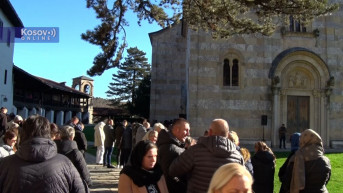
If it can be summed up in just a few words what attracts young people—some of whom were not even born during the conflicts of the 1990s—to go on pilgrimage journeys to Kosovo, the answer comes down to this: warmth, a sense of home, and love.
They tell Kosovo Online that they always return full of impressions, moved by the holy sites where a special energy can be felt, as well as by conversations with people who, with genuine enthusiasm, always invite them to come back.
Pilgrimage guide Ivana Coric uses every free moment to go to Kosovo. In a statement to our portal, she said that love and a special atmosphere are present on pilgrimages not only in monasteries, but also beyond their walls.
“I have been leading pilgrimages for a full three and a half years now, although I have been present in Kosovo and Metohija—our Holy Land—for five, almost six years. The impressions are truly special. We visit numerous shrines such as Visoki Decani, the Patriarchate of Pec, and Gracanica. We tour Prizren with the Monastery of the Holy Archangels, the Church of Our Lady of Ljevisa, the Church of St. George, as well as all those other sanctuaries that may be less well known—at least to us who live outside the territory of Kosovo and Metohija. We always try to see as much as possible, to visit as many shrines as we can, so that those who come for the first time can feel what we feel, those of us who have been there for years. That is precisely the love and energy that are present not only in the shrines but beyond them as well. When we visit the enclaves, we make an effort to visit the people and children of Kosovo and Metohija, to talk with them, to spend time together, and to return—to have somewhere to come back to—thanks to those who remain there,” Coric said.
She points out that an increasing number of young people are traveling to Kosovo.
“For years now we have been observing how aware our young people actually are of the Church and of everything that is happening in Kosovo and Metohija. The number of young people going there is growing. We strive and work to take even those who have never been to Kosovo before, so they can get to know the shrines and everything else. But there is no strict rule. Sometimes a bus is full of young people, but there are also older pilgrims for whom such a journey may be a special feat, given their age and health issues. Everything, thank God, always goes as it should. We even had our youngest traveler, who was just three months old at the time. So there have been those who had not yet taken their first steps, but who nevertheless walked through Kosovo and Metohija, as well as those in their later years who still feel the need to make pilgrimages and visit the holy sites,” our interlocutor emphasized.
Despite numerous risks, people do not give up on pilgrimages, and Coric stresses that it is a special experience to be in Kosovo during major holidays. She also notes that there are many motives for pilgrimage. For many, such journeys help overcome prejudices or fears—if they had any to begin with.
“I believe everyone has their own motive. Some may want to overcome fear. People truly have some prejudices at first and simply do not know what to expect until they arrive. When they see that it is not frightening at all and that one can come freely, their feelings immediately change. Some come because they want to spend time in prayer. We all perhaps have our own personal trials, or someone who is ill, for whom prayer needs to be intensified,” she says.
She adds that going to Kosovo during holidays is especially meaningful.
“It is very beautiful to be in Kosovo for a holiday. Sometimes it is planned that way, sometimes not. But it is beautiful to be with our people, who are not many there anymore. They want us to come, and they need us to gather with them and spend time together so they do not spend the holidays alone. It is important that we be present in as large numbers as possible, to rejoice together and to celebrate our
saints who protect us,” Coric concluded.
A high school student from Belgrade, Anđela Piljak, has already been to Kosovo five times and says that these pilgrimages have changed her view of the world.
“My first pilgrimage was two years ago with the humanitarian organization ‘Serbian Solidarity.’ At that time, my initial motive was certainly to visit the shrines and help our people down there. But I returned with an even stronger motive—and I believe everyone returns with it. That motive is love. Because the Lord is love, and He always calls us to return there again,” Piljak told Kosovo Online.
Asked what influenced her to return to Kosovo, Piljak points to a sense of home and warmth.
“What I believe I will remember and feel forever is the happiness of our people when they see us and realize that they are not alone. For me personally, every journey to Kosovo and Metohija so far is something I will remember for the rest of my life. What definitely always calls me back is that sense of home, which for me is priceless. Although I have no family roots in Kosovo and Metohija and I myself was not born there, wherever I am in the Holy Land I feel as if I am at home. And that is something I truly wish everyone could experience,” our interlocutor emphasized.
She stresses that conversations with people and the joy in their eyes left the strongest impression by far.
“Whenever we went on pilgrimage, we ate fasting food, because we all went with the desire to receive communion at Visoki Decani or the Holy Archangels. As I said, what stays with you the most are the conversations with those people, their happiness and emotions. We see tears of joy in their eyes and experience priceless embraces. When they see us, they always hold us tightly because they are happy that we came, and they always eagerly invite us to return,” Piljak recalled.

0 comments