
What attracts tourists to Kosovo: Medieval monasteries, stunning nature, and unforgettable flavors
Medieval monasteries, spiritual routes, and religious tours through some of the most valuable sites of Serbian cultural heritage are just part of the tourist offer in Serbian municipalities in Kosovo. Visitors are also drawn by natural beauty, as well as the unforgettable wines of Velika Hoca and Orahovac, along with numerous gastronomic specialties.
Written by: Katarina Saicic
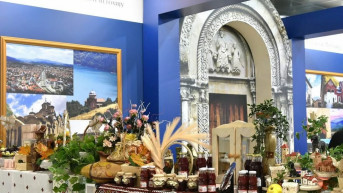
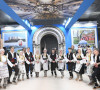
At the stand of the Office for Kosovo and Metohija at the 47th International Tourism Fair, tourism organizations from Serbian municipalities in Kosovo presented their offerings. Deputy Director of the Office for Kosovo and Metohija, Veselin Kocanovic, stated that the stand was very well attended and that visitors enjoyed a rich program.
“The stand is beautiful and very well visited. A rich cultural and artistic program has been prepared. In addition to tourism organizations and local self-government representatives, our winemakers from the Orahovac region are here as well. We have also prepared a special virtual tour showcasing the tourism potential of the historical and cultural events in Kosovo and Metohija,” Kocanovic told Kosovo Online.
Sar Cheese, Metohija Wine, and Pies Baked Under the Sach
As part of the promotion, visitors tasted Sar cheese, traditional pies baked under the sach (filije), homemade ajvar, cured meats, honey, rakija, and homemade pastries. Handicraft enthusiasts could enjoy handmade items, while the Monastery of Gracanica presented blessed souvenirs and its own products.
Within Kosovo’s tourist offer, besides monasteries, there are also archaeological sites, the Novo Brdo Fortress, the birthplace of Prince Lazar – Prilepac – as well as numerous cultural events.
Brankica Kostic, director of the National Library in Gracanica, highlighted the hospitality of Kosovo’s hosts and the special atmosphere that, as she says, leaves no one unchanged after visiting.
“When you come to Kosovo and Metohija, you come to your homeland, the homeland of your ancestors and the land of your descendants. Everyone who comes to Kosovo and Metohija feels that — they do not return the same,” Kostic told Kosovo Online.
She added that visitors are most eager to see medieval monasteries, along with many other landmarks.
“When the Nemanjic dynasty built their endowments, they built them for eternity. When you come to the Monastery of Gracanica, to Visoki Decani, to the Patriarchate of Pec, to Devic, to Gorioc, when you visit the Novo Brdo Fortress, you see and feel how relative time truly is,” Kostic said.
Traditionally Hospitable Hosts
She invited all tourists to visit Kosovo, emphasizing that being good hosts is part of their tradition.
“There is no greater joy than seeing off guests and noticing tears in their eyes — not tears of sadness, but of joy — and sensing their sincere promise to return. In addition to religious tourism, which is the most striking aspect of travel to Kosovo and Metohija, there is also cultural heritage tourism. The Cultural Center in Gracanica is truly a temple of culture, hosting book promotions, art exhibitions, and displays by both young and veteran artists,” she stressed.
She also reminded that there is much to see in Metohija.
“There is so much to see in central Kosovo and further in Metohija — Metohija is our sister, a beautiful land that simultaneously radiates sorrow and joy. Song is deeply rooted in Kosovo and Metohija. Even in the most joyful Kosovo song, you can sense a deep lament. It reflects life. Kosovo and Metohija offer a great deal. If nothing else, the air you breathe there will renew your entire body because it is the air of one’s homeland,” Kostic concluded.
Religious Tourism, Festivals, and Nature Tours Most Popular
Sandra Djokic, director of the Gracanica Tourist Organization, emphasized that religious tourism, summer festivals, and nature trips are the most popular among visitors.
“Tourists from the region and beyond most often come to Kosovo and Metohija to visit religious cultural monuments. Religious tourism is the most prominent and widespread form of tourism here. However, we also have a large number of visits in the summer, when we organize traditional events. We can say that event tourism is well attended, especially in Serbian communities. The ‘Vidovdan Festivities’ are particularly popular and bring the highest influx of tourists,” Djokic told Kosovo Online.
She added that Kosovo has significant tourism potential.
“In addition to religious tourism, we have large archaeological sites that are very attractive. In Gracanica, at the archaeological site of Ulpiana, statistics show more than 30,000 visits annually. There is also adventure tourism and nature tourism, with the Sar Mountains standing out in terms of popularity. All forms of tourism that are most widespread globally are also popular here,” she said.
She noted that tourists of all age groups visit Kosovo, and that foreign tourists mostly tour cultural heritage sites listed by UNESCO.
Visitors: Monasteries Most Popular, Nature Unmissable
Visitors to the Tourism Fair said they would gladly visit Kosovo, especially highlighting medieval monasteries, the vineyards and wineries of Velika Hoca, and the stunning natural landscapes.
Milivoje Filipovic from Zemun would primarily visit Kosovo for spiritual reasons, but is also interested in wine.
“I would visit the Visoki Decani Monastery, as well as other monasteries and our regions known for excellent winemakers, such as Velika Hoca,” Filipovic said.
Marija Antic Cvilanovic from Belgrade agrees.
“First and foremost, I would visit Serbian monasteries — the Patriarchate of Pec and Visoki Decani. They are among the most beautiful sites in Kosovo and Metohija. They preserve our tradition and date back to the 12th and 13th centuries,” she said.
Semir Kardovic from Rozaje, Montenegro, however, emphasizes natural beauty.
“As someone who visits Kosovo and works as a tourist guide, I can say that, besides historical landmarks, nature is indispensable. From the Sar Mountains to the Rugova Gorge — these are jewels of the Balkans,” Kardovic concluded.

0 comments