
Zdravkova: Macedonians hold prejudices toward foreign nationals
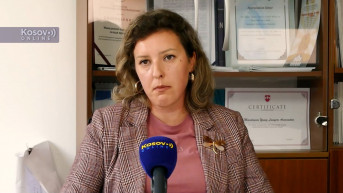
Irena Zdravkova, project coordinator at the Macedonian Young Lawyers Association and a member of the Balkan Refugee and Migration Council, believes that when discussing foreign nationals, one must keep in mind the security aspect, as well as the fact that the majority population of North Macedonia holds prejudices toward foreigners, even though there are no xenophobic statements.
Zdravkova noted that, at the Western Balkan level, there were initiatives aimed at facilitating access to the labor market due to the need for workers.
She added that one such initiative was the Open Balkan initiative, which was intended to ease movement—primarily to enable freer movement of labor between Albania, North Macedonia, and Serbia.
“However, we were faced with a different situation, where instead of increased movement within the Western Balkans, citizens of Nepal, Bangladesh, India, and entirely different countries began arriving. Then the situation arose where, instead of staying here, the challenge of legal migration led to illegal migration, because according to the information and reports from the Ministry of Interior, there is a large number of registered workers who worked here for a period of time but immediately left the country afterward and then went, I assume, to Europe,” Zdravkova told Kosovo Online.
According to her, when it comes to foreign nationals, two things must be taken into account: the need for workers on one hand, and migration management on the other.
“One must keep in mind the security aspect—whether they meet our qualification requirements, how long they should stay—and at the same time, very importantly, whether we, as domestic citizens, have enough people who could be engaged, all in order to avoid a situation where foreign workers arrive and become dominant in the labor market,” she said.
She added that quotas set by the Employment Agency have been increased.
“If the quota used to be 7,000, I think it has now reached as many as 20,000 foreign workers who may be present here, including those working for Bechtel and Enka. Regarding North Macedonia, we had a Migration Resolution that regulates this movement and how it will be managed, because the Ministry of Interior and the Government are responsible for that area and monitor it. We are also in the process of drafting a new Migration Resolution, which I think needs to take into account what I mentioned regarding incoming workers,” Zdravkova said.
The conditions for residence, Zdravkova noted, are prescribed by the Law on Foreigners, and she added that both permanent and temporary residence exist.
According to her, the majority population in North Macedonia does indeed hold prejudices about foreign nationals.
“There are usually prejudices that foreigners will come and take our jobs. There is a justified fear that demographics may change to some extent, because there truly is a large number of foreigners who move here long-term. I think the state needs to take this into account as well when issuing permits and residence approvals,” she emphasized.
She assessed, however, that it is positive that there are no longer xenophobic statements directed toward foreigners.
“The issue of migration is not heavily discussed, and I think this is something the state perhaps avoids to some extent. As a result, strategic documents that should be developed for the integration of foreigners—so that they can be present here and have access to basic rights—are rarely mentioned. When they reside here legally, there must not be any kind of discrimination in relation to the rights they are legally entitled to, according to international conventions,” Zdravkova said.
She stressed that it is good that North Macedonia has not seen any major incidents, such as the recent one in Montenegro, but emphasized the importance of prevention.
“That is why there must be security checks for the individuals who come here,” Zdravkova concluded.


0 comments