
Petronijevic: Many pieces of evidence have already been presented in The Hague; cases must be completed
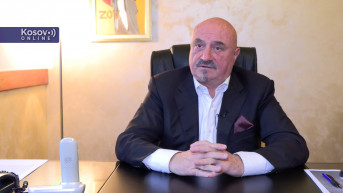
Projects created by the United States can be altered at their discretion, including the termination of the Special Court in The Hague – whether by halting funding or through other means, however, the real question is what comes next then? Significant evidence has already been presented there, and many facts previously unknown have been uncovered. If such a termination were to occur, there would need to be a transitional period for relocating the court, though I find this unlikely considering the current stage of its work, lawyer Goran Petronijevic told Kosovo Online.
He emphasizes that all open cases must be resolved somewhere.
"If we start from the premise that this court is essentially a court of Kosovo's institutions, specifically Kosovo's judiciary, which operates under the jurisdiction of the Ministry of Justice of the self-proclaimed Kosovo, and that it adjudicates based on Kosovo's laws and constitution, then presumably, the court would relocate to operate in Kosovo and Metohija, in Pristina, or wherever they decide. That is one of the scenarios. It is unlikely that all these cases could simply be closed, as substantial factual material and a large amount of evidence concerning KLA crimes have already been presented," Petronijevic said.
Regarding the court’s outcomes, he remains pessimistic.
“I have said before, when I see the first final verdict convicting someone from the Albanian leadership or the KLA leadership for ethnically motivated crimes against non-Albanians, primarily Serbs, then we can say the court is functioning properly. Unfortunately, that has not happened yet,” Petronijevic noted.
In his view, the Hague court was not established to promote justice or prosecute war crimes and serious offenses committed during the conflict. Instead, it serves as a tool to prevent certain compromises with Belgrade, such as efforts to establish the Community of Serb Municipalities or explore alternative statuses for northern Kosovo and Metohija.
“The moment the US globalist elite realized that Thaci was willing to compromise with Belgrade and not prioritize their interests as expected, he was arrested and sent to The Hague. The court was designed with this purpose in mind. To be clear, I’m not advocating for Thaci’s release, but he is not there because of crimes, he is there because he did not follow the current administration’s directives. That’s the difference, and it represents an abuse of the court,” Petronijevic stated.
He also notes that the previous US administration under Trump supported Thaci’s faction in Kosovo.
“On the other hand, while today’s neoliberal-globalist faction, represented by the Democratic administration, tries to portray Albin Kurti as disobedient, he is their product. Kurti is nothing more than a mouthpiece for such American foreign policy,” Petronijevic stated, adding that a clear division had become evident in the US, one between the sovereignist faction and the globalist faction, which had emerged during Trump’s first term.
He states that there is now a division within the deep state into a left-wing globalist faction, represented by the Democratic Party’s policies, and a right-wing sovereignist faction.
Regarding the proceedings before the Special Court in The Hague, Petronijevic notes that the focus has been placed on intra-Albanian killings tied to political power struggles.
“That shouldn’t concern us at all. Their internal struggles and killings for power are matters of their own justice. What should concern us are the ethnically motivated severe crimes, murders, expulsions, and everything that happened to non-Albanians, primarily Serbs, who made up the majority population in Kosovo and Metohija,” Petronijevic emphasized.
Analyzing the work of the Special Court so far, he points out that it has faced significant compromises on multiple occasions. He reminds of the case involving the disclosure of protected witnesses’ identities and the subsequent proceedings against members of the KLA Veterans Organization, Hisni Gucati and Nasim Haradinaj, who were, he says, swiftly convicted. However, the key issue – who provided them with the leaked information – was never uncovered.
“This information could have come from the court’s prosecutor’s office, court administration, or the highest levels of Kosovo’s government, yet no one was ever held accountable,” he stated.
He also reminds of the case of Ramush Haradinaj, tried before the International Criminal Tribunal for the former Yugoslavia, noting that Haradinaj was acquitted because, as he says, the court was controlled by the United States and its intelligence services.
“They were allies of the KLA, so it was unrealistic to expect a conviction. Haradinaj was acquitted with the infamous statement that there was insufficient evidence to unequivocally establish his guilt. Naturally, there wasn’t enough evidence because Haradinaj was allowed to roam freely, engage in politics, and systematically eliminate witnesses against him – through killings, intimidation, bribery, pressure, and influence. All of this was orchestrated to happen in such a way as to clean his record. One possible direction to consider for how the proceedings before the Special Court might unfold is precisely this. The repetition of the model applied in the case of Ramush Haradinaj,” Petronijevic concluded.



0 comments