
Spain elects new parliament today, future of Madrid-Pristina relations uncertain
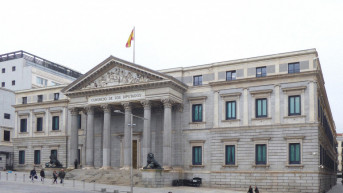
Spain is holding an early parliamentary election today in which citizens will decide on the new composition of the Congress of Deputies and the Senate, as well as on the political direction the country will take in the coming period. The outcome of the vote could bring a change of government and end the tenure of Socialist Prime Minister Pedro Sanchez, while for Kosovo, a particularly important question will be whether a potential right-wing government could adopt a tougher stance toward Pristina and its European integration.
Spanish citizens are electing new members of both houses of parliament—the Congress of Deputies and the Senate. The election was called on October 5, when Prime Minister Pedro Sanchez announced the dissolution of parliament and an early election for November 29.
The decision to call an early election came amid mounting political pressure on Pedro Sanchez’s government. The campaign has focused on the political crisis, relations between the governing Socialists and the opposition, and issues that have further deepened divisions within Spanish society.
The main political rivals are Prime Minister Pedro Sanchez’s governing Spanish Socialist Workers’ Party (PSOE) and the opposition People’s Party (PP), led by Alberto Nunez Feijoo. The right-wing Vox party also occupies a significant position in the electoral race, and its result could prove decisive in the formation of the next government.
According to opinion polls conducted during the campaign, the People’s Party holds the lead, but the key question is whether it will be able to secure a parliamentary majority on its own or whether it will need Vox’s support to form a government.
For Kosovo, the election is particularly significant because of Madrid’s longstanding position of not recognizing its unilaterally declared independence. Spain is one of five European Union Member States that do not recognize Kosovo, along with Cyprus, Greece, Romania and Slovakia. Although Pedro Sanchez’s government has shown a willingness in recent years to engage in certain forms of practical cooperation with Pristina, the question of recognition has not been opened.
One of the most significant steps in that direction was Spain’s recognition of Kosovo passports as valid travel documents in 2024, allowing Kosovo citizens to benefit from visa-free travel within the Schengen Area.
Spanish Foreign Minister Jose Manuel Albares recently reiterated that Madrid would not stand in the way of the Belgrade-Pristina dialogue or Kosovo’s rapprochement with the European Union, while at the same time emphasizing that Spain maintained its national position of non-recognition.
The possibility of a change of government and its potential impact on relations with Pristina has also been analyzed by Kosovo Online’s interlocutors. Analyst Nedzmedin Spahiu believes that a potential change of government in Spain would not necessarily bring any significant change in relations between Spain and Kosovo, given that Pedro Sanchez’s government, despite its communication with Albin Kurti, did not alter its position on recognition.
In his view, the arrival of different political forces in power could make the situation more difficult for Pristina, but would not fundamentally alter the existing relationship. Spahiu believes that the most important issue for Kosovo is reaching an agreement with Serbia, as this would open the way to resolving problems with the European community and the countries that do not recognize its independence.
Nikola Ilic, a researcher at the Faculty of Political Sciences, also believes that a change of government would not alter Spain’s position on non-recognition of Kosovo, but warns that Vox’s potential participation in the next government could have more serious consequences for Pristina’s European path.
Ilic points to differences between the People’s Party and Vox. While the conservatives, in his assessment, would probably seek to avoid any significant departure from the European Union’s broader foreign policy, Vox could take a much tougher stance toward Pristina and attempt to halt or slow its European path. He particularly notes that a change could be visible in the political narrative and in the way Madrid communicates with Kosovo institutions.
One reason why Spain’s position on Kosovo is particularly sensitive is the country’s own internal constitutional and territorial structure.
The issues of Catalonia and the Basque Country, as well as efforts to preserve Spain’s territorial integrity, have for decades been important political factors shaping Madrid’s position on Kosovo’s independence. A significant part of Vox’s political platform is based precisely on defending Spanish unity, and the party views the Kosovo case as a potential precedent.
The broader consequences of a change in Madrid’s political course could also be felt within European institutions. Spain is one of the countries that do not recognize Kosovo, but at the same time it participates in discussions on the future of decision-making within the European Union and a possible shift from unanimity to qualified-majority voting in certain areas.
Mijat Kostic of the New Third Way organization has warned that such a change could weaken the protection Serbia currently derives from the five EU Member States that do not recognize Kosovo, as countries supporting Pristina could more easily secure the necessary majority for certain decisions.
Nevertheless, the election result in Spain will not in itself change the European Union’s decision-making rules, nor will it automatically lead to any change in Kosovo’s status. Additional political and institutional processes would be required for that to happen.
For this reason, today’s election in Spain cannot be viewed as an immediate turning point in the issue of Kosovo’s international recognition, but it could serve as an important indicator of the future approach toward Pristina of one of the five EU Member States that do not recognize it. For Kosovo, in addition to the question of who will take power, it will be particularly important whether the future Spanish government maintains the current willingness to engage in practical cooperation or adopts a more restrictive position toward its European ambitions as well.

0 comments