
Jakaj: Frequent lack of quorum hampers parliament’s work, legislative agenda for this year difficult to fulfill
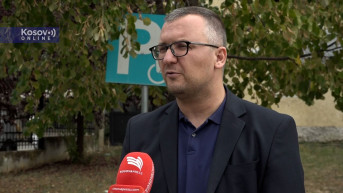
The Kosovo Assembly risks failing to fulfill its legislative agenda for this year due to a shortage of professional staff, as well as the frequent lack of quorum in committees and plenary sessions, which hampers the adoption of legislation, Naim Jakaj, Senior Researcher at the Kosovo Law Institute, said.
He added that a special session devoted exclusively to parliamentary questions should be convened so that MPs could receive answers from ministers and parliamentary oversight of the Kosovo Government could be strengthened.
In an interview with Ekonomia Online, Jakaj said that the Assembly was facing a significant shortage of professional staff, noting that half of the parliamentary committees were headed by coordinators serving in an acting capacity. According to him, this situation affects both the efficiency and quality of the committees’ work.
“The Kosovo Assembly has faced an exceptionally severe shortage of internal staff. For example, in half of the parliamentary committees, the coordinators are serving in an acting capacity. During its eighth, ninth and tenth legislatures, the Kosovo Assembly should not have left these parliamentary committees, particularly the standing committees, with acting coordinators. Instead, it should have announced vacancies and appointed individuals with the integrity and professionalism required to perform the duties stipulated by their employment contracts, the Law on Public Officials and the regulations governing the specific areas of work of parliamentary committees,” Jakaj said.
He stressed that the Assembly should announce vacancies for these positions as soon as possible to ensure the efficient and professional functioning of parliamentary committees.
In addition to the shortage of professional staff, he pointed out that the adoption of legislation was also being hampered by a lack of political will to cooperate, as well as by the absence of quorum in committees and at plenary sessions.
“We believe that the Assembly will not be able to fulfill the legislative agenda envisaged for this year for all of these reasons: the shortage of internal staff, the lack of willingness on the part of the political party governing the country to cooperate with opposition parties so that certain laws and draft laws can be adopted with their cooperation, and the lack of quorum for adopting legislation, both in committees and in the plenary session. We have established that dozens of agenda items are being carried over from one session to another, causing them to accumulate, while the Assembly ultimately has to make a final decision on the adoption of the laws,” Jakaj stressed.
According to him, because the Assembly had not functioned for two years, unresolved issues had accumulated and it had been unable to fully perform its constitutional functions, including its legislative, representative, electoral and oversight functions.
“These four constitutional functions could not be performed. The obligations have now accumulated, and the Assembly will need considerably more time than MPs’ usual eight-hour working day to complete its tasks. Based on what we have seen, we cannot realistically assess the work of the Kosovo Assembly at present, but there are certain delays, particularly in parliamentary oversight and parliamentary questions, more than half of which have not been answered by ministers. It is particularly problematic that, under the Rules of Procedure, a parliamentary question is not considered concluded even after it has been asked, which has resulted in a large number of unanswered questions,” he added.
Jakaj called on the President and the Presidency of the Assembly to schedule a special session devoted to parliamentary questions so that MPs could receive answers from ministers and parliamentary oversight could be strengthened.
Another problem threatening the work of the Assembly, according to Jakaj, is the lack of quorum at plenary sessions.
He said that the Presidency and the heads of parliamentary groups should coordinate MPs’ official travel and other parliamentary activities to ensure their attendance at sessions.
Jakaj called on the Assembly to give priority to legislation related to the Growth Plan, international agreements on loans under favorable terms, and the Civil Code. Regarding the Civil Code, he said that the greatest responsibility rested with the parliamentary majority, which should cooperate with the opposition to secure its adoption.
“The greatest responsibility in this case lies with the parliamentary majority, namely the Self-Determination Movement, to communicate, cooperate and ultimately reach an agreement with the opposition so that this Code can be adopted as soon as possible and in a substantive manner, in accordance with the Constitution of the Republic of Kosovo. It codifies the entirety of civil law into a single code, whose proper and fair implementation will ultimately serve the interests of citizens,” Jakaj said.
0 comments