
Repainting the "Yellow House"

For Kosovo Online: Dragan Bisenic, a journalist
Albanian officials launched an action in the Council of Europe to overturn the Council of Europe's resolution on the trade in human organs, better known as the Dick Marty Report. This resolution was adopted in 2011 with one of the most convincing voting majority - 169 deputies voted for the resolution, eight were against, and 14 abstained. Of the 19 amendments submitted by the representatives of Albania, only one was accepted, so the name of the resolution was changed to "Investigation of allegations of inhumane treatment of people and illegal trade in human organs in Kosovo".
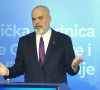
Albanian Prime Minister Edi Rama announced that Albania collected signatures in the Council of Europe Assembly for a new resolution, which would challenge Dick Marty's resolution from 2011, in which the Kosovo Liberation Army was accused of trafficking in human organs.
After 12 years as of its adoption, there was an attempt to challenge it and possibly disempower it. This is happening at a time when the world is preoccupied with the Russian-Ukrainian conflict and its profound consequences for European and world relations, the dialogue between Serbia and Pristina on the German proposal for the normalization of mutual relations, and with the trial of the commanders of the Kosovo Liberation Army for crimes committed during and after the 1999 conflict before the Special Court in The Hague. At the same time, Kosovo's application is waiting at the door of the procedure for admission to the Council of Europe.
Last year, the Albanian Parliament unanimously adopted the conclusion that the Council of Europe should initiate the procedure for revoking this resolution.
Rama stated that the resolution from 2011 "made terrible accusations against the KLA for trafficking in human organs without any facts", and that Dick Marty should have been "paid as a storyteller, not an investigator".
The path taken by the Albanian side is completely new. It has never happened that a country tried to revoke an already adopted resolution, not only in the Council of Europe, but also in other permanent international assemblies, such as the United Nations. The members of the Council of Europe, no matter how much they sympathize with Kosovo, all of them are very sensitive to issues of human rights and freedoms and consider themselves defenders of the values that form the very basis of the existence of European unity and identity.
The experience of the Council of Europe in examining the trade in human organs is very extensive and in no case is it directed exclusively towards Kosovo. It was this experience, together with the network of persons who appeared, that it was justified to assign the Swiss parliamentarian Dick Marty to investigate this case. This experience includes numerous similar reports on the trade in human organs - from Romania and Moldova, all the way to Western countries that appear as users. The Council of Europe is not a beginner in this, but a very well-equipped institution in terms of law, technology, logistics, and even intelligence. And not only that, but also the enormous trust that the parliamentarians of the Council of Europe have for the work of the courts for human rights and war crimes, impose a very thorough and intensive dealing with these topics. After all, the European Court of Human Rights, of which the Council of Europe is the founder, is located in Strasbourg, right next to the Council of Europe. Evidence of trafficking in human organs and the inhumane treatment of Serbs and Albanians during the conflict in Kosovo first appeared in the Hague Tribunal for war crimes in the former Yugoslavia and were first presented in the book by the Tribunal's chief prosecutor, Carla del Ponte. This served as a reason for the then UNMIK to send its chief forensic expert, Pedro Baraybar, to Kukesh (Albania) in 2004 to investigate these allegations together with the Hague Tribunal team. In the Burrel settlement, that house, which today is called the "yellow house", was found, and nearby, empty bottles of infusion liquid, with muscle relaxants, bandages and needles were found.
When the team found preliminary evidence, all further activity suddenly stopped. In 2008, the head of the Office of the Serbian Government for Cooperation with the Hague Tribunal, Dusan Ignjatovic, filed a complaint against UNMIK and Petersen himself for obstructing the investigation into human organ trafficking in Kosovo. Petersen then openly took Ramush Haradinaj under his protection, followed him to the Hague and gave guarantees for the defense from freedom, even though witnesses important to the entire process were physically disappearing at the time. All the accused from Kosovo were acquitted before the Hague Tribunal for the former Yugoslavia.
Being a Doctor of Law himself, a former Swiss Attorney General with an impressive legal career, Dick Marty was assigned to be the rapporteur on this matter. At that time, Dick Marty was one of the most respected and longest-serving members of the Parliamentary Assembly of the Council of Europe. He has been a rapporteur on numerous issues, including CIA secret prisons in Europe, euthanasia and many others. In his speeches in the Parliamentary Assembly, he was always on the side of Serbia's uncompromising demands for full cooperation with the Hague Tribunal. That is what recommended him to get involved in this Balkan issue.
After leaving active political life and leaving the Council of Europe, Marty, according to Swiss intelligence agencies, became the target of an assassination attempt last year. As reported in the media, the alleged assassination would have been carried out by the Serbs, in order to make the Albanians responsible for it. This intrigue has been clarified, but it has not been announced to the end who the authors were.
When it appeared, Marti's report was a great shock to the European and world public and had a wide resonance. However, it was also an expression of the change in the attitude of the international public towards the conflict in the Balkans. The crucial moment for the change of this position was the conviction of the administration of the American President Barack Obama that the crimes of the KLA and the Kosovo Albanians during the war and after the war cannot go unpunished and that it is time for an equal attitude towards all parties, so that conditions could be created for permanent normalization of the situation in the Balkans. Although he was the American president who was certainly the least personally involved in Balkan issues, Barack Obama had a significant influence on his future understanding.
A decisive role in this was played by the report of the American legal expert, Ambassador Clint Williamson, who, by the way, is one of the authors of the accusation against Slobodan Milosevic. On July 29, 2014, in Brussels, he published investigative findings in which he indicated that some high-ranking officials of the former KLA bear responsibility for persecution operations that were directed at ethnic Serbs, Roma and other minority populations in Kosovo and at fellow Kosovo Albanians whom they labeled as political opponents. He stated that these "acts of persecution effectively resulted in the ethnic cleansing of a large part of the Serbian and Roma population from Kosovo" and that "those crimes were not committed by renegade individuals who acted of their own free will, but were carried out organized and sanctioned by the leadership of the KLA". He therefore concluded that "the prevalence or systematic performance of these crimes warrants prosecution for crimes against humanity."
When it comes to the allegations of organ trafficking, he stated that his findings mostly agreed with the findings of Dick Marty and that "there are convincing indications that this practice really happened on a very limited scale and that a small number of people were killed for the purpose of extracting and trading their organs. He noted that the investigation has not yet provided a sufficient level of evidence to charge those crimes and concluded that this aspect of the investigation is still ongoing and that the task force will continue to vigorously pursue these allegations. Williamson, therefore, did not in any sense refute the findings of Dick Marty, as can be heard from those who seek to question his report.
As in other Balkan areas, there was, and continues to be, great resistance to the creation of the Special Court in Kosovo. After the procrastination of the Assembly of Kosovo in 2015 to adopt the decision on the formation of the court, then petitions with more than 15 thousand signatures, and the initiative of 43 deputies at the end of 2017 to withdraw the said decision, the highest officials in Pristina agreed to cooperate with the court whose headquarters will be in The Hague.
The truth and justice about the "yellow house" and other crimes under the jurisdiction of the special court have been inadmissibly delayed for decades. The Council of the European Committee for Legal Affairs and Human Rights at one time found reasons in the fact that the international administration "favored a pragmatic political approach, considering it necessary to promote stability in the short term at any cost", so the examination of the KLA's crimes was tacitly ignored.
The Albanian request will bring the Council of Europe to a new situation. In addition, it will also bring Kosovo's request for admission into a new situation, since the Council of Europe has so far had no experience with admission of countries that challenge the decisions of the Council of Europe in advance.


0 comments