
So far no good concept
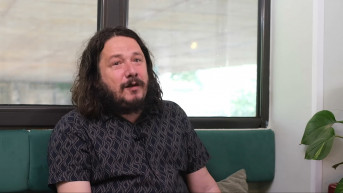
Writing for Kosovo Online: Muharem Bazdulj, writer and journalist
At the end of last year and the beginning of this year, the focus of attention of the Serbian cultural public was the film director Srdjan Karanovic. Paradoxically at first glance, the occasion was not a movie, but a book. It's not really a book, but two books. I say "paradoxical at first glance" because in recent years, Serbian film directors, such as Emir Kusturica and Goran Markovic, not only often publish books, but these books also receive prestigious awards or are on the shortlist for them, being translated into foreign languages and they have a great reception. First, the autobiography "Sam o sebi" was published in the "Geopoetika" edition, and only a few weeks later, the "Film Center Serbia" published a book of conversations Stefan Arsenijevic had with Karanovic, under the title "A little above the ground".
Finally, some ten days ago, Karanovic returned to the media because of a film, but not a new one, but one three and a half decades old. The reason is the digital restoration of the film "Za sada bez dobrog naslova" (1988). And although Karanovic himself said in a recent interview that the subject of this film was Kosovo, but that Kosovo was not the main motive; it is difficult to escape the impression that it was Karanovic who dealt with the Kosovo theme most impressively among Serbian directors, both from a modern and historical perspective. An example of the latter is the movie "Solemn Promise" from 2009.
We wrote in this same place two weeks ago, among other things, about the song "Kosovska" by the group Bijelo Dugme, one of the few artifacts of Yugoslav popular culture in the Albanian language. And indeed, it sounds almost paradoxical, in an era in which Rita Ora and Dua Lipa are global superstars, that through several decades of integration of Kosovo Albanians into the Yugoslav community, none of them became more widely known singers. It was similar in literature. There was not enough translation either from Albanian to Serbo-Croatian or from Serbo-Croatian to Albanian. And not only that, when an Albanian writer like Ismail Kadare became a worldwide literary fact, it often happened that he was not translated into Serbo-Croatian from the Albanian original, but from a translation into a foreign language, in Kadare's case – French.
If we exclude sports, Albanians, in Yugoslavia, were most visible through cinematography. The best and most powerful example is, of course, Bekim Fehmiu, but we should not forget, for example, Enver Petrovci, Faruk Begolli, or Abdurrahman Shala.
Maybe something similar is possible in the new context. Svetlana Slapsak recently published an extremely interesting essay that begins like this, "In the second decade of our century, the cinematography in the Balkans experienced an unexpected, conceptually, productively and artistically mature new school of film, which currently consists mainly of female film workers - directors, screenwriters, producers and actresses from Kosovo. (...) Their films - mostly the first - are winning awards at festivals around the world. The thematic core, deeply engaged socially, is precisely women, their current position in Kosovo, and, without distinction, the despair due to such a position and such a society. All those films are co-productions, which further testify to the European connection and the common needs and interests of the Balkans, especially of Balkan women".
Logically, this trend should be registered by a Serbian author or theorist rather than someone whose culture is much more distant from the Albanian one. Neighborly understanding, understanding between cultures that have influenced each other for centuries is almost inevitable. Slapsak writes here about a festival "niche" of art film, but some kind of Serbian-Albanian cooperation is also present at the other end of today's feature production - in the world of modern multi-seasonal genre television series.
Those who follow in detail the growing production of that branch of the cultural industry, as the best, or at least one of the best recent Serbian TV series, cite the series "Solemn Promise", which was "announced" by Tony Jordan based on the idea of Srdjan Saper. Along with Radivoje Bukvic and Milos Timotijevic, the main role in the series is played by an Albanian actor from Kosovo - Arben Bajraktaraj.
Not even in great Yugoslavia did anyone think of trying to integrate Albanians into the Yugoslav mainstream through film. It happened by chance, a natural turning towards Belgrade as the local center of an expensive industry. If there was some concept, some idea to avoid the blackmailing capacities of various politically correct international funds through the cooperation of local large production companies, cooperation on the film could mark a new beginning of cultural cooperation on a healthy basis, without the constant perpetuation of stereotypes and the eternal return of the same.
comments