
Yugoslav guerrillas and the special war against Enver Hoxha
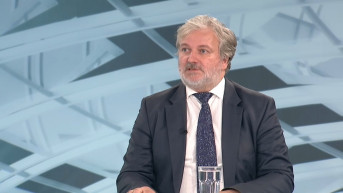
Dragan Bisenic, a journalist, writes for Kosovo Online
Immediately after the formation of the CIA, the Department for Political Coordination with the task of carrying out special covert operations chose as its first operation the overthrow of the Albanian leader Enver Hoxha in accordance with the accepted policy of "releasing the satellites". This plan was devised by Frank Wisner and Robert Joyce.
In March 1949, a senior British intelligence officer, William Hayter, who served on the Joint Intelligence Committee, traveled to Washington with a group of intelligence officers. The group included Gladwin Jebb, Earl Jellicoe, and Peter Dewer of MI6 to meet Robert Joyce and Frank Wisner to discuss the planned operation. Joyce and Wisner were OSS veterans who had fought in Yugoslavia, and at the time both were dealing with the significance of the Yugoslav break with Stalin on the Political Planning Department headed by the "father of the Cold War" and later ambassador to Yugoslavia, George Kennan. A month later the Political Planning Department headed by Kennan approved this operation and a joint Anglo-American group was created to plan the entire operation. The joint group will include the most famous Soviet spy in the West, Harold "Kim" Philby, Robert Joyce, Frank Wisner, and Franklin Lindsey, who were later found.
Americans did everything to find the best way to fight communism. In the end, three concepts emerged - suppression, liberation, and Titoism. Each of these concepts had its supporters, patrons, and sponsoring bodies.
The American and British secret services chose Albania because it was isolated from all sides, and they estimated that Tito, after breaking with Stalin, would support any change in Tirana. The idea was to insert saboteurs from Malta who would initially gather the information that would be the basis for much more ambitious plans, an uprising in Albania, and the overthrowing of Enver Hoxha from power. There was already an Albanian National Committee headed by Hasan Dosti.
Franklin Lindsey also showed initial enthusiasm for this action. He was extremely impressed by the results of the guerrilla struggle in Yugoslavia, in which he directly participated, but he slowly realized that guerrilla actions did not work against the communists, except for occasional successes. Among them, he especially counted the fact that he managed to send five aid ships with weapons to Yugoslavia when it came into conflict with Stalin.
The operation planning began, which the British historian Elizabeth Heuser described as "ridiculous and amateurish", as it ended in complete disaster. On the American side, the operation was led by Wisner's deputy, a former member of the OSS with an impressive Yugoslav record, Franklin Lindsey. Lindsey spent most of World War II in Yugoslavia, working with Tito. While working as a consultant in the State Department, he, together with Charles Thayer, who was also an OSS operative in Yugoslavia and then worked for the Voice of America, wrote a memorandum on using the experience of Yugoslav guerrilla warfare, and especially displaced emigrants, to undermine Soviet power. in Eastern Europe. "Thus, the Yugoslav guerrilla struggle became a manual for CIA covert operations abroad and the overthrowing of foreign governments," Lindsay wrote in an email correspondence we conducted.
It is impossible to separate the refugee or immigrant issue from the covert operations of the CIA in the early years of the Cold War. Hundreds of thousands of fugitive former soldiers from Central European countries, but also from Germany and Austria roamed Europe and America. The Americans already had ideas about using Eastern European emigrants in psychological warfare, but nothing serious happened until in March 1948, the State Department presented its paper on the need for propaganda - psychological warfare. This paper proposes the use of refugees to encourage resistance in Eastern Europe. According to that plan, Eastern European refugees would gather in "liberation committees" that would be funded by the US. The State Department proposed that the committees should be headed by prominent American citizens who would not be considered government-related, and Allen Dulles was specifically named as an excellent candidate for the job. Allen Dulles also had connections with Yugoslavia. Together with Hamilton Fish Armstrong, he was the co-president of the American-Yugoslav Society, which was founded in 1921, and its lawyer. When Dwight Eisenhower became president of the United States, Allen Dulles became the head of the CIA. The operation was named "Bloodstone". According to Lionel Simpson, many of those who thus arrived in America were former Nazis.
Dulles was ideally positioned to establish contacts with the illegal resistance forces that existed in Eastern Europe and provide them with American support. The State Department described him as a man who "inspired confidence, was brilliant and came with a glamorous reputation in intelligence work", and his "pipe-smoking style was disarming".
Although he worked for the government all year, Dulles did not receive a salary until December 1950, when he officially transferred to the CIA. During that time he played an important role in the creation of the Committee for a Free Europe (Free Europe Committee) and the National Committee for a Free Europe (National Committee for a Free Europe). In addition to Dulles, the Committee's board members were as from the list “who's who” of American intelligence: Henry Luce, Joseph Grew, Adolf Berle, and Dwight Eisenhower. This committee aimed to be a means of "peaceful efforts in preparing the way towards the restoration of social, political and religious freedoms in Eastern Europe".
Committee members hoped that the organization could be funded through private donations, but that soon proved impossible, so the CIA stepped in. Before reaching the Committee, the money passed through numerous foundations and voluntary trusts, including the Rockefeller, Carnegie, and Ford foundations. The "private-public" network that developed was important because it indicated, as historian Scott Lucas states, that "the Cold War was not only the domain of diplomats, politicians, and generals", but also "numerous private groups and high-ranking individuals who worked with them".
One of the first formed national liberation committees was the Albanian one, which was supposed to be the nucleus of the Albanian government in exile. The first president of the organization was Mid’hat Frasheri. Already in 1947, he approached the CIA offering his services. He immediately offered to bring 50 Albanian refugees to the US to counter communist propaganda in America, but the State Department refused to grant them visas because of their collaborationist past, which would "quite upset the government in Washington." Two years later, on May 12, 1949, Robert Joyce spoke on behalf of Frasheri and his friends, and they were granted visas to enter America. Frasheri died five months later, on October 3, 1949, at the Lexington Hotel in Manhattan, so he did not see the start of Operation Valuable. He was replaced by the former minister of justice in Zog's government, Hasan Dosti. Like Frasheri, he was a member of the Balli Kombetar, an organization characterized as "right-wing" and "ultra-nationalist". The goal of the group, apart from liberation from communism, was also the annexation of Kosovo. Since then, the annexation of Kosovo will be the permanent goal of all emigrant Albanian organizations in the world.
The Truman administration initially supported the "National Front" because it tried to operate "under the banner of pseudo-democratic ideas", mistaking it for a "republican" party. Most of the members of the "National Front" were undoubtedly anti-British and anti-Tito. It was a dangerous combination that opened the door to a lot of problems, and a lot of people on the American side refused to cooperate with them.
The British very quickly ran out of illusions when it comes to the "anti-monarchist" attitude of Balli Kombetar, so during the operation they approached another Albanian organization "Pravo" (Legality) which was created in 1943 under the leadership of Abaz Kupi. Its goal was the return of King Zog to power, and many of its members were Nazi collaborators. The British government decided, however, to back Kupi, but the Department of Political Coordination remained in its support of Balli Kombetar, leading to a series of misunderstandings and even several murders believed to be caused by the conflicts between the two factions. They were reinforced by arguments about participation in the future monarchist government, which in that form American politics never agreed to restore, even if the uprising was successful.
In order to cover up the mutual quarrels between these two groups, it was decided to expand the national committee. Its structure was 40 percent for these two groups, and the other 20 percent belonged to smaller parties and groups.
In July 1949, a group of Albanian emigrants landed in Albania, but they were all quickly captured. Everything was disclosed a year later when the Albanian authorities brought them to trial.
As a convinced Anglophile in the romantic sense of the British Empire, Wisner worked closely with Kim Philby, who was the liaison officer of the British Secret Service in Washington from 1949 to 1951. It was during those winter days that the Americans began to suspect that he was a mole with whose help the Soviets prevent American covert operations that failed in the fall of 1950 in the Ukraine, the Baltics, and Albania. In Washington, only a small circle of people, or rather only four of them, including Philby and Joyce, knew about these plans. Wisner then told Joyce that there was probably "a mole" in their ranks.
It all began to unravel at a dinner at Kim Philby's that would prove fatal for the most famous Soviet secret agent. At that dinner was also the Yugoslav diplomat, Vladimir Velebit, whom Tito sent on a secret mission to secure American weapons for Yugoslavia through his wartime friends from the OSS.
In the several-hour conversations we had, Velebit told me that at that dinner, quite drunk, Guy Bridges, another one of the famous "British Four" who had worked for the Soviets, and who had then been working at the British Embassy in Washington, had insulted the boss of the CIA's counterintelligence division, William Harvey. He drew a pornographic caricature of Harvey's wife. Harvey had no sympathy for the English aristocracy anyway, unlike his "Ivy League" colleagues. After this bizarre event, he put them all under a special surveillance regime that led to their exposure.
American policy toward Tito was complicated in light of this venture. Tito also had his own groups in his territory that were supposed to act against the authorities in Tirana. American politics was also really divided. While the Department of Political Planning sought to improve relations with Tito, the Department of Political Coordination sent several shipments of arms and attempted to overthrow Tito at the same time as it attempted to improve relations with him. This policy compromised American politics as a whole. There were those, such as John Paton Davies, who supported improving relations with Tito, but there were others, such as John Campbell, who opposed any kind of collaboration with the Communists. That issue needed to be clarified, especially if the operation in Albania required Tito's support. Tito was told by senior State Department officials that the US would want any type of government in Albania if it were democratically elected. In the end, Tito refused to support this operation and completely turned against this action.
When a group of illegals was introduced into the territory of Yugoslavia, Tito became completely enraged, although the Americans apologized saying "they missed the path". This, however, led to a significant deterioration of mutual relations. Over time, more and more people in the administration questioned the wisdom of continuing the Albanian operation in the face of Tito's opposition. The State Department concluded that this operation was not worth worsening Yugoslav-American relations, but the Office for Political Coordination (OPC) continued to support it for the next four years.
Robert Joyce reported to the State Department that Vladimir Velebit told him that if Yugoslavia were to be invaded, the Yugoslav army would immediately overrun and occupy all of Albania. He added that the Yugoslavs would not be satisfied with just retreating to impassable areas suitable for defense, to the mountains in Yugoslavia, but were planning to enter Bulgaria and occupy certain strategic positions. It seemed quite clear that Tito if attacked, intended to do everything he could to turn the local conflict into a general one.
It wasn't just the State Department that wanted these operations to end. It required the CIA's Special Activities Center (SAC), which was tasked with drafting national intelligence assessments. Until the end of 1950, there was a division between SAC and OPC as two separate entities, which led to a gap between the intelligence and operational functions of the CIA.
After the Soviet test of the atomic bomb, the victory of communism in China, and the outbreak of the Korean War, the British were no longer interested in suppressing communism, but in suppressing war, so they soon withdrew from the operation altogether. The Americans were not so easily discouraged. They organized a group of 250 Albanians in Boston and renamed the operation BGFIEND. The group, known as "Kompania 4000", began training in Germany under the command of an American of Albanian origin, Thomas Mengeli. Guerrillas were used several times to overthrow the Albanian government, but all this did not produce results. The operation continued at the end of 1950 and the beginning of 1951 until it was finally stopped.
Today, it is estimated that between 200 and 1,000 Albanian rebels lost their lives in this multi-year attempt, which some call the "Wisner experiment".
0 comments