
Bisenic: Serbia's new regional policy begins in Zagreb
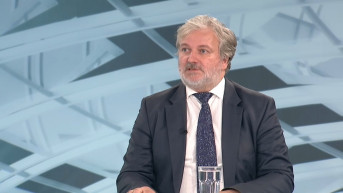
With the visit of Ivica Dacic to Zagreb, at the request of the President of Serbia, Aleksandar Vucic, it seemed that the new regional policy of Serbia was starting, which would be characterized by greater openness and a more dynamic attitude of Serbia towards all regional centers, except to a certain extent towards Pristina, a journalist, Dragan Bisenic, said in the author's text for the "Tanjug" agency.
Bisenic pointed to Dacic's words that Croatia and Serbia "instead of competing in hatred" should compete in building peace and good relations.
"Serbia's new regional policy will be characterized by greater openness and a more dynamic attitude of Serbia towards all regional centers, except to a certain extent towards Pristina. Pristina has been showing its grumpy face for a whole year, although all this time there have been clear efforts by the EU and the US to improve relations between Belgrade and Pristina, while the escalation continues all the time with growing tensions and incidents," Bisenic points out.
He adds that international representatives, the EU, and the US diplomats were also tired of this, and they were pushed to the limit of patience, so they prepared a different approach towards Kosovo.
Under such conditions, Serbia was given the opportunity to devote itself more constructively to the region. That idea is strengthened by the fact that international actors are also coming to Belgrade with new proposals and plans to reshape the regional order in the Western Balkans, in which Serbia should assume, together with others, an even more prominent role in building and preserving regional cooperation and stability.
He points out that there is no doubt that the present with a plan for the future should dominate and that this requires planned and targeted action from both sides, and that the world economic forum in Davos, which starts in four days, will be attended by the leading figures of Serbia and Croatia be an opportunity to take a new, significant step in that direction.
"The visit of the Minister of Foreign Affairs of Serbia, Ivica Dacic, to Zagreb, after seven years, was experienced in some parts of the region as a sudden turn of Serbia, although it is only at first glance. This visit has been worked on for a long time," Bisenic said, reminding that the president of the Social Democratic Party, Milorad Pupovac, practically, even before the spring of last year, intensively worked on the preparation of the visit of the President of Serbia, not only with Belgrade and Zagreb but also with international representatives.
After that, he states, the car went downhill, but it seems that process has now stopped, and he adds that it seems that the new regional policy of Serbia started with the visit of Dacic to Zagreb.
No less important motive for Serbia's new approach, he believes, is the need to align political relations more explicitly with economic relations, which are good, but not reciprocal.
He reminds that Serbian citizens are the second most numerous foreign workers in Croatia - there are about 20,000 of them with permits, and the number of tourists in 2022 has increased by 60 percent compared to 2021, and last summer there were about 130,000 Serbian tourists.
Although the relations with Zagreb could have been much better, Belgrade has not missed them in recent years, sort of say, because of Serbia's almost absolute focus on Kosovo. In that period, Serbia was more strongly oriented toward the US, signed the Washington Agreement, and defined the "Open Balkans" policy, which it considers its authentic contribution to regional cooperation. In the 'southern direction', relations with North Macedonia experienced a strong rise, while Montenegro expects the resolution of the internal crisis.
Hence, he says, the strengthening and support of the "western orientation" are why Dacic took the first steps with a smile, only to "warm up" the relations between the two capitals on the Sava river.
Bisenic believes that he succeeded in this and that the official Zagreb, despite the caution shown, was satisfied with it.
Dacic presented his platform in several political positions and symbolic values.
'The symbolism of these holidays reminds us of timeless and, I hope, shared values - peace, tolerance, and solidarity. I think a lot is expected from this reception today because such an atmosphere has been created in terms of what will follow after that. The best relations between the Republic of Croatia and Serbia are in the best interest of our two people, but also of the entire region', Dacic said and added:
'My arrival represents a strong message about the need to talk and redefine the current relations between Belgrade and Zagreb. We don't think alike on many issues, but we have to talk and agree'.
He added that Serbia was aware that some issues could not be resolved quickly, but that it understood the need to improve relations, thus announcing new steps in that direction.
The evaluations after the visit are better than the expectations that existed before the visit. On Christmas Eve, Croatian Prime Minister Andrej Plenkovic was completely relaxed and satisfied, Croatian Foreign Minister Ivan Grlic Radman, was more cautious, but fundamentally satisfied, while the reactions of the public and the media are mostly positive, with a few ones sticking to stereotypes and patterns established in recent years.
Minority representatives Milorad Pupovac and Tomislav Zigmanov did a lot to create the conditions for this visit.
Zigmanov and Pupovac, before Dacic's arrival, signed the Declaration on Cooperation between the Serbs from Croatia and the Croats from Serbia.
It condemns all forms of hatred towards minorities and "encourages the countries in which they live to, instead of renewing the conflict, finally turn to cooperation" and start solving open issues.
Relations between the Serb and the Croat minorities are defined on the principle of 'joined courts', where it is stated that “every act of threat or aggression towards the minority community in one state endangers the minority community in the other.”
The Croatian Prime Minister was satisfied that he was the representative of the Croats in the Government of Serbia, assessing that the 'Croatian minority in Serbia got a new life'.
Croatian Prime Minister Andrej Plenkovic assessed that the arrival of three Serbian ministers in Zagreb was "obviously a political message and a signal to establish contacts with a higher frequency than in the past".
He said that there were many topics that burdened the relations between the two countries, but he had also seen the perspective, assessing that "dialogue must continue". "It is important to establish contacts, and then for a structured dialogue," Plenkovic said.
The Croatian Minister of Foreign Affairs proudly spoke of Croatia's achievements in foreign policy and strategic goals and asked a rhetorical question who else wanted the stability of the Western Balkans more than Croatia; he stated and pointed out that Croatia now had the opportunity to practically demonstrate this desire.
The Croatian Minister of Foreign Affairs, practically, offered a new openness to the European perspective of Serbia, so in this sense, the inclusion of the Minister for European Integration, Tanja Miscevic in this delegation was quite appropriate.
It must be said, Bisenic points out, that the area of European integration provides really wide spaces for cooperation between the two countries and enables Croatia to demonstrate some natural advantages for closer relations with Serbia.



0 comments