
How should one interpret the message from the US that Kurti is no longer their partner?
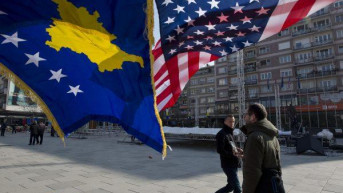
In a series of condemnations of the actions of the authorities in Pristina due to the violent unilateral actions in the north of Kosovo and the refusal to agree to the demands of the US and the EU to de-escalate the situation, the clear assertion of the American ambassador to Serbia, Christopher Hill, was heard that the question was whether they could still count on the Kosovo Prime Minister Albin Kurti, adding that he did not remember such deep divisions between Pristina and Washington. The daily dissatisfaction of the international community with Kurti's policy, including messages from US officials that he is no longer their partner, according to Kosovo Online interlocutors, should be interpreted as "the last straw", but they also add that the US and Pristina's other allies are in a dilemma as to how to " punish" the disobedient Kosovo Prime Minister, without endangering their "child" - independent Kosovo.
For now, Kurti not only does not give up his "tough" attitude, but in the past days, he continued to escalate the situation in the north. Unfounded arrests of the Serbs continue, with detention measures being determined without evidence, intimidation, and even beatings of minor children.
Kosovo Special Forces are still in the municipal buildings they stormed on May 26, and Kurti does not give up his insistence that the illegitimate Albanian mayors who were elected in elections where the turnout was only about 3.5 percent are performing their functions from these buildings, and which the Serbs boycotted.
Diplomat Zoran Milivojevic says for Kosovo Online that for a long time, there has been a series of statements that show that in Washington they are not satisfied with the way and measures that Kurti is taking as Prime Minister, as well as with the policy that he is implementing, because, as he explains, that policy does not lead to progress in dialogue and political solutions for which the US stands for.

"The last escalation was a bit of a 'last straw' and we witnessed the harshest reactions from Washington. Another measure followed - the exclusion of the Kosovo Security Forces from the maneuvers that took place on the territory of Kosovo and Metohija under the guise of NATO.
There were threats, and there were various announcements of sanctions and measures," Milivojevic said.
However, he points out, none of that has come to fruition.
He assesses that a serious dilemma has opened up in the American administration - how to act at this moment.
On the one hand, the diplomat explains, Kurti's policy, the measures he is taking and all that is happening, which leads to further escalation, does not correspond to American interests at the moment and calls into question the position of America and its policy not only in relation to Pristina, but in relation to the entire region.
"Everything they said raised the stakes, conditionally speaking, and opened the question of the credibility of American policy," Milivojevic points out.
On the other hand, he says, America's position is that, when it comes to Kosovo, it is a sovereign and independent state that functions and has its own political system and that takes measures of a different nature within that political system.
"So any interference and intervention by America that would call that into question puts it in a defensive position to confirm Kosovo's statehood," he points out.
According to him, the region is a witness to that dilemma and it is expected which side Washington will prevail on.
Milivojevic believes that Kurti has definitely become someone whom American politics does not support at the moment and that their only problem is what measures to take toward him.
"Otherwise, it is quite certain that Kurti is not counted on in the medium and long term. Personally, I think that the Americans, together with the Europeans, have raised the level of engagement towards the Albanian opposition parties and are looking for a way to reduce the majority that Kurti has in the government. So, how can they call into question the stability and position of Kurti's government and use 'democratic' means to bring about a change of the government in Pristina and bring about a structure that would suit their interests," the diplomat emphasized.
He assesses that the US will certainly not use force, but that they have the option of giving KFOR the "green light" and for it to start exercising its mandate, protecting the Serbs in Kosovo and using all the means at their disposal to prevent intervention, behavior and finally the presence of the Kosovo Police.
This is something that could in some way prevent further escalation and that the Americans could do without calling into question what is in their strategic interest - Kosovo as a state, the diplomat concludes.
However, he also indicates that increasing the involvement of KFOR is also problematic for the Americans because then they return the issue of the Resolution 1244 of the UN Security Council to the field and return the issue of Kosovo to a jurisdiction where they do not control things.
Milivojevic explains that it does not suit the Americans and Europeans to return the matter to the UN level, because then, as he says, they are not the arbiters, and "then we return to the current of international law, which they would not want".
"They would like to avoid that and solve the matter now in this process that they initiated, but they need someone who will be much more flexible and who will make key concessions to a political position such as the formation of the CSM and the continuation of the normalization process. However, the problem is that Kurti in his ideology does not correspond to such a single policy and such a single approach. His ideological position is completely different, Greater Albanian, nationalist, and he does not fit into those frameworks, and I think that is now the key to what the Americans are working on - to find a replacement for Kurti, but to carry out that replacement according to democratic rules and principles," Milivojevic concludes.
Analyst Dejan S. Miletic from the Center for the Study of Globalization expressed the hope that the messages the US sent to Albin Kurti meant the end of tolerance and "turning a blind eye" to all that Pristina was doing to the Serbian community in Kosovo.
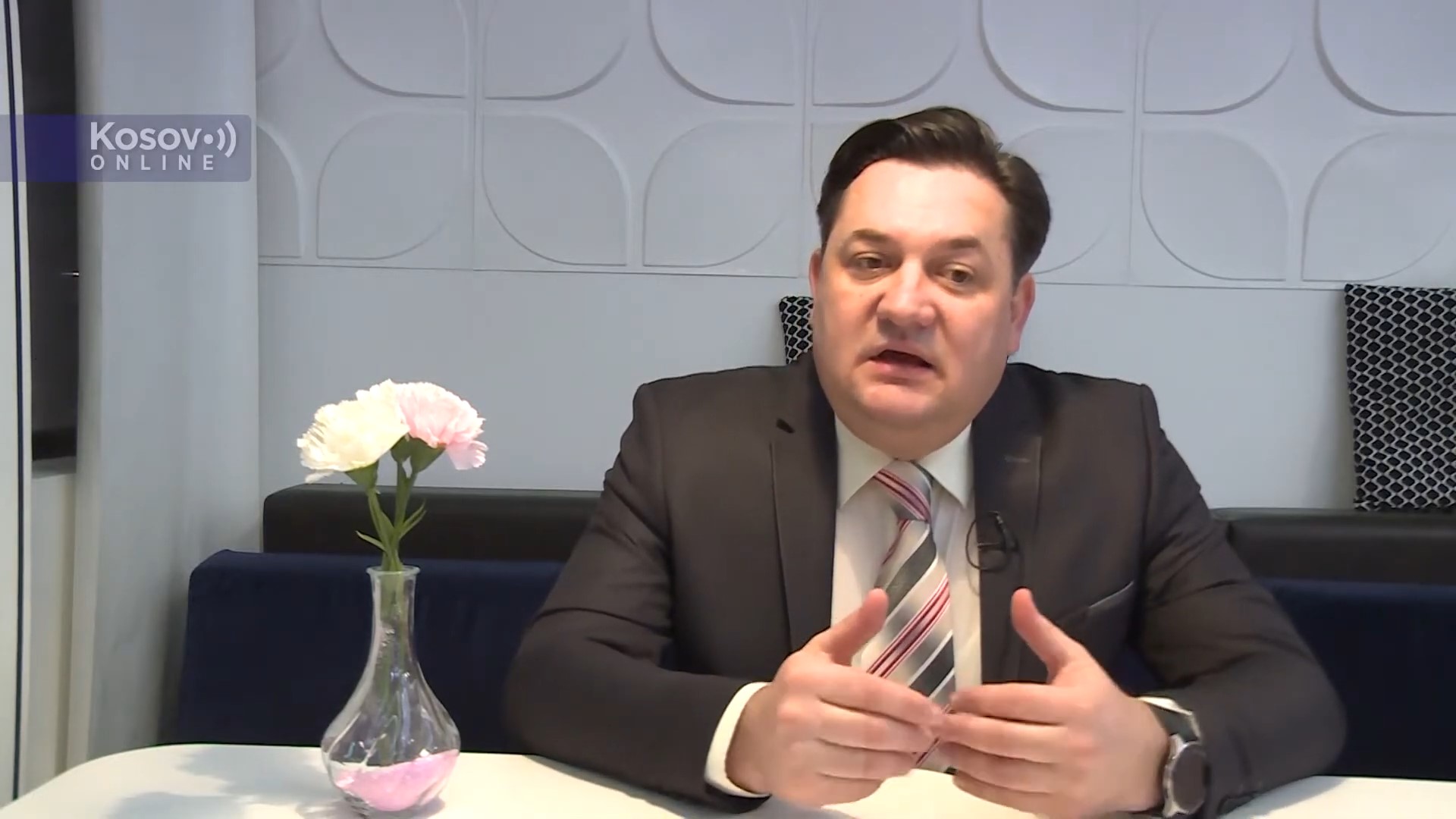
He believes, bearing in mind the intense harassment and arrests of the Serbs, that the time has come when concrete actions are expected, otherwise, as he says, all the talk about Kurti no longer being a partner of the US "falls down the drain".
"We are one step away from the uprising of the Serbs in the area of Kosovo and Metohija, and the only hope that this will not happen and that the situation in the north of Kosovo will not escalate at this moment is an adequate intervention by the US. To move more from words to action. I hope that this message means that there is no more room for tolerance and no postponement of concrete measures that would throw Kurti off the saddle and simply make his image and his way of thinking and acting towards the Serbs meaningless," Miletic told Kosovo Online.
The US, he says, must clearly show that they understand that Kurti's behavior is a "path to hopelessness" and a sharp conflict, which could have consequences for the security not only of the region but also of Europe.
Everything else, he points out, is support for Kurti and represents a direct danger of escalation, the scale of which cannot even be assumed at the moment.
"The first punitive steps are for Kurti's regime to be overthrown by a serious political initiative, and there is no doubt that the US has a decisive influence on the internal political scene of Pristina. This violent group of people who are trying to drag the whole world into a conflict against Serbia by escalating the conflict should be disempowered. That policy must not be legitimized and decisive action must be taken to change the political structure in Kosovo when it comes to Albanians," Miletic said.
However, he adds, if at this moment the US does not have the will or strength to do something radical, then they must at least change their support, both in the military and economic sense, towards the people who represent the government in Pristina.
The analyst warns that there must be no more postponement of sanctions against Kurti, otherwise, the situation on the ground will not stabilize.
"Every day of delay is a wind at Kurti's back, and that's why the talk that they will do something and that he is not their partner falls flat because concrete actions are important now, because only actions can stabilize this situation," he pointed out.
Miletic, commenting on the arrest of athlete Milun Milenkovic in Kosovska Mitrovica and members of ROSU targeting passers-by, reiterates that escalation is inevitable if the international community continues to tolerate "long guns in the north of Kosovo".
He points out that the only serious solution to calm tensions in the north is the withdrawal of Kosovo Forces and Police.
"It's just that right now the government has to be influenced to pull the long guns because otherwise, I don't see how it is possible for the Serbs to react in any way except to react to such a brutal force by defending their bare lives. So we are in a really complex situation where a lot of words have been said, but the actions are not seen behind them. I think that the withdrawal of the Albanian Special Forces, as well as the authorities from Pristina, can be an adequate response to this situation and that is a prerequisite for discussing anything further," Miletic concluded.

0 comments