
EU Single Market: How much can the Western Balkans gain, and what is holding it back?
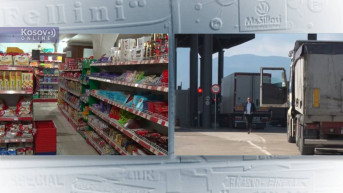
The International Monetary Fund’s (IMF) estimate that deeper economic integration of the Western Balkan countries with the European Union could increase their gross domestic product (GDP) by eight to 15 percent in the long term raises questions about the opportunities and obstacles on the path toward the European single market. Kosovo Online’s interlocutors agree that closer economic integration could bring significant benefits to the region, while pointing to the need to implement reforms and remove regulatory and trade barriers.
Written by: Darko Savanovic
Shortly after the IMF published its estimate, reports emerged that the European Union planned to offer candidate countries gradual integration into the single market, as well as access to European programs and funds.
According to a draft plan seen by the Brussels-based outlet Politico, candidate countries, some of which have been waiting for membership for decades, would be offered an unprecedented degree of gradual integration into the single market, including frictionless trade and access to research programs while their EU accession processes remain under way.
The plan, whose preparation is being overseen by Alexandre Adam, one of European Commission President Ursula von der Leyen’s senior advisers and a former adviser to French President Emmanuel Macron, is expected to significantly change the EU’s approach toward countries in its neighborhood.
At present, nearly all the economic benefits of closer cooperation are reserved for member states, while no new country has joined the Union since 2013.
Under the Commission’s plan, the economic benefits offered to candidate countries would depend on their support for the EU’s foreign policy objectives, while access to the single market would also depend on whether those countries share key technologies with hostile states and trade competitors.
Access to the single market would boost Serbia’s economy and investment
Bojan Stanic of the Serbian Chamber of Commerce (SCC) told Kosovo Online that access to the European single market would bring Serbia greater economic activity and long-term GDP stability, while also contributing to faster alignment with EU legislation and policies.
“Membership in the European single market is our objective. I cannot say that it is an alternative to the European Union, but simply something that would contribute to faster fulfillment of all those obligations in terms of harmonizing legislation, on the one hand, and aligning with EU policies, ultimately leading to full membership,” said the Assistant Director of the SCC Sector for Strategic Analysis, Services and Internationalization.
Stanic stressed that economic integration with the European Union would also affect Serbia’s credit rating and make the country a more reliable investment destination, resulting in greater economic activity and capital mobility.
“If there were some tangible progress in the integration process, that would certainly increase investors’ confidence in investing in this region, which would translate into better economic prospects and, ultimately, into political alignment arising from those economic opportunities,” Stanic said.
Asked how this would affect gross domestic product, Stanic said that Serbia currently had a good GDP growth rate, but that under such circumstances growth rates would become more stable over the long term, accelerating the development of both the country and the region and making a significant contribution to sustainability.
According to him, various restrictions currently exist, including non-tariff barriers, quotas and restrictions affecting hauliers, which harm the Serbian economy and make the European market increasingly difficult to access.
Economic integration could increase Kosovo’s GDP by more than 15 percent
President of the Kosovo Business Alliance Agim Shahini told Kosovo Online that economic integration with the European Union could advance even before eventual full membership and that Kosovo’s GDP could increase by more than 15 percent.
According to him, the Kosovo government should adopt legislation aligned with European integration requirements and remove all barriers that exist in relations with Balkan and European countries.
“We can increase our gross domestic product by more than 15 percent if we integrate into the European market,” the President of the Kosovo Business Alliance said.
He stressed that all Western Balkan countries should view the European Union as a new opportunity because integration would give them access to a market of more than 550 million consumers.
Shahini identified transport carnets and obtaining certificates from the Food and Veterinary Agency as obstacles to Kosovo businesses accessing the European Union market.
“The other, even greater problem is that Kosovo producers, and Balkan producers in general, need to understand that goods intended for the European Union must be strictly controlled and comply with European standards, because consumers and governments there do not accept every type of product that we may find in our shops here,” Kosovo Business Alliance President Agim Shahini said.
Reforms and integration bring benefits even before EU membership
Skopje-based economic development and green finance expert Olimpija Hristova Zaevska does not regard the estimate that deeper integration with the EU could increase Western Balkan GDP by as much as 15 percent as something new, but rather as a reminder that economic integration and reforms are extremely important even before EU accession and can bring benefits to the population.
Full integration, she told Kosovo Online, would undoubtedly bring significantly greater benefits.
“It is an IMF working paper, and this figure of 15 percent sounds quite encouraging. Of course, if you read it, you see that there is a range of, let us say, seven to 15 percent, depending on a country’s progress. What is important to say about these estimates is that this is achievable,” Hristova Zaevska said.
According to her, economic integration with the European Union can move forward even before eventual full membership thanks to the reform agenda under the Growth Plan for the Western Balkans.
“Yes, that is precisely the reform agenda that is taking place now. It has provided a certain impetus. The main assumption is that there are institutions clearly moving toward the EU and working seriously on reforms, because institutional capacity is the foundation for exports,” Hristova Zaevska said.
Asked about the biggest obstacles to accessing the European Union market, she cited transport, while stressing that further work was also needed to bring production quality closer to EU standards.
“If you lose enormous amounts of time waiting at borders, that affects your GDP, and that is where we are stagnating. With these latest passport controls and the EU system, transport is genuinely being affected, and I know that the chambers of commerce are working very actively with the EU to find some kind of solution,” Olimpija Hristova Zaevska said.
Removing barriers would increase productivity and regional GDP
Enriko Ceko, Head of Business Administration and Information Technology at the Canadian Institute of Technology in Tirana, also agrees that economic growth in the Western Balkan countries could increase by 10 to 15 percent if the EU reduced barriers.
Speaking to Kosovo Online, Ceko said that removing non-trade barriers would greatly contribute to higher GDP because it would increase both the volume of trade and productivity, as countries in the region would produce more.
“Increasing productivity will raise national GDP, but also the combined GDP of all the countries. We are talking about countries with a total population of 17 to 18 million. Taken together, this is a consolidated, stable territorial, political and economic area with many natural resources that are valuable to the European Union,” Ceko said.
He assessed that, even if trade and non-trade barriers were eliminated, one further issue would remain: how capable Europe was of absorbing goods from the region and whether it was prepared to finance infrastructure projects in the Western Balkans.
“One problem will remain. If the Western Balkans increase their level of trade, how capable is Europe of absorbing products and services from the region? How prepared is Europe to finance infrastructure projects—for railways, roads, telecommunications systems, digitalization and wireless technology networks? In other words, how prepared is the EU to help the Western Balkan countries, because this is a supply chain that requires these investments, while the countries of the region do not have the resources to finance them from their state budgets,” Ceko said.



0 comments