
Who among the Serbs in the north bothers Albin Kurti the most and why?
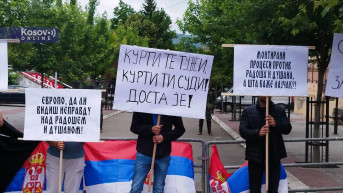
The number of Serbs from the north, in Kosovo prisons is increasing, and according to an interviewee of Kosovo Online, the biggest thorn in the side of Prime Minister Albin Kurti are influential Serbs in any area, political representatives of the Serbian community, i.e. members of the Serb List, but also the Serbs in general. As they point out, the Kosovo Prime Minister does not respect the rights of the Serbian community.
Only in the last twenty days, Dusan Obrenovic and Rados Petrovic were arrested in the north in Zvecan, who, despite the obvious evidence of their innocence, are still in prison. Milun Milenkovic Lune, a prominent kickboxer and trainer of the kickboxing club "Kosovska Mitrovica", was also detained, and yesterday, Nemanja Vlaskovic from Leposavic.
Analyst Ljubomir Stanojkovic tells Kosovo Online that for Kurti, Serbia and its leaders will always be the enemies and that he wants to convince the Serbs in Kosovo that they are "citizens of Kosovo" and that their mistreatment will stop when they "understand".
"Kosovo is still not a complete state entity, on the international level it is not a member of the United Nations, Kosovo is not recognized by Russia and China, nor is it recognized by the five members of the European Union. Internally, a part of the population does not see the central authority of Kosovo as their own future," Stanojkovic says.
As he adds, Kurti is aware of this, so in his desire to prove that Kosovo is a "finished story" with the use of force, he wants to prove to the citizens that the brutality he uses in his actions is "in their interest".

"Mr. Kurti knows all this well, and so did all his predecessors as Prime Ministers of Kosovo. Currently, Kurti is trying to fight these problems decisively, so that sometimes these moves take on a brutal character. He has laws, the Constitution, and the police, he uses all of them to prove that Kosovo is a finished state story, that for him and his government, all citizens are equal, and that the harshness and brutality applied to them is in their interest," Stanojkovic added.
He pointed out that this referred to the Serbs, primarily to those in Serbian municipalities in the north of Kosovo.
"Unfortunately, this is not sarcasm, this is a great truth, that the harsh use of repression is being shown "for their own good". Of course, this refers to the Serbs, and above all the Serbs from the north of Kosovo," Stanojkovic believes.
He says that the support for the Serb List is very large.
"The Serbs from Kosovo participated in the last elections for the Kosovo Parliament and the turnout percentage was very high. All ten guaranteed seats were won by the Serb List. It is the only real political representative of the Serbs in Kosovo. It consults with Belgrade for its proposals and decisions of fateful importance for the Serbian community. Belgrade, on the other hand, provides not only advisory but also material support," Stanojkovic emphasizes.
He adds that it particularly bothers Kurti, who, he says, wants to convince the Serbs that they are "citizens of Kosovo" and that the mistreatment of them will stop when they realize that.
"It bothers Kurti a lot, he publicly calls on the Serbs, their representatives, to move away from Belgrade, that Pristina is the one that takes care of them, that thinks well of them, and the sooner they realize that, the sooner the use of the repressive apparatus against them will stop. He views the Serb List as a political representative of the Serbs negatively; it does not respect them, makes decisions, and makes appointments without consulting them. He does all this according to some of his own criteria, regardless of the fact that these appointed persons do not have any political support in the Serbian community, again Kurti continues to publicly announce that this is the method of the most democratic system in Europe," Stanojkovic pointed out.
According to him, Kurti does not respect the rights of the Serbs, and for him, Serbia and its leaders will always be enemies, stating that he will certainly never change that attitude.
"In the end, however, I cannot say with certainty that Kurti hates the Serbs, but that he does not respect, and even does not want to hear the indigenous views of the Serbs that is for sure. And it will not help him much if all his energy in the relationship with the Serbs is spent on looking for so-called loyal Serbs. It is also certain that Kurti hates Serbia and its leaders. For him, Serbia is an eternal enemy, an occupier. He will never change that attitude in ordinary life, let alone in political life," Stanojkovic concluded.
Senior researcher of the NGO Aktiv, Igor Markovic, believes that Kurti has practically a problem with all the Serbs in the north, without individual exceptions.
As he says, Kurti, due to the failure to fulfill the promises made during the election campaign, reached for a method that certainly "passes" with Albanians, that is, he focused all his energy on the integration of the Serbs from the north into the Kosovo legal framework.
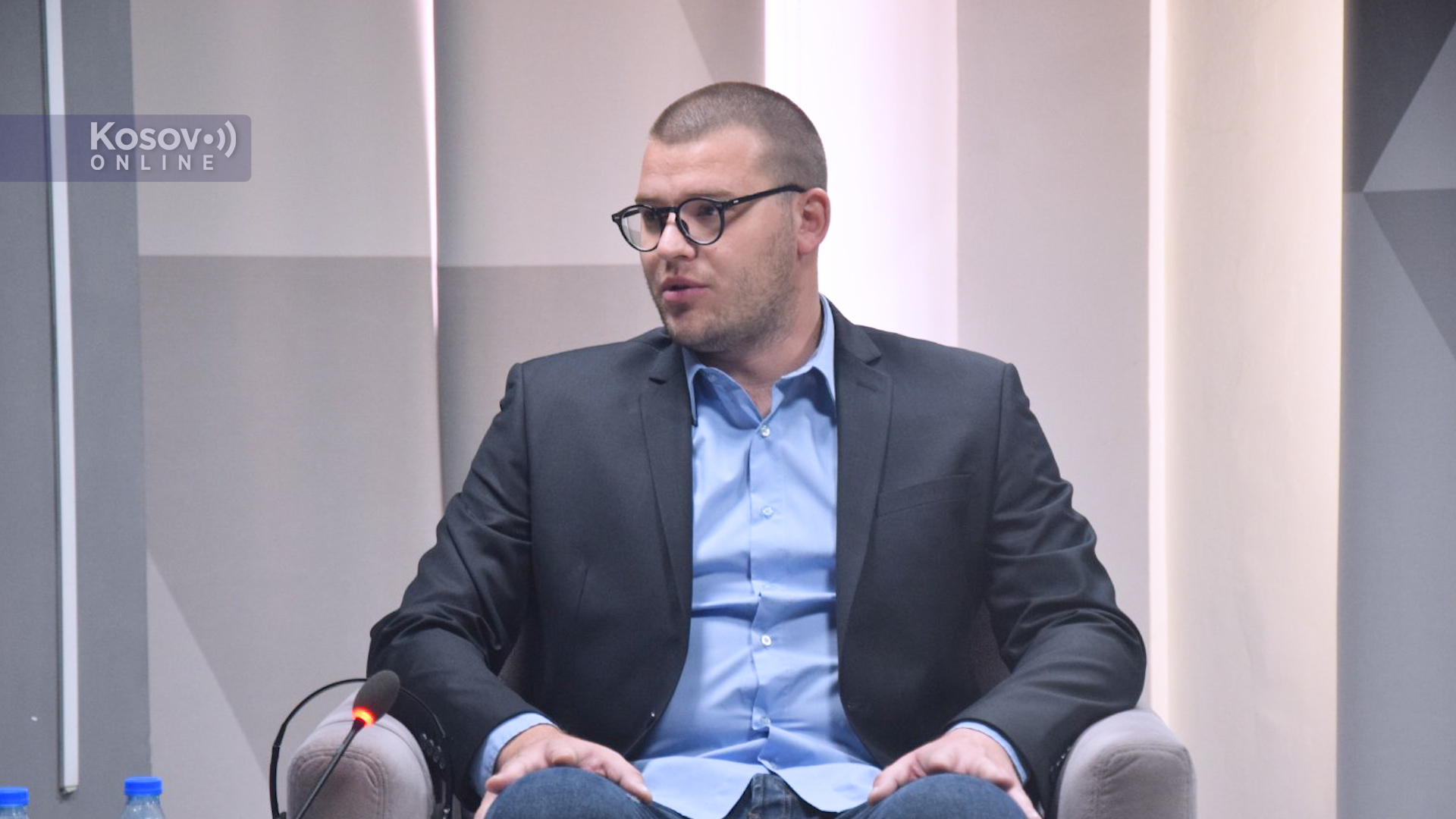
"Ever since the first mandate of the government led by Albin Kurti, it is clear that he and the Self-Determination Movement were not really ready to deal with the key problems that concern the citizens of Kosovo. He based his election campaign on promises to fight corruption, and the poor state of healthcare, and that he will focus on Euro-Atlantic integration. In the absence of success in these fields, he turned to the strategy of raising the right-wing electorate, by focusing all his efforts on the so-called completion of the process of integration of the Serbs, especially those in the north of Kosovo, into Kosovo's legal framework," Markovic said.
As he stated, Kurti had shown since coming to power that he did not want communication with the Serbs.
"The way he did it from the beginning was a clear sign that he originally did not want to approach communication with the Kosovo Serb community peacefully. The refusal to form the CSM is only one of the side effects of such an approach, which culminated in the sending and violent behavior of Kosovo's special units of the police in the north," Markovic said.
He pointed out that from all this it could be concluded that Kurti's problem was all the Serbs in Kosovo.
"From there it follows that Kurti has practically a problem with all the Serbs in the north, without individual exceptions," Markovic concluded.



0 comments