
Local elections in Albania: Harsh rhetoric of political leaders, vulgar posters, and bickering opposition

In less than two weeks, on May 14, local elections are held in Albania. 48 political parties with 23,788 candidates entered the pre-election race, which officially began on April 14, of which 144 are running for the position of mayor, and 15 of them are women.
The biggest rivals in the 61 municipalities are the ruling Socialist Party of Edi Rama and the "Together We Win" coalition, which consists of the faction of the Democratic Party, former prime minister and president Sali Berisha, and the Freedom Party, until recently the president of Albania, Ilir Meta. The "official" Democratic Party headed by Enkelejd Alibeaj, which has candidates in only 14 municipalities, is also participating in the elections.
The Socialist Party, which is currently in power in 59 municipalities in Albania, because the opposition boycotted the previous local elections in 2019, is apparently satisfied with the results achieved by the majority of mayors, 45 of them ran again for that position.
That the political situation is tense before the elections and that a lot of attention is paid to them is typical for Albania, says the local analyst and lawyer Redi Ramaj, who adds that this time the tension was "aided" by the division in the largest opposition party in the country, but also by the rhetoric parties use in the election campaign.
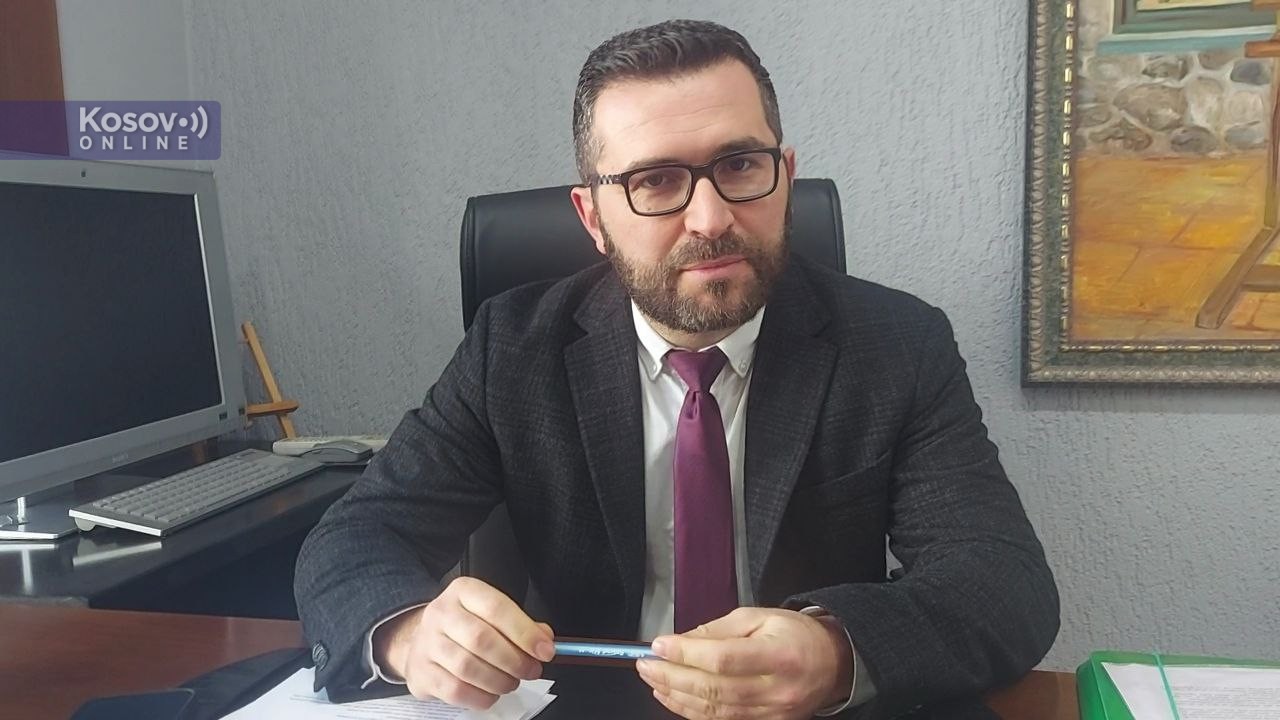
"The aggressive political rhetoric is not only between the opposition and the majority but also within the opposition itself. Both factions of the Democratic Party say they represent the right-wing democratic electorate, they fight for every vote, accusing each other of betrayal. I will remind you that the Central Election Commission of Albania did not register the faction which Berisha is running in the elections as the official Democratic Party, but the one led by Alibeaj, which received the logo and seal of the party, although Lulzim Basha, Berisha's successor, is still officially the president of the Democratic Party in the court register," Ramaj says for Kosovo Online.
Party competition for local elections in Albania takes place in the electronic media, at rallies, social networks, but also through posters and billboards.
Although Albania's 2017 election law, due to austerity, stipulates that posters and billboards can only be placed within five meters of the headquarters of the parties' election headquarters, they flooded the capital during the campaign. The posters of the two parties "sprouted" around the city like mushrooms after the rain.
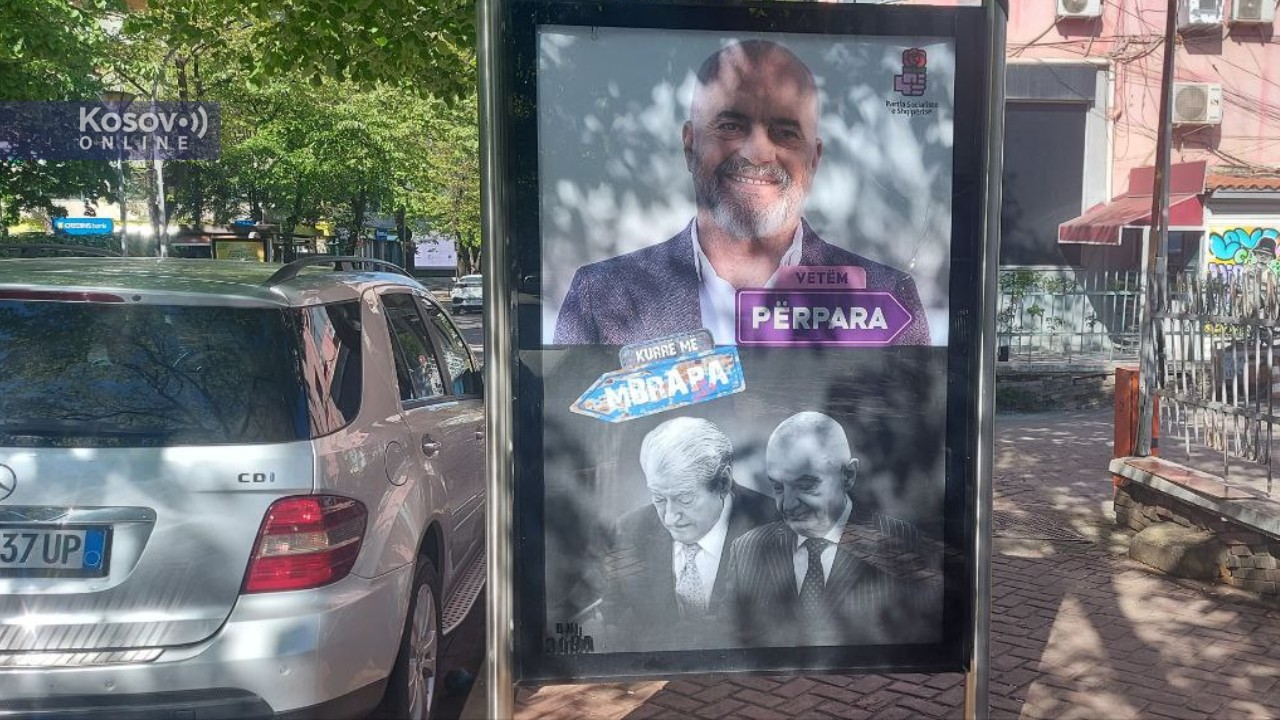
The Socialist Party put up posters and billboards not with photos of candidates for mayors and councilors, but with a picture of Edi Rama and the inscription "Go ahead", below which there is a picture of Berisha and Meta with the message "Never go back".
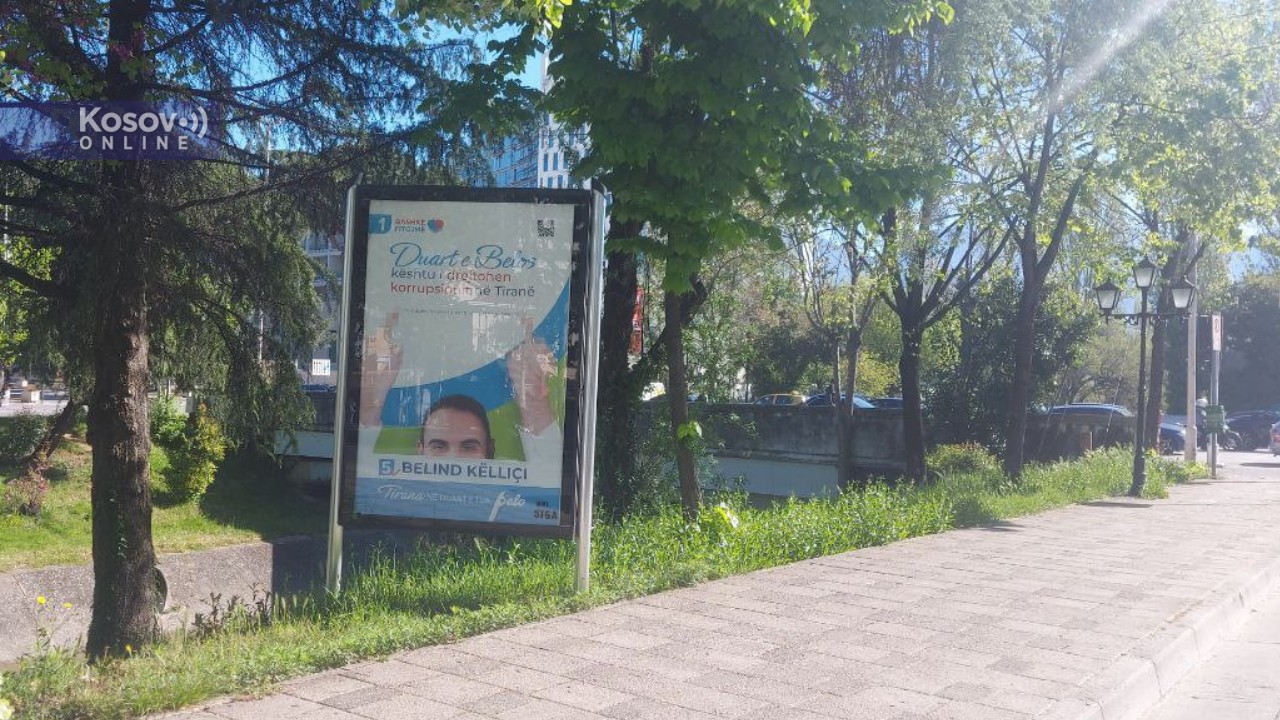
The "Together We Win" coalition responded to the Socialist Party with a poster with a photo of their candidate for mayor of Tirana, Belind Kellici, with his hands raised and pointing the middle finger on both hands.
The poster caused stormy reactions, and debate between parties, but also comments from civil society and religious communities. The "Mosques of Tirana" were among the first to announce that Kellici's action was unacceptable, irresponsible, and unprecedented and that such a poster could negatively affect the city's image.
Kellici subsequently tried to explain and justify his actions, stressing that he was glad that the poster caused so many reactions and that the citizens "agreed to point the finger against the corruption of the city of Tirana".
"Corruption is the gangrene of our society and the fight against this phenomenon is at the top of my agenda," Kellici wrote on Facebook and explained that "his middle finger is aimed at those who misuse public state funds."
In order to help their candidates in the campaign, party leaders are also active, it seems, more than the candidates for councilors and mayors themselves. The President of the Socialist Party and the Prime Minister of Albania, Edi Rama, holds rallies throughout the country. Only ladies were invited to the meeting in Durres and Elbasan. All government members are involved in the party's campaign.
"What else characterizes this election campaign is that all attention is focused on big cities such as Tirana, Elbasan, and Durres. Polls show that the Socialist Party and its candidates have an advantage in most municipalities, the 'Together We Win' coalition is behind, and the official Democratic Party is in third place with a significant margin. The municipalities in which the 'Together We Win' coalition can triumph on May 14 are in the north, Shkoder, Tropoje, Kukes, Lezhe, and Has, while in the south the situation with the opposition candidates seems more difficult. Although The Socialist Party has been in power for almost 10 years, it still has strong positions at the local level," Ramaj concluded.
Due to the problems surrounding the financing of political parties, which have been following the elections in Albania for years, the Central Election Commission has decided to strengthen monitoring during the election campaign by creating an electronic platform through which it will collect reports on party financing.
However, despite this, civil society organizations expressed concern about the non-transparency of campaign financing, as well as the extensive use of state resources.
For local elections in Albania, 3,650,550 citizens have the right to vote, of which 122,545 will be able to exercise that right at 5,211 polling stations. The elections will be monitored by 324 international OSCE/ODIHR observers, and the head of the mission is Audrey Glover, who has held this position several times in Albania.


comments