
The picture of Kosovo after 15 years - unemployment, poverty, violation of human rights, the UN is far away
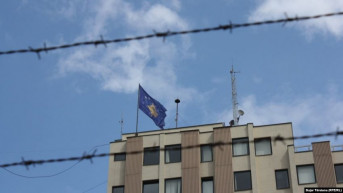
Fifteen years since the Declaration of Independence was unilaterally adopted in Pristina, Kosovo is still far from the set political goal of becoming a member of the United Nations. About 17 percent of the population lives in poverty, and unemployment is the highest in the Western Balkans.
According to data from Belgrade, out of 193 member states of the United Nations, 106 do not recognize Kosovo's independence, 84 recognize it, and three do not have a clear position. It is not recognized by five members of the European Union - Greece, Cyprus, Slovakia, Romania, and Spain. The last country to recognize Kosovo was Israel, in September 2020, and the government in Pristina is often criticized by the opposition for not securing any new recognition in the meantime. From 2017 until today, 27 countries have withdrawn their decisions on the recognition of Kosovo.
Kosovo is not a member of the Council of Europe, the Organization for Security and Cooperation in Europe (OSCE), Interpol, the United Nations Educational, Scientific and Cultural Organization (UNESCO), the World Trade Organization, the World Health Organization... It is a member of the International Monetary Fund, the European Bank for reconstruction and development, World Customs Organization, the CEFTA, and the Olympic Committee.
It is also a member of the World Bank, which announced a few days ago that it led the Western Balkans in terms of unemployment, with as many as 31 percent of the unemployed out of 1,739,825 inhabitants. According to the data of the Agency for Statistics of Kosovo, in 2021 the average gross wages in Kosovo amounted to 484 euros, and the average annual inflation rate for 2022, according to the data of the same Agency, was 11.6 percent.
Young people, nurses, and doctors are leaving Kosovo in such numbers that there is even a fear that the health system will run out of doctors in the next five years.
Contrary to the language of numbers, Kosovo officials say that the economy of Kosovo is growing rapidly, that its democracy is getting stronger, and that no one in the European Union gives minorities more rights than Kosovo.
"True reality is being covered up"
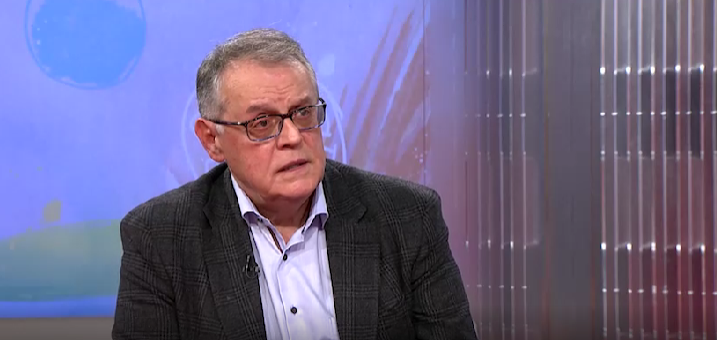
The former president of the Coordination Center for Kosovo and Metohija, Nebojsa Covic, tells Kosovo Online that the reality on the territory of Kosovo and Metohija is being covered up. He enumerates: there is no work, there is no economy, young people do not see a perspective regardless of the ethnic community they are from, and organized crime is flourishing led by former commanders of the KLA.
As he indicates, the violation of the rights of non-Albanian communities and hate crimes from 2008 to today have escalated to a degree that would make European leaders of some other era, when there was more personal integrity in politics, ashamed.
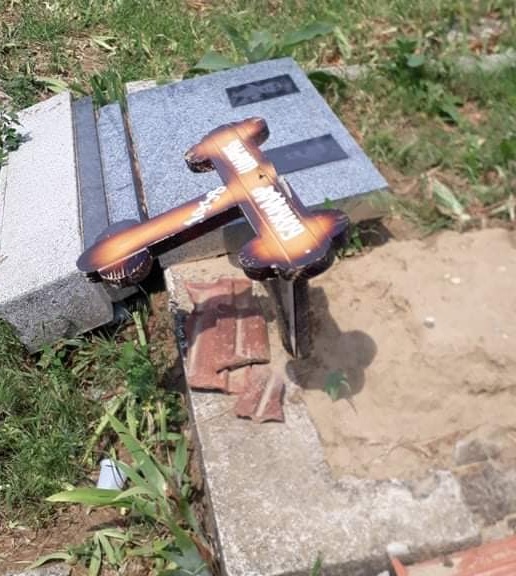
The "Independent Kosovo" was entered with more than 40,000 unresolved cases of usurped and damaged Serbian property, and that number has drastically increased in the last 15 years in the ethnically biased justice system. The return of the displaced no longer exists even at the level of statistical error. Those who wish to regain possession of their property are arbitrarily arrested for alleged war crimes based on false witnesses in order to dissuade them from intending to return their property. Serbian cemeteries are being destroyed, monasteries and other cultural and religious monuments are constantly exposed to attacks and vandalism, and even those rights of the Serbian community that are provided for by the legislative framework of the temporary self-governing bodies in Kosovo are flagrantly violated daily. Let's just take the people of Decani and the return of their property as an example," Covic says.
On the subject of human rights in Kosovo, Covic says that the data of international organizations that deal with human rights are practically unusable, because, he believes, they are part of the American propaganda narrative.
"If you are naive enough to believe their reports, you will see that the so-called Kosovo is flowing with milk and honey for non-Albanian communities; that you can count hate crimes on the fingers of one hand, and that is nevertheless in the north of Kosovo; that the rule of law flourishes more than, say, in Sweden. In the OSCE reports for 2011 and 2012, for example, the reports of the Kosovo Police Service are reported which deliberately do not classify the ethnicity of the victims so there is no data on hate crimes. This is how, on the occasion of this year's attacks on Serbian children, both the police and Pristina politicians deliberately avoided saying that the attacked children were Serbs and that they were attacked by Albanian extremists. Despite these matchmaking approaches, the OSCE in the period 2013-2019 registered 2,228 hate crimes directed against the Kosmet Serbs and their property, which means 380 hate attacks against the Serbs per year," Covic says.
He adds that according to the statistics of the Office for Kosovo and Metohija for the period from 2021 to the first months of 2023, 297 attacks on the Serbs were registered, but he points out that no one should be fooled by the slightly lower number of attacks in this period compared to 2013-2019 because these are serious incidents aimed at completing the process of ethnic cleansing.
"Never further from rounding up its statehood"
"All this speaks more about the hypocrisy of the mentors of the Kosovo state project than about the maturity or immaturity of Pristina politicians, including Albin Kurti. The so-called Kosovo has never been further from completing its statehood than it is now. All those who think that, for example, threats about the introduction of visas will force the Serbs to renounce their existence and to give them on a plate what they have failed to seize by force - do not know us or our history," Covic said.
He notes that 15 years ago Pristina politicians believed that only the sky had been the limit and that this story had been over forever.
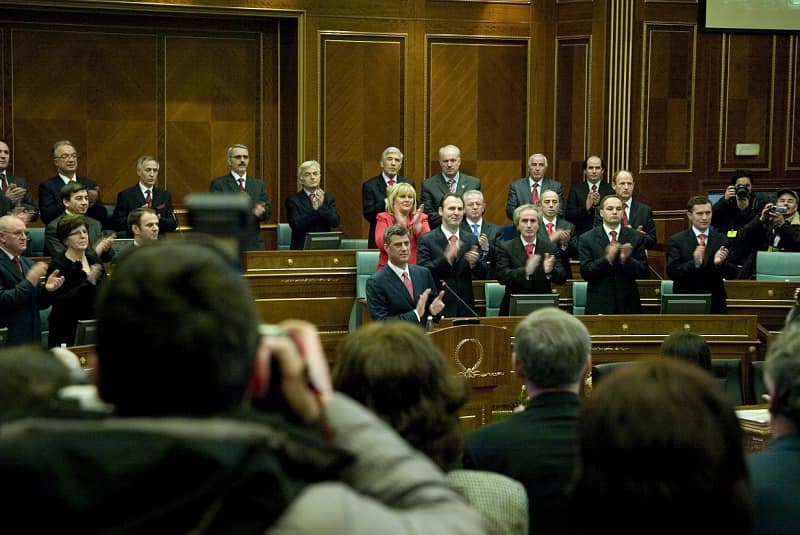
"Exactly 15 years ago, the collective West, led by the US and other Quint countries, violating all internationally binding legal documents, including the United Nations Charter and the Security Council Resolution 1244, in complicity with the Albanian political structures in Kosovo, made another attempt at legal bullying by actively sponsoring and encouraging the self-proclamation of the so-called independence of Kosovo. In that victorious euphoria, that simulation of the state, that cuckoo's egg, on the territory of the sovereign member of the UN, Serbia, was immediately embraced and recognized by the US and its allies, as well as several countries whose recognition was the result of brutal pressure, threats and blackmail by Washington officials. At that moment, intoxicated by this success, both Pristina politicians and their Western mentors believed that only the sky was the limit, that this story was over forever, and that no one could oppose the force and the fake reality that was created and is being created by America." Covic says.
As he assesses, a lot has changed from 2008 to today, and the arrogant violation of fundamental international norms exploded in the face of the collective West in February 2022 in the East of Europe.
"The events of the past 12 months have laid bare the way America and its allies achieve their goals. That method was very directly summarized in 2019 by the then US Secretary of State Pompeo in a presentation to students. He said: "we lie, we cheat, we steal, in order to reach the goal". Thus, an internationally legally binding document such as the UN Security Council Resolution 1244, the Dayton Agreement, or the Minsk Agreement is signed in order to deceive the other party, and then it is actively disavowed and violated in order to achieve some completely different goals. This is exactly what happened in the Republic of Kosovo from 1999 to 2008, where the collective West consciously undermined both the Kumanovo Agreement and Resolution 1244 and ignored all the facts about the situation on the ground, and created its version of a quasi-state project, buying time with an avalanche of new plans and documents that allegedly supposed to ensure the fulfillment of the standards prescribed by international law without any intention to actually implement these plans," Covic concludes.
comments