
Pristina and Belgrade are closer to elections than major decisions in dialogue
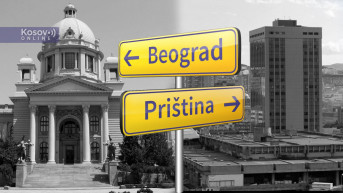
The Franco-German plan for Kosovo caused a heated debate among political actors in both Belgrade and Pristina. And while the parties in Serbia are divided on whether they should accept the discussion about it, in Pristina "lances are broken" over the fate of the Community of Serb-majority Municipalities.
The opposition in Pristina is almost unanimous in its condemnation of Prime Minister Albin Kurti, who, according to them, was slowly softening his hard stance on the formation of the Community of Serb-majority Municipalities, under pressure from the West, although he was setting certain conditions to fulfill what had been agreed upon 10 years ago.
Until now, Kurti has successfully resisted the obligation to allow the Serbs in Kosovo to form a Community with executive powers in certain areas, but the statement of the US special representative Gabriel Escobar that the CSM would be formed, with or without the will of Kurti, showed that the pressure of the West on Pristina was strengthening, and it also opened the question of whether there would be extraordinary elections.
"It can be, it doesn't have"
Meanwhile, a session of the Serbian Assembly was held in Belgrade, where the right-wing parties, as expected, demanded that the proposal be rejected completely, while the pro-European part of the opposition is for talks, through which, perhaps, the positions of Serbia would be improved.
However, after that session, due to the insufficient support of the Socialist Party of Serbia during the debate, relations in the ruling coalition "strained," and the media announced possible early elections in the fall.
The President of Serbia, Aleksandar Vucic, said that he did not see elections as a good solution at the moment, but that he did not rule out the possibility that they would still happen.
It seems that the answer to the question of whether there will be an election could fit into a sentence attributed to Nikola Pasic - it can be, but it doesn't have to. Analysts believe that there will not be an election, however, because it would also mean postponing the decision on the Franco-German agreement, which the Western partners do not look favorably on.
When asked about possible elections, sociologist Vladimir Vuletic for Kosovo Online indicated that it should be borne in mind that the eventual dissolution of the Serbian Progressive Party and Socialist Party of Serbia coalition and the elections would threaten the formation of the Community of Serb-majority Municipalities, as it would weaken Belgrade's position.
There was no doubt that the Albanian side would use that to relativize its obligations, which was the formation of the CSM, he added.
When it comes to the Franco-German framework for talks, it would certainly be insisted on, because the West does not have time to wait for political tensions to calm down, according to Vuletic.
"What could eventually be postponed, but which is not currently on the agenda, is the signing of the final agreement, which would not be what Serbia and the Serbian community in Kosovo expect. It would be difficult to expect that a technical government would now find itself in such a situation. Although, if the 'press' is big, it is not excluded that some kind of pressure modality will be found to do something like that," Vuletic said.
Trust in Vucic
When asked whether the eventual elections could be viewed as a kind of referendum - whether citizens believed in official Belgrade's policy towards Kosovo, he answered that the majority of citizens who supported the government, without a doubt, had confidence in that policy and support President Vucic.
"I do not believe that the potential elections could be interpreted as some kind of referendum, because the elections are influenced by many things, and even those who vote for the opposition, and this was seen in the assembly, do not have a significantly different framework. Apart from the parties on the right, which offer some kind of alternative approach, which whatever you think about it is different, the other part of the opposition actually did not come out with anything concrete that would be significantly different from what is in front of us", Vuletic says.
When it comes to the elections in Kosovo, Vuletic notes that on the previous few occasions, in order to avoid pressure and a situation in which they would have to fulfill what was up to them, the Albanian politicians had, in a certain way, "fixed" the elections, in order to delay the elections with the formation of the government.
"Now it seems to me that the West, above all the US, but also Brussels, would not look favorably on the attempts of both parties to have elections, however, justified they may be, and that they would try in every way to prevent the prolongation of what they expect. Which, again does not mean that it is not possible if there is a formal impossibility for a government to be maintained," Vuletic said.
West against delay
The director of the Forum for Ethnic Relations, Dusan Janjic, says that the "most regular" thing would be the elections in Kosovo, but he does not believe that the international community will allow it.
One of the reasons for the elections, he clarifies, is that if the Serbian community, after leaving the institutions, does not have elected mayors in the north, who should convene the election assembly of the CSM, then the CSM cannot be created without that.
"Secondly, when the decision to confirm the founding assembly of the CSM comes to the agenda of the Kosovo assembly, it would be advisable to have representatives of the Serbian community who are not in dispute, who are related to Belgrade; who are in position there," Janjic pointed out.
According to him, there had been a change in the balance of political forces in the Albanian population, which had also been seen in the local elections, where the rating of the Self-Determination Movement of Albin Kurti, as well as Vjosa Osmani "falls", while the percentages show that the LDK parties, after Isa Mustafa, like the PDK after Hashim Thaci, they "repaired", got a young, respectable leadership, and Ramush Haradinaj also "reset" his reputation with the Americans, and they were all looking for elections.
When asked who would be the winner of the possible elections, he answers - whoever it is, it won't be Kurti, because the majority will be built around that, or Kurti will have to change his attitude.
"The main reason why the opposition is now seeking elections is the illegitimacy of Kurti's behavior, the refusal to cooperate with America, and the non-fulfillment of demands towards strategic allies. This is common to all parties, except Self-Determination Movement, and they will form a large coalition if necessary. I think they will form a broad coalition without the Self-Determination Movement," Janjic said.
However, he points to an important reason against the elections - the assessment of the State Department, as well as the EU, that it is a loss of a few months, which they want to prevent, because - you can schedule elections quickly, but you cannot hold them quickly.
"Everyone knows that it is best to go to the elections, but now many compromises are being made, both towards Kurti, and towards Belgrade and the Serb List, in order to avoid the elections, just to do something as soon as possible. I think that this is unnecessary, but that Kurti must do what is possible regarding the CSM; to give an opinion on the Statute of the CSM, then for the Management Team to 'finish' that Statute, to elect mayors, and to schedule parliamentary elections," Janjic said.



0 comments