
Serbian-Albanian misconceptions regarding Kosovo: Is there hope for understanding?
While the authorities in Belgrade and Pristina have been unsuccessfully trying to find a compromise solution for the normalization of relations for a long time, it seems that the question of how well the members of the two largest nations in the Balkans, who live next to each other, understand each other remains in the shadows. Young Albanians in Kosovo generally do not know the Serbian language, the Serbs generally do not speak Albanian, and there is a lot of bad blood, prejudice, and many misconceptions between the two nations.
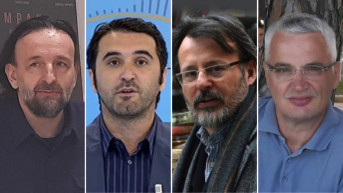
Journalist and writer Zivojin Rakocevic, who is the president of the Association of Journalists of Serbia and lives in Gracanica, notes in his statement for Kosovo Online that for the Serbs, Kosovo is like medicine - if you don't take enough of it, it won't be good, if you overdose, you're doomed.
"In the public, political, cultural, and spiritual life, Kosovo should be a balance between life and heritage, science and intimate layers of poetry, our civilization, and relationship with the world, as well as inviolable ownership and unquestionable sanctity of space and historical duration. For someone, who today, is not able to see the miraculous survival of an imprisoned old woman in Metohija and the world composition of the Last Judgment in Gracanica, all his knowledge about Kosovo will be deficient, because he ignores the balance of heritage and reality," Rakocevic points out.
Because of all this, he says, one of the biggest Serbian misconceptions about Kosovo is that the Serbs can live without Kosovo and Metohija and that the Kosovo Serbs will not survive.
"History and life have shown that if only one Serb survives or returns, they all survived and returned," Rakocevic is convinced.
On the other hand, he recalls that someone said a long time ago that the Serbian soul was trapped in an Albanian body and that Albanians had a problem with how to erase, cancel, forget, and kill that soul, and how to create a border within themselves and separate themselves from it.
"The national romanticism that combined the myths about the Illyrians and Adem Jashari cannot provide an answer to the Albanian citizen as to why almost nothing in Kosovo is named after them," Rakocevic emphasizes.
He notes that now everything looks like a destroyed ecosystem in which one species has been exterminated, or is about to be exterminated, and the other feels like a winner without realizing that it is destroying itself and its own future.
"The solution for the Serbs in Kosovo is simple: leave us alone! Which simply means, your freedom to you - our freedom to us. This is a condition for the ghettos, we live in, to develop a minimum of democratic capacities and welcome freedom. Why and how today Albanians in Kosovo believe that their freedom and democracy depend on the Serbs? Because they didn't build it inside themselves, because other people are problematic and that's why the modern world doesn't have the strength and won't tell them - look at yourself and leave others alone. Therefore, freedom is better even within the barbed wire, than someone else's way of life and thinking, which explains to you what your life should look like and who you are," Rakocevic concludes.
Sociologist Artan Muhaxhiri assessed that the most difficult process, which was at the same time essentially irreplaceable, was the joint achievement of an acceptable version of history for the most important events between Kosovo and Serbia, based on objective references that ensured scientific credibility.
"Both from the human and emotional side, as well as from the political and legal side, understanding the past is the basic starting point for hoping for a normal development of events in the future. As long as the two sides continue to have diametrically opposed views of history - especially the events of the 1980s, In the 1990s, and the 2000s, there will be no hope for conceptual evolution toward long-term solutions. An honest confrontation with the past is the main starting point for major progressive change because otherwise, any attempt at deviant reinterpretations of history will reinforce existing traumas, prolong the confrontation with them, and a beginning of their processing. History can be liberating or blocking - depending on the level of political consciousness of the actors who make decisions. Mythomanias always boomerang back to their creators and, in moments of pragmatic collective enlightenment, reveal all the misery of civilization and the core deceitfulness of their originators," Muhaxhiri explained.
Muhaxhiri says that prejudice and mistrust mainly depend on the degree of political instrumentalization of history and attempts by populist leaders to use it as a giant metaphorical tent for the shortcomings of creative development ideas - economic growth, improvement of well-being, socio-cultural progress, and positive change of life perspective.
"It suits this category of politicians to play the "situation of permanent risks" card, because in this way - putting themselves in the main role - they design the premises of the dimensions of the problem, but also the expectations for their solution. Pseudo-patriotism is an extremely common and harmful alibi in our region because, under this label, politicians of illiberal democracies usually camouflage their typical goals: the will for unlimited power, daily political and financial benefits for oligarchic structures, as well as the continuity of the negative status quo," Muhaxhiri emphasized.
Muhaxhiri adds that the ease of finding information validated with professional neutrality gives many opportunities to new generations of citizens to research and find the most objective versions of the truth about past events.
He adds that public and state institutions have a crucial role because they must prove their readiness to legitimize new official formats of correct historical narratives.
"Without grotesque pathetic and trivial stereotyping; these formats should then be included in teaching programs and thus begin a long-term and multidimensional regeneration of the dominant mentality. The biggest misconceptions are the clichéd ideas that the normalization of our region can occur without multiple compromises, maximum realism, and valuable investments. The very complex nature of the power relations between Kosovo, Serbia, and the international community are interdependent, so various forms of sophisticated controls should be established that would gradually monitor and complement each other. Current quasi-fairytales about the neighborhood as the "Other" in the form of a permanent “bogeyman” do not coincide with the simultaneous declarative determinations for European integration processes. The Copernican turn must necessarily happen - first in thinking, then in documents and books," he told Kosovo Online.
Muhaxhiri points out that the European Union will in no way import existing disputes and the potential for escalation between Kosovo and Serbia.
If that were to happen, he adds, it would most likely entail their transfer within European structures, risking chain damage to various processes.
"Both Kosovo and Serbia are essentially threatened by the consistent emigration of professionals, which, according to the current trends of increasing systemic readiness of powerful European countries such as Germany, will only increase in the coming years. The large departures of professionals will be reflected in the qualitative weakening of institutional structures and the potential of the public sphere, additionally reducing the space for constructive debates and critical discourses," Muhaxhiri concluded.
Historian Mile Bjelajac notes that new generations are growing up among the Albanians and Serbs in Serbia itself, who are not aware of common life and common interests.
The Serbs who survive, despite everything, in Kosovo itself feel differently because their difficult fate rests on the conscience of the Albanians, both the authorities and their neighbors, but also those who have militarily occupied the territory of Kosovo, emphasizing the false slogan "first standards, then status", while at the same time, ever since the conference in Bratislava organized by the State Department in 2000, they demanded that Serbia be permanently isolated from the European order and that Kosovo be recognized as an independent state as soon as possible.
"The gradual withdrawal of the presence of the Serbian state in part of the territory, especially the concessions in the north of Kosovo, which was annexed to the province in 1959, worsened the position of the Serbs and non-Albanians. Also, at the same conference, it was repeated several times that a precedent was set and that international law was violated, in other words, as it was pointed out, this precedent could be used in the future when someone needed it", Bjelajac reminds Kosovo Online.
He adds that it has been said publicly many times that all ultimatums, short deadlines during the Yugoslav crisis, including those in Kosovo, could only stir up passions, rather than cool them down.
"Frozen conflict, solving practical life problems of both, solving economic and other rights that have been usurped, fair administration, could cool their heads and restore trust as it used to be before 1968. Of course, ideological textbooks where one nation is the sole victim and the other the criminal must become a thing of the past. It is hard to believe that the great powers will give up their selfish appetites without a major change in the international constellation, and that is beyond the power of small Balkan factors. Hope, however, is the time factor as many times so far in history. The people of the Balkans themselves would rather come to an agreement," Bjelajac believes.
He indicated that the illegal aggression of NATO in 1999 and today's pressures had been produced by the wider geopolitical desires of those factors who, by their own admission, had wanted war, in order to shape new political circumstances - military presence and control of resources, including communications.
"General Wesley Clark and others testify to this. Creating a crisis was a way to give an occasion for interference and intervention. This has been a practice in the world for decades. In the Balkans, the great powers were rather a factor of instability than harmony among the Balkan people. Regarding the Albanian nation, the Ottoman Empire, Austria-Hungary, Italy, and the contemporary great powers cannot be ruled out. Once upon a time, the favorites were the Greeks, Bulgarians, and Serbs. Both the Ottoman Empire and Austria-Hungary, and in the period 1918-1943 Italy, sought a support factor for survival in the Balkans, of course to the detriment of the Serbian, Slavic, and Orthodox elements. This tendency was noticed a long time ago among the elites of the Balkan nations and was opposed by the idea of "the Balkans to the Balkan nations". This was also supported by the Albanian leader Essad Pasha, a friend of the Serbs and cooperation with Serbia," Bjelajac explained.
He indicates that the Communist International was also not innocent, imposing its idea on the solution of national issues in Yugoslavia and the Balkans to the Communist parties.
"Those ideas often came from the centers that were defeated in the First World War. Ethnic engineering began in the area of today's Kosovo and Metohija after the Ottoman experience of the lost war in 1878. Active immigration of Albanian and other Asian elements began and pressures on the Serbian and Slavic population began often accepting the Muslim faith (arnauts) or emigrating to free countries. On the other hand, Muslims emigrated from Bosnia and Herzegovina, which was occupied by Austria-Hungary, and settle in Kosovo, which was still officially Turkey. Thus, in the mid-1890s, the Serbs for the first time fell under fifty percent of the population," he said.
Bjelajac says that the historiography that prefers the Albanian narrative in the world insists on the year 1912 and overlooks or keeps silent about the earlier period.
"Genocide" is being insinuated against the "Albanian race" and it continues to this day. The facts from the proclamations and the highest intentions of the Serbian state and military authorities, and even the monarch himself, are being ignored. However, propaganda then and now had its own interpretation, preparing the ground for "humanitarian intervention". Although some Serbian historians or publicists are ready to keep silent about those unpleasant facts that are the consequences of war situations, there is an even greater number of Albanian colleagues who will persistently emphasize some of the traditional ideological patterns that are an integral part of today's textbooks in Kosovo. For example, the thesis that the battle of Kosovo is as much Serbian as it is Albanian, that the great migration of the Serbs from Kosovo and the south of former Serbia in 1690 under Patriarch Carnojevic after the Austrian defeat is a Serbian fabrication or a myth that is not a picture of reality; that the Serbs came in the 12th and 13th centuries and were the occupiers of the native Illyrians (Albanians) and again from 1912. That Albanians were victims throughout the duration of Yugoslavia, and that genocide was perpetrated against them. Noel Malcolm or Timothy Garton Ash and many other think tanks incorporated these theses into their works with the help of Albanian collaborators," Bjelajac added.
He says that the Albanian elites in Kosovo and socialist Albania strove to achieve the goal of enclosing Greater Albania at any cost.
"The resources of Yugoslavia and Serbia were used for educational, cultural, and economic development, demographic growth was encouraged and pressure was exerted on the Serbs with various measures in order to make them emigrate. Where are the mistakes of the Serbian factor, well, one of the main ones is the misunderstanding of the importance of the consistent functioning of the rule of law, the easy acceptance of normative solutions imposed on Serbia through constitutional changes without appreciating the possible development in the future and the consequences in some new, changed circumstances. The importation of Albanian textbooks and the hiring of teachers for those same studies from Albania itself, which did not permanently pursue a friendly policy towards Yugoslavia, were easily tolerated. That indoctrination left lasting consequences," Bjelajac emphasized.
Fadil Lepaja, an analyst from Pristina, points out that history cannot be changed, but one can learn from it.
"Also, we cannot change our past, but it would be wrong to think today as in the 12th, 13th, 18th, or 19th century, and even the 20th century. We must correct the mistakes of the past when millions suffered because of borders or because of ideologies. We must accept this historical chance to find an option without losers, and not allow ourselves to be held hostage by medieval ideologies, or small-minded fanatics who believe that people need to go to war to prove that their God is more valuable or stronger," Lepaja told Kosovo Online.
He says that the future must be built together, both in Kosovo and Serbia.
"We will all go to God as a gift or answer to him, but we are obliged to build the present and the future in our country based on the principles of equality, equity, and freedom for all, and democracy and the European Community are the future that makes this possible. The European plan opens the European path, and we need to understand that we need to build the future together, both in Kosovo and Serbia. We need to respect and recognize each other, seek forgiveness and forgive our mistakes in the past, prosecute our citizens who caused suffering or took the lives of civilians, and give others the same rights they seek for themselves," Lepaja added.
He also indicates that nothing can be achieved by negotiating the past, but only the future can be negotiated.
"I think that ordinary people do not hate each other, but medieval unreformed religious and political organizations fear and exploit the people for their unjust and ideological goals. Fortunately, the European people broke with those ideologies that made everyone suffer, and built a new society with new goals and principles that brought them the peace and prosperity they now enjoy. The Albanians and Serbs in Kosovo should build life and coexistence together, and the Serbs should be a bridge of cooperation between Kosovo and Serbia, not militant formations of outdated political or religious organizations," Lepaja concluded.


0 comments