
Rakocevic: The Serbian Ortodox Church is the beginning of every system in Kosovo
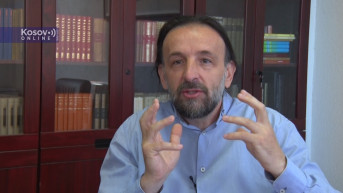
The Serbian Orthodox Church in Kosovo and Metohija is older than all systems and it is the beginning of every system in Kosovo, and most of the values in the province are based on the experience, existence, duration, documents and values of the SOC, says Zivojin Rakocevic, the director of the House of Culture in Gracanica and president of The Journalists’ Association of Serbia (UNS), Politika reports.
"SOC is the absolute beginning of Kosovo and SOC is absolutely unimaginable without Kosovo. Without it, you cannot regulate anything in this area because it is at the beginning of Kosovo," Rakocevic told Tanjug.
He adds that the authorities and authorities have passed through history, and only the SOC remains, the values it preserves, its property and a deep mark on civilization that is indelible.
"All the systems in the past few hundred years have tried to expel the SOC from life, to take its values, to take away its ownership, to submerge it with their ideologies or nationalisms, and no one has succeeded," said Rakocevic.
When asked whether the European Union and the USA have finally convinced themselves of the extent to which the Serbian cultural heritage is threatened in Kosovo and Metohija, and that is why it is specifically regulated in the proposal for a new agreement, Rakocevic answers that we fundamentally do not know what is regulated by that new agreement.
"What is now built, i.e. constituted on force, injustice and discrimination against others, cannot be introduced into law, contrary to hundreds and hundreds of years of one civilization, one culture and one spirituality and property that belongs only to us. So you cannot reduce the SOC to an institution that suddenly appears as a disruptive factor and say we will regulate it according to the laws of Kosovo or the laws of Serbia", Rakocevic points out.
Rakocevic warns that many have tried to make the SOC conform to their laws, such as the Ottoman and Austro-Hungarian empires, Yugoslavs, communists, Albanians, but that the SOC has outlived them all, because the SOC cherished values that are more important, significant and globally recognized than all other systems which tried to adapt it to themselves, to appropriate it or to extinguish it.
He says that the status of the SOC was regulated by time, its values, openness and that everything that is most important in Kosovo belongs to the SOC, and now, as he said, some foreign organization, ethnic and military force is coming that says "no, no, you don't exist like that, you need to adapt to us, so we will determine what your status is and how it will all look like".
"Therefore, we had an egregious example of an attempt to legally confiscate property in Montenegro, which ended in disaster because it turned out, as in the case of Kosovo, that the SOC is the foundation of organizing, social, public and cultural life, and without it you cannot move anything, you can do nothing, and especially you can't take anything from the SOC", Rakocevic believes.
When asked where the right comes from, that someone who did not punish those who demolished and desecrated Serbian churches and Orthodox monuments now speaks about the fact that Kosovo institutions are capable of protecting Orthodox holy places, Rakocevic says that we live in a period of paradox, that the one who demolished, seeks to protect.
"When you ask him why you were demolishing it, of course he doesn't have any answer, but he knows that after all these attempts and 150 demolished, desecrated, devastated churches and monasteries, he finally realized that it cannot be destroyed, and then they moved on to institutional destruction and on appropriations," says Rakocevic.
He adds that there is now an attempt to have the institutions take over everything and to realize the idea from the communist era that churches and monasteries should be museums, where some curators will be the main speakers and where they will be places without life.
"That can't happen. These are living places, they are still places of creating culture and spirituality, because European values are created in or around those monasteries today and very often, these are the only European values of these areas. As time passes, we will know more and more that contemporary culture and life are happening in those achievements of the SOC, and that in fact the present moment is just as protected by UNESCO as the past of those objects and cultural assets is protected" he pointed out.
Rakocevic notes that there is a terrible frustration among Albanians, because when foreign diplomats come, they go to see the Monastery Visoki Decani, the Patriarchate of Pec, the Church of the Holy Virgin Ljeviska.

0 comments