
Why is Croatia a role model for Kosovo when it comes to the attitude towards Serbs?
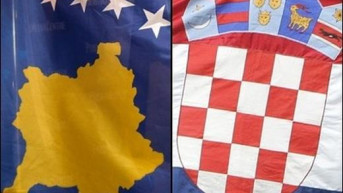
Of the dozens of European models that could serve Pristina as a model for the Union of Serbian Municipalities, Kosovo Prime Minister Aljbin Kurti, dissatisfied with what Belgrade proposed, made his own proposal, inspired, as he said, by the Croatian model for national minorities. The Croatian model, according to Milorad Pupovac, would imply that the CSM does not have the competences agreed upon by the Brussels Agreement, while Cedomir Antic says that Kurti actually wants the Serbs to accept the lie that Kosovo has always been independent and to create the impression that he is giving the Serbs something.
The president of the Serbian National Council (SNV) in Croatia, Milorad Pupovac, tells Kosovo Online that if the position of the Serbs in Kosovo were to be resolved according to the Croatian model, the Serbs would have incomparably less than what was already agreed upon in the Brussels dialogue, but he also notes that there is no places of comparison, regardless of the similarity of the names of the CSM and the Joint Council of Municipalities in the area of Eastern Slavonia, which was foreseen by the Erdut Agreement.
The basis for the Croatian model, Pupovac points out, was the Erdut Agreement signed by Belgrade and Zagreb, which was also confirmed by the United Nations. There was, he reminds, a Letter of Intent brought by the Government of Croatia, which was also confirmed by the UN Security Council. The problem, as he points out, is that the Joint Council of Municipalities, defined by the Erdut Agreement, is actually only a general right of Serbs, but without any additional elaboration, as well as without elaboration in the Letter of Intent.
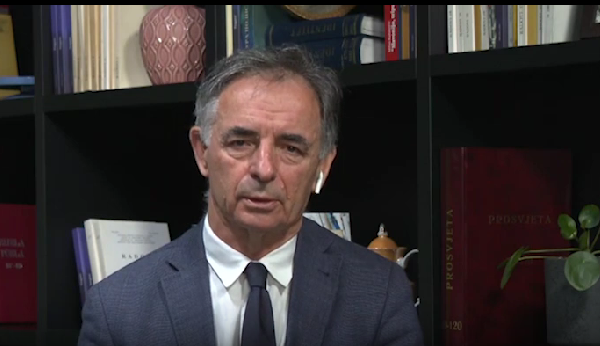
"It was not a finished solution, but indicated what it could be, but not what it really is. In that sense, the Joint Council of Municipalities in Croatia, and I assume that Prime Minister Kurti meant it, is not an Association of Municipalities modeled on communities of municipalities in socialist Yugoslavia in its republics. During peaceful reintegration, we fought for the elaboration of that solution and for the status that the Joint Council of Municipalities could have. But not as a community of municipalities, but as a community of representatives of Serbs who were elected in those municipalities and which meet to discuss issues from the sphere of culture, education, sports and other issues and which did not have any executive powers and was not recognized as much more than a non-governmental organization. Today, this council de jure is not more than a non-governmental organization but de facto it is a form of minority self-government in the east of the country in strictly minority issues, and not in the sense as defined by the Brussels Agreement for the CSM", says Pupovac.
Here, he adds, we are not talking about Serbian municipalities, but about municipalities in which Serbs have their representatives, and the Joint Council of Municipalities does not have the status of a sui generis organization.
"We never managed to get that from the Croatian state," says Pupovac.
This type of connection, such as the Joint Council of Municipalities in the area of Eastern Slavonia, he notes, does not exist in the areas of Dalmatia, Lika, Kordun or Banija, where there are municipalities with a Serbian majority.
Pupovac reminds that there is another institute - the Serbian National Council (SNV), which covers the whole of Croatia.
"SNV is a minority self-government for the entire area of Croatia and is elected in a different way than is the case with the Joint Council of Municipalities, whose legitimacy derives from the mandate of elected municipal and city councilors. While SNV's legitimacy derives from the electoral process organized by the state for the whole of Croatia, where there are members of the Serbian community. And that is a different model compared to what was proposed for the CSM in Kosovo. The SNV is a de jure non-governmental organization and that is unfortunately inconsistent with international documents signed by Croatia, because why would the state organize elections for a non-governmental organization, and SNV is treated as a non-governmental organization. It is certainly not a model that could be replicated in Kosovo with what is the goal with CSM," says our interlocutor.
Let us remind you that the competences for the CSM are prescribed by the Brussels Agreement - in the areas of economic development, education, primary, secondary and tertiary health, social protection and urban and rural planning, and Pupovac tells us that such a thing does not arise for Serbs based on the Erdut Agreement.
"We can address the Government, the President of the Republic and, in different ways, the units of local self-government and regional self-government, but we do not have that kind of competence," says Pupovac.
In Croatia, as he states, there are about 15 municipalities with a Serb majority, although they are not defined as such, and Serbs are a relative majority or a significant minority in about 40 municipalities.
When asked if, then, Kurti's appeal to the Croatian model is an offer that is much smaller than what is provided for in the Brussels Agreement for the CSM in Kosovo, Pupovac says that it is "absolutely so".
"It seems to me that it is unfounded to scare people by saying that the CSM will be the new Republic of Srpska, just as it is equally unfounded to look for a solution for the CSM in the model that exists in Croatia. The best solution is a dialogue about it and looking for what both sides can agree on, with the help of the international community. The solution to the issue of Serbs in Kosovo, the issue of Orthodox monasteries, churches and overall heritage, as defined by Ahtisaari's plan, is not comparable to the Croatian situation, nor is the issue of relations between Belgrade and Pristina and Belgrade and Zagreb comparable in terms of a number of elements, how are those relations mutually developed", concludes Pupovac.
He says that the Serbs in Croatia are following with interest what is happening with their compatriots in Kosovo and that they are ready to help in matters where it is possible, but that the solution should be specific.
"There are no states that have the same models of minority policies. Nor are there solutions that are the same answers to different historical or current issues of certain minorities. Models can be a reason for looking for solutions or inspiration, but not much more than that," says Pupovac.
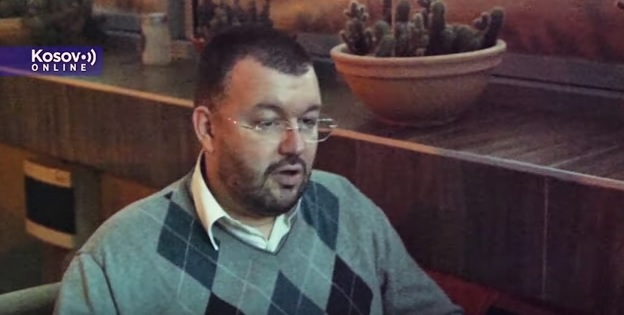
The President of the Progressive Club Cedomir Antic tells Kosovo Online that Croatia was unconditionally recognized in 1992 and entered the United Nations and assesses that Kurti would actually like the Serbs to accept a lie that the future children of Kosovo will fall into, "if there are still Albanians on Kosovo, to be taught to believe that Kosovo has always been independent".
"It seems to me that it is unfounded to scare people by saying that the CSM will be the new Republic of Srpska, just as it is equally unfounded to look for a solution for the CSM in the model that exists in Croatia. The best solution is a dialogue about it and looking for what both sides can agree on, with the help of the international community. The solution to the issue of Serbs in Kosovo, the issue of Orthodox monasteries, churches and overall heritage, as defined by Ahtisaari's plan, is not comparable to the Croatian situation, nor is the issue of relations between Belgrade and Pristina and Belgrade and Zagreb comparable in terms of a number of elements, how are those relations mutually developed", concludes Pupovac.
He says that the Serbs in Croatia are following with interest what is happening with their compatriots in Kosovo and that they are ready to help in matters where it is possible, but that the solution should be specific.
"There are no states that have the same models of minority policies. Nor are there solutions that are the same answers to different historical or current issues of certain minorities. Models can be a reason for looking for solutions or inspiration, but not much more than that," says Pupovac.
The President of the Progressive Club Cedomir Antic tells Kosovo Online that Croatia was unconditionally recognized in 1992 and entered the United Nations and assesses that Kurti would actually like the Serbs to accept a lie that the future children of Kosovo will fall into, "if there are still Albanians on Kosovo, to be taught to believe that Kosovo has always been independent".


0 comments