
Why do international actors in Kosovo allow Pristina to abuse the police and the judiciary?

In Kosovo, special rules for the Serbs still apply, and laws and agreements in their case are often violated by those who should respect them the most, namely the police and the judiciary. Expropriation of land, detention without evidence and procedure, harassment due to license plates, arrest due to typos, the expulsion of the Serbian language from official use, and ignoring the verdict of the Constitutional Court regarding the return of land to the Visoki Decani monastery. There are many examples.
Taking everything into account, the logical question arises of why international actors in Kosovo allow Pristina to behave like this, above all the abuse of the police and the judiciary.
Political analyst Dejan Vuk Stankovic believes that international actors do not see that Kurti is abusing the police and the judiciary, but that they believe that this is his way of using those institutions, something that Kurti himself decides on.
"Most of those international actors believe that Kosovo is an independent state and they do not see any abuse in that, but the use of those institutions in the way that Kurti should do it. For them, Kurti is an independent political figure, and Kosovo is an independent and sovereign state. Simply, their goal is to legitimize Kosovo's independence and in that real political struggle for Kosovo's independence they have a lot of tolerance even for its violence. At no moment has that decision on Kosovo's independence been questioned, as a result of which the state independently decides what laws to pass and how to apply them," Stankovic told Kosovo Online.
He does not think that this behavior is unexpected and states that Great Britain, Germany, France, and finally the US, which recognized the independence of Kosovo, can hardly now say out loud that Kurti is someone who is unworthy to be a political leader, and that Kosovo is not worthy of being a state.
"They tolerate them because they created them and it is a hellish vicious circle in which the Serbs who live there move and who do not know how they will fight and how they will ensure their dignified survival, because they work with the logic of force, which is indirectly tolerated and everything that happens there can only be explained in that way," Dejan Vuk Stankovic says.
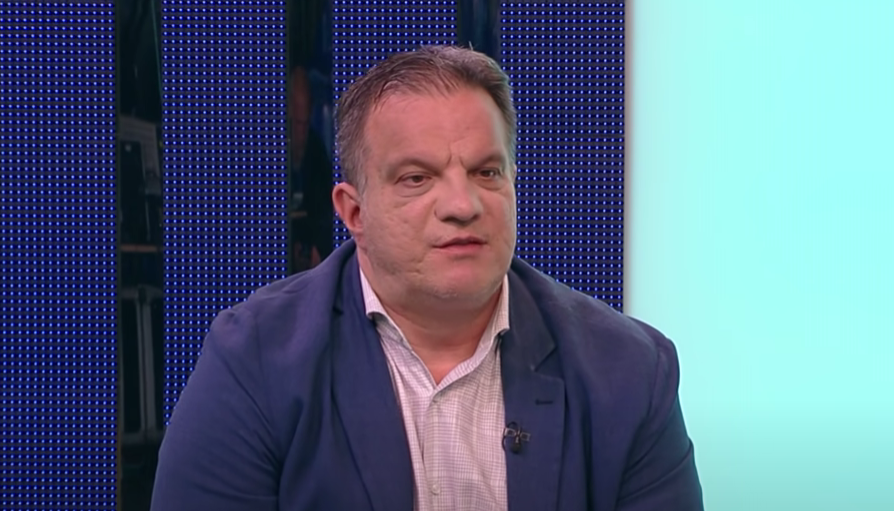
He states that international actors know very well what the Albanians are up to, but they stick to political opportunism and that it is more complicated to intervene radically in relation to what the Albanians are doing than to let the Albanians do what they want.
This is because, as he adds, they believe that Albanians should have another state, which is Kosovo.
"The whole thing starts and ends there," he said.
He believes that the Serbs from Kosovo must raise their voices, protest, ask international mediators for certain guarantees for their safety, and refer to international documents, whether it is human rights declarations or agreements that Belgrade and Pristina have concluded with the EU mediation.
"The Serbs must use all the political means at their disposal in order to survive," Stankovic says.
The former Minister of Foreign Affairs of the FR Yugoslavia, Vladislav Jovanovic, believes that Pristina is not independent in relation to its "parents, sponsors", pointing out that neither France nor Germany, are independent in relation to America.
"Pristina is a tool, first of all, in the hands of America, and also Brussels, for the purpose of exerting combined pressure on Serbia in terms of their interests, which is to persuade Serbia as quickly as possible to finally accept that Kosovo is an independent state and that through this America and NATO releases mortgages due to aggression against Serbia. Serbia's consent to the independence of Kosovo would at the same time give America a discharge for NATO aggression against Serbia," Jovanovic says.
According to him, the assurances given by the international community that Kurti was stubborn and that they didn't know what to do with him, that they had a headache because of him, are stories for small children.

Incidents with the police and the judiciary, as Jovanovic says, are not only aimed at provoking the Serbs in Kosovo but also Serbia and exposing themselves to the risk of different reactions and outcomes.
They say they are doing it gradually, by increasing the number of incidents.
"The reaction of the Serbs is fiercer than before, which is understandable, and the goal is to provoke Serbia, through the reaction of the Serbs in Kosovo, to leave its established positions and to fly out into a cleared area where they can exert controlled wider pressure on it and force it to finally understand that it is not in its interest to dwell on the issue of Kosovo but to move on. These provocative moves also serve to test Serbia's readiness to leave its principled positions in a blank space where it is not known how it will all develop further because the main directors of all this are not in the Balkans, but in Washington," Jovanovic says..
He believes that the Serbs in Kosovo should be as united as possible, stick to common attitudes and actions, and not jump out unprepared in front of the enemy.
He adds that the Serbs are deliberately being provoked in order to provoke Serbia through them, “and Pristina is not doing this alone, because it is estimated in Washington that the Serbs in Kosovo are Belgrade's weakest point".
"Probably, the conclusion was reached that the pressure on the Serbs in Kosovo should be increased, and through that to determine what Serbia's reaction will be and whether it is really ready not to allow ethnic cleansing. America is indirectly doing this check, not declaring that it is in favor of it, but not actively challenging Pristina to prevent it; it is done more in an undefined way, than in a really effective way that could be, and the situation requires. To raise its voice and remind Pristina that it is 100 percent dependent on America and cannot even dream of leading an independent policy. But the problem is that it is not an independent policy, but in some way, a direct or indirect agreed policy of increasing pressure on Serbia," Jovanovic says.


0 comments