
Ristanovic: Around 140,000 Serbs emigrated from Kosovo from the beginning of the 60s of the last century until 1989.
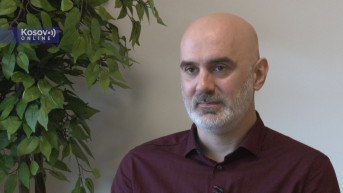
Research associate at the Institute for Serbian Culture in Leposavic, historian Petar Ristanovic, says that from the beginning of the 60s of the 20th century until 1989, according to his research, between 130,000 and 140,000 Serbs, i.e. 40 percent of all the Serbs who lived there, emigrated from Kosovo.
Ristanovic, who received his doctorate on the subject "Serbian intellectual elite and the Kosovo issue 1974-1989" in an interview for Kosovo Online, he points out that the emigration of the Serbs from Kosovo continued in the 50s and 60s of the 20th century, and that it has been escalating since the mid-60s.
"It is a huge number and that number was not a secret, people knew about it and people talked about it informally, but until the beginning of the 80s, censorship in Yugoslavia was strong and it was not allowed to talk about it publicly," Ristanovic says.
The national aspirations of the Albanians in Kosovo began to flourish after the Brion plenum and the dismissal of the second-in-command of the SFRY, Aleksandar Rankovic. Even today, the term Rankovic's Yugoslavia can often be found among Albanian authors. Has his removal removed the obstacle to the achievement of the goals of the Albanians?
It is a very interesting phenomenon, since the term Rankovic's Yugoslavia exists exclusively in Albanian historiography and among Albanian historians, public figures, and publicists. They divide Yugoslavia into the one before 1966 and the one after that year. This makes sense in a way, since deep changes really began in Yugoslavia in the mid-60s. Previously, it was a centralized state, which was completely managed from Belgrade, from the party center. From 1966 to 1974, the process of decentralization of Yugoslavia began, where decision-making was transferred from central institutions to republican and provincial institutions. However, talking about Rankovic's Yugoslavia is quite pointless. It is a term that is exclusively used by Albanian historians and publicists.
Rankovic was undoubtedly a significant, influential person. At the time when he was dismissed in 1966, he was the vice-president of Yugoslavia, it was talked about him as a possible successor to Tito, which was probably not the case, but he was undoubtedly an influential man who was a centralist, who was the personification of that strong Yugoslavia that manages from the center. Although at that time he did not formally control the secret service, which among other things was responsible for the fight against separatism in Kosovo, he was the man who was considered its informal head. Given that the removal of Rankovic coincided with decentralization, with the transfer of all essential functions to a lower level, to the republics and provinces, from that moment on, Kosovo also gained greater independence, the institutions in Pristina gained greater independence, power was essentially transferred to the Albanian cadres in Pristina and thus the modern history of Kosovo begins. It makes sense in a way since the roots of separatism are starting to flare up.
Not long after that, large demonstrations broke out in Pristina in 1968. Does this indicate that some of the goals set by the Albanians remained unfulfilled?
The Albanians understood this because they played a very important role in replacing Rankovic. The practice that the State Security Administration implemented in Kosovo, the so-called deformation of the secret police, was used as the essential main excuse for his dismissal. The Albanians were allies of Tito and others in the party leadership in the confrontation with Rankovic, and as a kind of reward, they received complete administration of the province, which has been a republic in all but name since the end of the 60s. It is formally part of Serbia; in practice, it is completely independent, like the other Yugoslav republics and the province of Vojvodina. And then, after the removal of Rankovic, while these changes continue, while Yugoslavia is being reshaped, the question arises as to what form of autonomy Kosovo will have and whether it will be autonomous or perhaps it will grow into a republic. Various voices are being heard in Kosovo, they are asking for a constitution instead of a statute, which has symbolic significance; they are asking for the Albanian flag to be used freely; they are asking for the representative of the province to have the same rights as the representatives of the republics in the collective presidency of the state...
So, various requirements that, essentially lead, to that formal republican status. Practically all those demands have been fulfilled, except for the key one that Kosovo becomes a republic. And when it became clear in 1968 that this demand would not be fulfilled, demonstrations broke out. They were a direct reaction to the fact that in that round of constitutional changes that took place in 1967 and 1968, Kosovo did not become a republic.
With the Constitution of 1974, Kosovo formalizes its status within Serbia. What was the attitude of the Serbian leadership in Belgrade towards that issue in the years that preceded it?
Since the removal of Rankovic, the Serbian leadership has faced a series of other changes. First, the so-called Rankovic sympathizers were taken away, then the Cosic sympathizers, and then a number of other cadres. Then, in a period from 1969 to 1972, the leading role in Serbia was played by Nikezic's leadership, today known as the so-called liberals, who were cooperative towards the provinces and were ready to give up many of Serbia's competencies for the sake of ideology or practical politics, which they did during those constitutional changes in 1971. The constitution was gradually changed with constitutional amendments in 1967, 1968, 1971, and finally in 1974. It was a process that was ongoing.
During all that time, Serbia faced a series of changes in its management personnel. Those shifts were not motivated by Kosovo. Most often, Kosovo played a minor role there, another policy was at work there. But the consequence of that was that the position of the Serbian leadership in Yugoslavia was greatly weakened. Leading people during the 70s, the most influential politicians there were Petar Stambolic and Draza Markovic did not have much influence at the Yugoslav level, at the federal level, and essentially they were forced to make numerous compromises in order to preserve their positions. Their political calculation was approximately like this – “we will agree to what we have to; we will preserve our positions, and then after Tito's death, when things change, we will try to regain the positions of Serbia and Yugoslavia”. That was their calculation, and that calculation turned out to be wrong.
Were the demonstrations that broke out in Pristina and throughout Kosovo in 1981 a continuation of the pressure for Kosovo to formally obtain the status of a republic?
During the entire period of Yugoslavia, Kosovo was a rather bad place to live. It progressed, and life was getting better, but not fast enough compared to the rest of Yugoslavia. People were poor, they had no perspective. There was a huge natural increase, even among the Serbs, incomparably higher among Albanians. At the beginning of the 80s, Pristina was a city of young people, out of about 100,000 people, there were 80,000 young people. They had practically no perspective on life, and the chance for a job was minimal. And at that moment, a dissatisfaction was simply bubbling up that was motivated by social circumstances, but when it spilled over when it flared up, it spilled over into national demands. And usually that's how it always is, Kosovo is nothing special in that regard. All that social dissatisfaction eventually escalated in one demand of the Republic of Kosovo. That republic was seen as the solution to all the problems that the young Albanian population in Kosovo had.
The then Kosovo leadership, where Albanians dominated, was not in favor of that. They didn't approve of that step; they even saw danger in it, which turned out to be true. They believed, rightly, that in a new round of constitutional changes, after 1974, and in Yugoslavia constitutional changes were relatively frequent, every 10 years or so, Kosovo would receive the status of a republic. They saw it as a kind of natural evolution. Those demonstrations somehow hindered them in their plans, so from that moment, instead of asking for more, that is, asking for a republic, the communist leadership of Kosovo at that moment put itself in a defensive position, they defend what they have. They defend that position - they are formally part of Serbia, but in practice, they are completely independent.
After those demonstrations, the issue of the emigration of the Serbs from Kosovo and Metohija, as well as their position in the province, was opened to the public, for the first time it was written and spoken about publicly.
The emigration of the Serbs from Kosovo continued throughout the 50s and 60s and escalated from the mid-60s. My estimate, based on research, is that in the period from the beginning of the 60s to the end of 1989, about 130,000 to 140,000 Serbs came from Kosovo, that is, 40 percent of all the Serbs who lived in Kosovo. That is a huge number and that number was not a secret, people knew about it and people talked about it informally, but until the beginning of the 80s, censorship in Yugoslavia was strong and it was not allowed to be talked about publicly. As a graphic illustration, an Albanian politician from Kosovo, provincial leader Kole Shiroka, was a guest on Yugoslav television in 1967. People were allowed to call and join the program, of course it was controlled. I came across a report about that show quite by accident, which had been submitted to the Yugoslav presidency by the secret police, in which it was stated that during the show, about 250 people had called the studio and over 200 of them had wanted to ask questions related to the emigration of the Serbs, but none of those questions had not been included in the program. So, it was whispered and talked about, but due to the political climate until 1981, it was not a subject that was allowed to be discussed publicly.
When it was discussed, after the demonstrations in 1981, the subject was somehow misused again. The goal was no longer to prevent the emigration of the Serbs, to stop it, to adopt concrete measures, to suppress it. In other words, it was the goal, but it was in the second plan. Emigration was used in political calculation. For the Serbian leadership, the emigration was proof that they do not want to prevent it in Kosovo, that they even encourage it, and that the Constitution should be changed, that Kosovo should return to Serbia, that this is the only way to stop the emigration. On the other hand, in Pristina they claimed that emigration was a normal process, that people went where it was better for them, for more money, they essentially denied that emigration had been a problem at all, thus again defending themselves against accusations from Belgrade and proving that there was no need for any constitutional changes. So even when emigration was talked about, it was an instrument, not a problem that there was a concrete interest in solving.
Despite the great dissatisfaction of the Serbs from Kosovo and Metohija, it seems that the first concrete steps to solve this problem were taken by Slobodan Milosevic at the end of the 80s.
Milosevic "discovered Kosovo" in 1987 and tied his political destiny to Kosovo, even though he had not really dealt with Kosovo until then. He did not know the problem, and he did not understand the problem, at the sessions where Kosovo was discussed, he was mostly silent or gave some generic statements. A year before him, in 1986, Ivan Stambolic was in Kosovo, he saw what was happening, he saw the dissatisfaction of the Serbs, but he tried to calm them down and sent a message, to wait, that they would solve it. At that moment, the Serbs didn't want to, they couldn't wait. Dissatisfaction among the Serbs, because of everything that happened during the previous decades, it was coming to a boil. Milosevic appeared in '87, in front of those same Serbs, and sent a message, “we will solve your problems quickly and efficiently”.
In this way, he tied his fate to the quick and efficient resolution of problems, and he solved them by pushing the situation to its limits. He created the crisis, he deepened it, and he was even ready to bring it to the brink of an incident, even to the brink of escalation, not only in Kosovo, but at the Yugoslav level, through the common people; the rallies that took place on the streets of Serbian cities, there were even attempts to export those rallies outside the borders of Serbia. And in this way, he pressured the leadership in the rest of Yugoslavia to influence the Kosovo leadership and to influence Kosovo together with Belgrade to change the Constitution, which was Milosevic's solution and which was ultimately the solution that the Serbs from Kosovo demanded. It means that the Constitution should be changed and that the province of Kosovo should be returned under the auspices of Serbia. Kosovo was promised autonomy with those changes, in practice it was granted by the amendments from 1989, but it was fundamentally returned under the auspices of Serbian institutions.
The Albanians were not ready to accept that. During the 1980s, Albanians spread a narrative, a belief, that the defense of autonomy as it was, where Kosovo was fundamentally independent of Serbia, was a matter of survival, that if that autonomy was minimally narrowed, practically there would be no life for Albanians in Kosovo. At the moment when that autonomy was narrowed, they decided to boycott those changes, to boycott the institutions of Serbia, and started building their own parallel state.


0 comments