
Djuric: The authorities in Pristina understand that the support of the international community is not unreserved
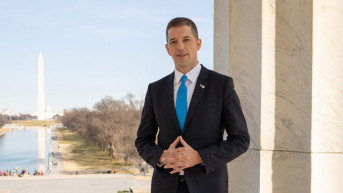
The Ambassador of Serbia to the United States of America, Marko Djuric, said that the authorities in Pristina understood that the support of the international community was not unreserved because, as he stated, no one wanted to support aggression or the violation of human rights.
In an interview with Adria, Djuric said that the flagrant violation of the human rights of Serbs in Kosovo was a dangerous factor.
"The violation of the human rights of the Serbs in Kosovo and Metohija, which we have especially witnessed in the last year and a half, during which time the position of our people has visibly deteriorated, but also over the years, and unfortunately, now for decades, is not only a destabilizing factor but also an extremely dangerous factor. , both in our country, as well as in the region, Europe, and the world," Djuric said.
In the interview, he talked about the situation in Kosovo, but also the relations between Serbia and Montenegro, as well as the US and Serbia.
Since Aleksandar Vucic became the head of state, Serbia has significantly raised its international reputation. What, in particular, in relations with the US, would you single out as a significant success of Serbian diplomacy?
Today, Serbia and the US are surely moving towards the path of the former very close partnership that we shared in our not-so-long common history. Such an assessment did not come overnight, but is a direct result of the visionary attitude, wisely conceived moves, and ten-year commitment of President Aleksandar Vucic to directing Serbia's foreign policy towards an ever stronger and broader improvement of relations with a world power such as America. In doing so, we should keep in mind the former starting point for our leadership and the encounter with the international scene where Serbia was not an excessively welcome actor.
Even then, President Vucic saw the urgency of changing the negative view of Serbia that others had imposed on us from the 1990s onwards, and until ten years ago we were too inert to oppose it and present our own, true side of the story. In such circumstances, as Prime Minister, he is practically building a new image of Serbia from the ashes, and for the past six years as President of the Republic, he has been strengthening the position of our country as a serious and responsible partner, a reliable and attractive investment environment, as well as a credible interlocutor and collaborator for numerous international doers.
Thanks to that, Serbia is now in a situation where, for the first time in history, it is discussing the date for the start of the strategic dialogue with the US as an extremely important step in our relations. Just opening the possibility to start this kind of communication and cooperation platform with America is a sure sign that we are raising our relations to a new, even higher level, connecting our institutions in a unique way and paving the way for future agreements and benefits for our citizens, such as the one on avoiding double taxation, and in the future also about visa liberalization.
These are the results that our people want to see, and I am proud that with my small share from here, I contribute to the implementation of our country's foreign policy goals and the realization of President Vucic's vision of a strong, stable, and world-respected Serbia.
Before the coming to power of Aleksandar Vucic, Serbia was a country without a strategy in the international arena. Today, it is a country that decides its destiny. To what extent, in your opinion, did Vucic's experience and great work, as well as personal contacts with world statesmen, contribute to so many countries withdrawing recognition of so-called Kosovo?
President Vucic already has significant qualitative and quantitative experience in international relations. Before my arrival in Washington, I received from him both many work orders and a lot of valuable, friendly advice which, along with his personal good contacts here, helped me many times to achieve communication and maintain a dialogue with the highest representatives of the American administration and state officials for which our Embassy is in charge on a non-residential basis. Let's just remember that the American position on Kosovo and Metohija was so deeply rooted that it was not even a topic of conversation and that now we have come to the point that, although we do not have the same positions on the status of our southern province, Serbia's positions are listened to, respected and understood, which I am personally convinced of during meetings with individual interlocutors.
I notice the change in that narrative in conversations with other ambassadors accredited to the US, as well as with representatives of the Caribbean countries that we cover non-residentially from Washington, among whom are long-term friends of Serbia, as well as those countries that do not or did not share our position, but over time saw a violation of the principles of international law in our case and retracted their previous decisions. Such outcomes are the result of our determined and unwavering fight for the interests of Serbia and the Serbs, a fight we are leading with President Vucic at the helm.
We see that the temporary institutions in Pristina are doing everything not to form the Community of Serb-majority Municipalities. How much do you think the international community, primarily the US, will tolerate such an approach?
Slowly but surely, the self-proclaimed authorities in Pristina are realizing that the support of the international community is not unreserved because, in the first place, no one wants to support aggression or the violation of human rights. The flagrant violation of the human rights of the Serbs in Kosovo and Metohija, which we have especially witnessed in the last year and a half - during which time the position of our people has visibly worsened, but also for years, and unfortunately, now for decades - is not only destabilizing, but also extremely dangerous factor, both in our country and in the region, Europe, and the world.
Pristina continues to be the "black sheep" and set a bad example, and that is why the ground is shaking under their feet. They can no longer hide behind the great powers, because those same great powers see their irresponsible and unaccountable behavior, non-respect of agreements reached, and failure to fulfill their obligations, the most important of which is the formation of the Community of Serb-majority Municipalities. We appreciate the clear signal, sent by the international community led by America, that ignoring obligations and unilateral moves that directly disrupt the atmosphere of dialogue that our side openly strives for the well-being and survival of the Serbs in our southern province will not be tolerated.
When we talk about the relations between Serbia and Montenegro, how do you comment on the fact that, despite the fact that DPS is no longer in power, celebrated Serbian athletes, businessmen, and clergy are banned from entering Montenegro?
I don't think that these kinds of issues are resolved on newspaper pages, and I deeply believe that they should and can be resolved. Bearing in mind that Serbia is the first foreign trade partner of Montenegro both in terms of imports and exports, it is clear that we attach importance to our bilateral relations, both on the economic and infrastructural level, as well as on the political level. We are always ready to lend a hand to brotherly Montenegro, sit down at the table, and openly discuss the resolution of all issues in mutual interest, as well as to consider opportunities for further improvement of our cooperation in numerous areas.
Recently in Washington, I had the opportunity to meet privately with Prime Minister Dritan Abazovic, who gave me great pleasure by accepting to be my guest, together with the local ambassadors of North Macedonia and Bosnia and Herzegovina, at the basketball game between the home Washington Wizards and the Denver Nuggets. When we as state representatives gather at events like that, we all send not only a unique message of our regional unity but also a message that sport, i.e. sports diplomacy, transcends state borders and differences that we may have in certain political viewpoints.
Do you expect Montenegro to withdraw the recognition of the so-called Kosovo?
Following Montenegrin politics as an observer, unfortunately, it does not seem to me that this will happen in the short term. If I would like that to happen, you don't even have to ask me.

0 comments