
Lajcak: Undertaken obligations must be fulfilled
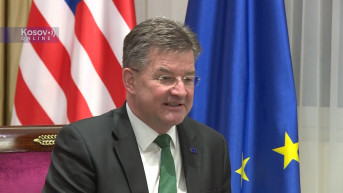
The European Union is currently working on two tracks in order to move the negotiation process between Belgrade and Pristina forward. First, the priority is that both sides agree on the EU's proposal for the normalization of relations. Second, we keep on working in parallel to ensure the full and immediate implementation of all parts of what has been so far agreed in the dialogue - which remain valid, and are binding for both parties, says Miroslav Lajcak, the EU Special Representative for dialogue between Belgrade and Pristina, in an interview for “Politika”.
Why has the Brussels Agreement not been implemented yet?
Large parts of the First agreement of principles governing the normalization of relations from 2013 (what many call “The Brussels Agreement”) had, until recently, already been implemented, with the notable exceptions of the Association/Community of Serb-majority municipalities and the provisions on regulating the energy supply in the north of Kosovo – which were all part of the same package.
Some of the implementation had gone unnoticed to the public eye, but it had been very important on the road towards normalisation of relations between Kosovo and Serbia and bringing direct benefits to the people. For example, we have implemented agreements relating to telecommunications and integration of police, judiciary and local administration – which however were rolled back in November 2022 by withdrawal of Kosovo Serbs from Kosovo institutions in the north of Kosovo. Therefore, both Parties have a list of outstanding commitments from the 2013 package: The establishment of the A/CSM by Kosovo is long overdue and we expect Kosovo to move forward with it immediately, and Serbia needs to enable the return of Kosovo Serbs to Kosovo institutions. Additionally, both Kosovo and Serbia have work to do in implementing the Energy Roadmap and Kosovo also has pending obligations related to the Justice agreement.
We need to remember that the 2013 package only comprises a small portion of all Dialogue agreements, and the Parties’ list of unimplemented items is actually more extensive than this. We are now working on two tracks to take the process forward. Firstly, and the priority, is to have both Parties agree on the EU Proposal towards normalisation of relations. Secondly, we are in parallel continuing to work on ensuring full and immediate implementation of all the elements of what has been agreed in the Dialogue so far – which remain valid and binding for both Parties.
Why has not the Association of Serb Municipalities been formed yet?
We continue to work with both Parties on a wide range of issues, including the establishment of the Association/Community of Serb-majority municipalities, which forms part of the Brussels Agreement. It was ratified by the Kosovo parliament – making it an international legal obligation for Kosovo. We understand that this issue is sensitive for the Kosovo government, but commitments need to be fulfilled. The EU’s view, and that of the US and other international partners, is that any further delays are unacceptable. At the same time, the Parties using the Association/Community as a condition for other issues is not helpful either.
The establishment of the Association is intended to create a trusted relationship between Kosovo Serbs and the government in Kosovo, allow for a continued support of the government of Serbia in a transparent manner as well as to ensure that Kosovo Serb-majority municipalities can work together to ensure the Kosovo Serbian community in Kosovo develops and thrives. It is now time that both Kosovo and Serbia talk about the practical implications of implementing these protections in a way, which works for everyone, that will result in improved local governance and improve the lives of Kosovo Serbs and other communities in Kosovo.
What caused the US, Italy, and the UK to engage in the dialogue between Belgrade and Pristina and France and Germany to propose non-paper? Was the Brussels Agreement lacking something to be acceptable for implementation to both parties?
The new EU Proposal was born in a situation where the democratic international community is increasingly concerned about the recurrent crises over small, yet highly symbolic issues in the relations between Kosovo and Serbia. These crises have diverted the focus of the EU-facilitated Dialogue from what really matters, which is normalization of relations and the respective EU paths of the Parties, to crisis management and putting out artificially lit fires almost on a daily basis. It was clear to us all that this is not a sustainable situation, nor is it desirable for the citizens - who want economic growth, political stability and progress towards their EU future. The Proposal was developed with a simple goal in mind – it would address the root causes of these recurrent crises, put the normalization process on a sustainable forward-looking footing, lead to real and irreversible progress and respect the red lines of the Parties. By adding many new elements to the benefit of the Parties, the Proposal should be seen as a logical continuation of the Brussels Agreement as it aims to further advance the process of normalization of relations and expedites the respective European integration paths of both Kosovo and Serbia.
Americans consider Kosovo to a state, while Russians refer to Kosovo and Metohija as the autonomous province of Serbia. There is also a polarized relationship among EU members. The Brussels Agreement calls for the normalization of relations between Belgrade and Pristina. In accordance with the UN Resolution 1244, KFOR is stationed in the Serbian province of Kosovo and Metohija. What - politically, economically, and security-wise - is offered to Belgrade and Pristina for to reach a compromise in this complex situation?
I cannot talk about the details of the Proposal as it can only be published after it has been formally endorsed by the Parties – but I can tell you that it provides concrete political and economic benefits to both Kosovo and Serbia, and it would strengthen regional stability and security on the ground, including for Kosovo Serbs.
The word compromise is key here – and thanks for raising it. Our consistent message to both Kosovo and Serbia has always been that neither Party can achieve 100% of what they want but both need to make compromises in order to reach an agreement. This is simply how international negotiations work, and the case of Kosovo and Serbia is not different. Sticking to maximalist positions or negotiating in bad faith will eventually lead to missing out on the significant benefits that are on the table, so it is important for the Parties to see the big picture and assess the approach to the negotiations based on strategic considerations on where Kosovo and Serbia want to be in the future. If they want to join the EU and benefit from all what comes with membership, including the extensive financial investments, they need to make progress on normalization of their relations. The Proposal on the table is the perfect opportunity for both to show that they take their European aspirations seriously. The Member States, whose consent is needed for these aspirations to eventually become a reality, are closely following the developments.
As the EU's special representative for the Belgrade- Pristina dialogue, what message you can send to all participants of the dialogue and especially to citizens whose life and creatorship is embraced by the Brussels Agreement?
The Dialogue’s ultimate objective is to improve the lives of the citizens affected by the current lack of normalisation of relations between Kosovo and Serbia – which I would argue includes the entire populations of Kosovo and Serbia. I believe that the EU Proposal is the right way forward to make concrete progress in the normalisation of relations, and our message to the leaders is to seize this unique opportunity on behalf of the people they represent to bring direct benefits to them. Let me explain what these are. On a broad scale, I think it would strengthen the political stability and security and bring new economic opportunities through increased financial assistance, new investments and employment opportunities for everyone in Kosovo and Serbia. I firmly believe that it would change the currently gloomy mood in the entire region and show that progress is possible. It would also advance freedom of movement of people, labour, goods and services between Kosovo and Serbia, as well as make dealing with documents, certificates and bureaucracy in general much easier than before. For the Serbs in Kosovo, it would bring more security, certainty and predictability about their protection and rights in Kosovo, including for the Serbian Orthodox Church. It would improve the currently tense atmosphere and hopefully put an end to the vicious circle of crises that we have seen recently in the north of Kosovo – and, I hope I am not being too optimistic, give a new impetus to reconciliation, co-existence and good neighbourly relations between Kosovo and Serbia.


0 comments