
After 24 years of NATO bombs: What did the Serbs and Albanians learn, and what did the West learn?
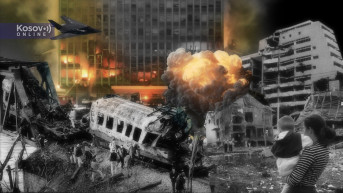
The NATO bombing of Serbia, or the then FRY, began on this day 24 years ago. During 78 days, according to the data of the Ministry of Defense of Serbia, 2,500 civilians were killed, among them 89 children and 1,031 members of the army and police. 2,300 airstrikes were carried out, nearly 420,000 missiles were launched, and banned depleted uranium ammunition was used.
The aggression against the FRY was carried out without the approval of the Security Council of the United Nations, and as the official reason NATO cited the stopping of the "humanitarian disaster in Kosovo". The order to start the airstrikes was issued by the Secretary General of NATO at the time, Javier Solana, while the NATO commander during the bombing was American General Wesley Clark. The bombing ended with the signing of the Military Technical Agreement in Kumanovo on June 9, 1999, and a day later the UN Security Council adopted Resolution 1244.
After 24 years of NATO bombs, what did the Serbs and Albanians learn, and what did the West learn?
The Minister of Foreign Affairs of the FR Yugoslavia at the time of the bombing, Zivadin Jovanovic, tells Kosovo Online that the Serbs have already learned a lot throughout their history - how to defend the country, freedom, people, equality, dignity and that they did not need NATO aggression to learn anything. As he says, the Serbs know what their goals and rights are.
As far as Europe is concerned, Jovanovic hopes that it has learned lessons from that aggression because, as he says, NATO's war against Yugoslavia was a classic war against Europe.
"The bombs did fall on Serbia, but that was the destabilization of the whole of Europe. If not, how can we explain today that Europe cannot establish unity either in the EU or in NATO because there are always countries that think differently about the most important issues of European security and cooperation "Europe made a historic mistake when in 1999, under pressure from America, it dutifully participated in an aggression that essentially meant aggression against Europe," he emphasizes.
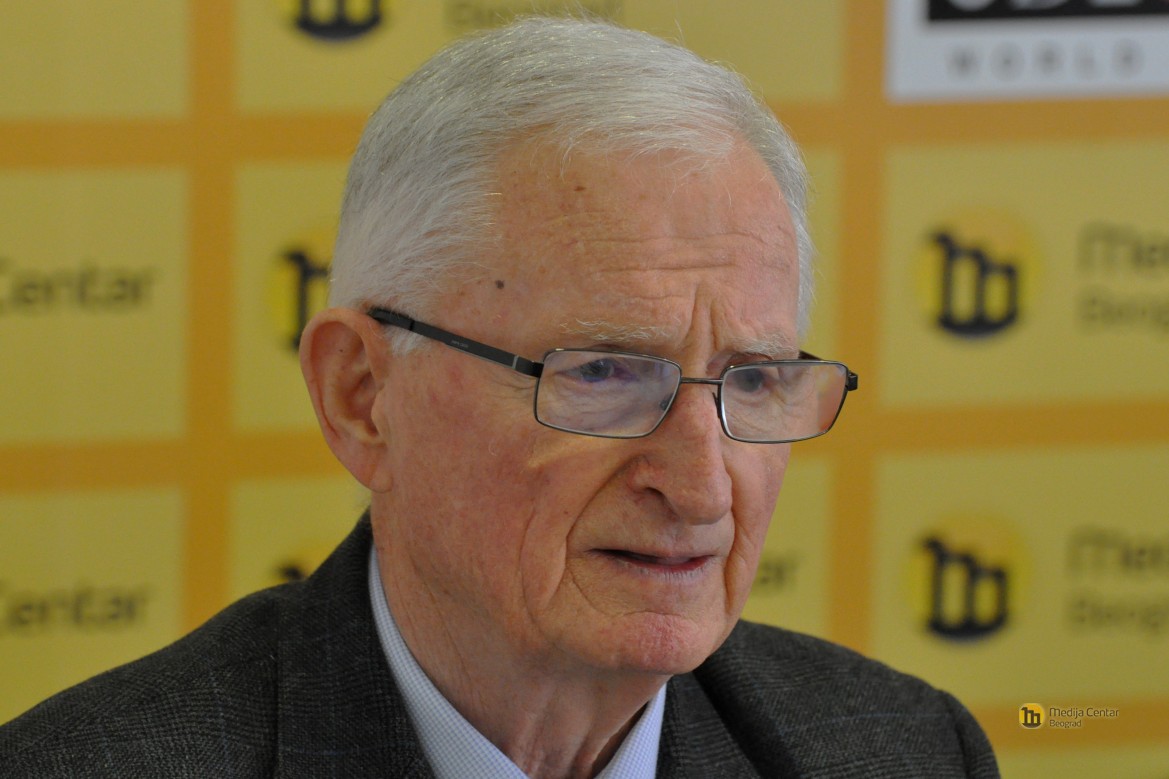
From 1999, Jovanovic points out, the unstoppable decline of Europe began, which led to an increasing dependence and vassal position on America. He adds that today Europe listens to America by imposing sanctions on Russia, putting pressure on other countries, including Serbia, "as if it were something civilizing". Europe, he believes, made a cardinal mistake by attacking a free, independent country in 1999 under the pressure of America, and this, he estimates, is backfired today through demonstrations, and social rebellion...
"I think that this generation of European politicians is not able to get out of the American overcoat because the American overcoat brought this generation of European politicians under its thumb, and even if it wanted to get out of that circle, it has no possibility to turn to itself. Europe will be able to make a turn in its favor the moment it starts to reconsider its destructive policy in relation to the Serbs in the Balkans because Europe blindly followed the Anglo-Saxon strategy of weakening and crushing the Serbs in the Balkans from the end of the 1980s until 2000," our interlocutor says.
When it comes to Albanians and NATO aggression, Jovanovic states that they are not an example to anyone and in this sense reminds that they celebrated Stalin, then Mao Zedong, and today Stoltenberg.
"Albanians are an inspiration for vassalage and serving other people's interests, and they count on getting some crumbs as a third or fourth hand. It is their business, but it has no perspective. Today it is clear to everyone that their masters are going down in history, and that the only solution is in seeking an honest agreement with the Serbs; that they live in peace and understanding next to each other and that no one seeks privileges for himself in order to cause as much damage as possible to the Serbs; there is no future from that. Today the world is on the path of multilateral relations, today Albanians too should ask themselves which side of history they are on when they seek what does not belong to them, as Xi Jinping said the other day in Moscow that China was always on the right side of history," Jovanovic says.
In the period of 24 years, according to the assessment of the research director of the ISAC fund, Igor Novakovic, Serbia has become aware of world politics and the need to adapt to the currents instead of going with the flow.
"I think that's the key. During the 1990s, Serbia had a lot of chances to turn certain moments into victories in cooperation with its neighbors, but we missed it. Now it seems to me that things are different. I'm not sure if it's getting better, but it's certainly not the same as it was two decades ago," Novakovic told Kosovo Online.
As for the West, Novakovic believes that they are no longer thinking about the bombing of the FRY.
"In large countries, you generally have parties of the extreme right and left that pay attention to the bombing of the FRY, but it is not the mainstream of political opinion. For most of them, it is a finished story, and for some of them, it was sealed by the recognition of Kosovo's independence in 2008. In the science of international relations, you have whole theories about the behavior of large and small states. Serbia is a small country and what is for us a first-class event of vital importance for them is just, in principle, a footnote. What remains for us is to see how we can get the most out of such a situation. That is up to our foreign policy," Novakovic says.
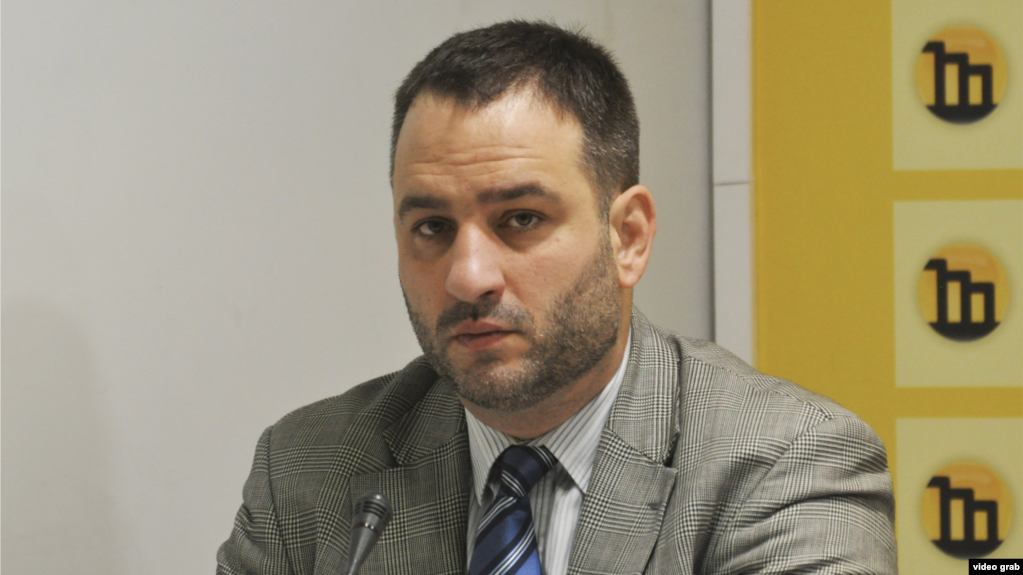
He adds that 24 years ago there was a time of a classic unipolar world where the role of world policeman was primarily on America, and now it is different.
"The decision related to FRY in 1999, in terms of justification, from their perspective is that there was a humanitarian background. I would not connect the later actions of NATO with this one. In Iraq, certain members of the Alliance refused to take part in the action with the US, but that story was different because they talked about suspicions about Iraq's support for terrorists and about the possession of nuclear weapons, which later turned out to be not true," Novakovic says.
Perhaps sporadically, but since 1999, voices from the West have been heard questioning the justification of NATO aggression.
Thus, the former president of the Czech Republic, Milos Zeman, whose country, as a NATO member, participated in the bombing, asked the Serbs for forgiveness two years ago.
"I apologize for the bombing of Yugoslavia, it was worse than a crime. I am asking the Serbs to forgive us," Zeman said after meeting with Serbian President Aleksandar Vucic in Prague in 2021.
The former US ambassador in Belgrade, William Montgomery, said that he believed that the NATO bombing had been a mistake because there had been many victims during that action and that the consequences were felt even today, while the reality after that action was different from what official Washington had wanted.
Last year, critical assessments of NATO aggression were also heard in the German Bundestag. MPs from the Left and the right-wing "Alternative for Germany" assessed that "two violations of international law - the bombing of the former FRY and the unilaterally declared independence of Kosovo, created precedents, the consequences of which are still visible today."
Zivadin Jovanovic points out that the aggression of the NATO pact was illegal and, as he says, criminal, carried out in violation of international law, the UN charter, the basic founding act of the NATO pact, and that it represented a violation of the sovereignty and territorial integrity of one country that does not pose a threat to any other country neither in the environment nor outside the environment. He adds that this aggression represented a violation of the constitution of the NATO members because none of the participating governments sought the consent of their parliaments for the aggression.
"It was a criminal act that was directed, first of all, against Serbia, the Serbs, also against Montenegro, but while the bombs and missiles of the NATO pact, including those carrying cluster bombs and missiles with depleted uranium, were falling on Serbia from Pristina to Subotica, through Niksic and other cities of the FR Yugoslavia, while three-quarters of the total number of victims were civilians, including children, until then those bombs actually destroyed the security system and security architecture of Europe and the world the most, those bombs destroyed the Helsinki Document on security and cooperation agreement from 1975, but also the agreements from Yalta, Tehran and many others which represented the basis of the system of global relations based on the results and outcome of the Second World War," Jovanovic says.
According to his words, today, 24 years later, it can be safely asserted that the goals were the expansion of NATO to the east towards the Russian borders, the control of the Balkans, and the establishment of the absolute dominance of the NATO pact in the Balkans.
"It was part of a wider plan, for the new strategy of NATO, the strategy of expansion to the Russian borders and global management of the planet. It was a cover under the false pretext of defending the human rights of the endangered Albanian national minority in Kosovo and Metohija, and in fact, America was looking for cover for the permanent stationing of its troops on the territory of Serbia, on the territory of Kosovo and Metohija, and in this sense, immediately after the end of the aggression, one of the largest US military bases outside the territory of America was established - Bondsteel near Urosevac. It was the first chain of new American military bases that were expanding like mushrooms after the rain to the east because three were established in Bulgaria, three or four in Romania, more bases in Poland, the Baltic republics..." Jovanovic says.
He points out that the NATO aggression represented the beginning of the full militarization not only of the Balkans but of the entire European continent because America imposed on all members of its alliance from Europe to allocate two percent of GDP for armaments. Under the pressure of America, the entire infrastructure in the EU had to adapt to the requirements of military standards, Jovanovic says and adds that the militarization of the economy has also begun.
"These days, above all, we are obliged to remember our victims, more than 4,000 people lost their lives, three-quarters of them were civilians, including about 90 children, but we also have to know that this was the beginning of all that what we see today in front of our eyes. Everything that is happening today in Europe started in 1999 with the NATO aggression against FR Yugoslavia, and the aggression continues today with different means," Jovanovic concludes.


0 comments