
Serbian people in Kosovo after the bombing: Towns and villages left without Serbs
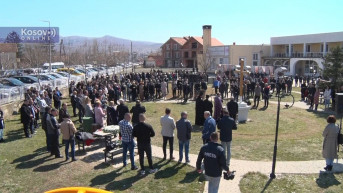
After the signing of the Kumanovo Agreement and the withdrawal of military and police forces from Kosovo, Serbs were left unprotected, and most of them set off on a journey into the unknown and a journey of no return. Gracanica is one of the places where Serbs still survive today, RTS reports.
After the bombing in 1999, the Serbs remained in areas where they felt safe. Cities, villages, and entire areas were left without Serbs. There are no Serbs in Pristina, Peja, Prizren, Urosevac, or Djakovica. Metohija is almost emptied of Serbs, RTS notes.
The bombing, according to the announcement of those who initiated it, was supposed to bring freedom to Kosovo, but the opposite happened. Not only for Serbs but also for Albanians, although they are reluctant to talk about it. For the Albanians, the bombing brought new conditions and a new way of life, but there is no prosperity and order that they expected.
On the first day of the bombing, military targets around the airport, not far from Pristina, were hit in Kosovo.
According to international sources, more than half of those killed in the entire former Yugoslavia died in the attacks in Kosovo.
In addition to the military, NATO planes also targeted civilian targets.
A column of refugees in Djakovica was hit. 75 civilians were killed then, and more than 100 were injured. A bus near Peja was hit, killing 17 people and injuring 44. Dozens of civilians were killed in the village of Korisa near Prizren.
On the bus in Luzane, near Podujevo, 44 people were killed. At least 20 prisoners were killed at the Dubrava prison in Istok, after which a convoy of journalists on the Prizren-Brezovica road was targeted, where one person was killed.
After the end of the air campaign, several tens of thousands of international soldiers entered Kosovo. Today there are incomparably fewer of them, but the Bondsteel base of American soldiers is still in operation.
With the entry of international soldiers and the return of Albanian refugees, there was a mass exodus of Serbs.
It is estimated that there are between 100,000 and 130,000 of them left in Kosovo. They remained in isolated areas, with a limited degree of movement.
Traditional gathering in Gracanica
One of the areas where they stayed is Gracanica and its surroundings. Every year on this day, Serbs gather in Gracanica to pay their respects to the victims.
It will happen today, too. Their gathering was announced for 11 a.m. next to the memorial cross, dedicated to the Serbs who died in the NATO bombing and during the exodus after 1999.
The memory of a post office worker: Everything started to collapse, we didn't expect they would target the post office
In 1999, Nebojsa Stojanovic was an employee of the Post Office in Pristina, which was hit by a missile in a NATO attack at the beginning of April. One person died then.
"There were sirens for the alarm, but we did not expect that they would target the post office. Due to fatigue, we all dozed off around midnight at our workplaces, and then it suddenly thundered, without any warning. Everything started to collapse and crack. I was next to a two-seater when the bomb hit, it went down through the corridor, almost to the basement below. The wall started to collapse," Stojanovic remembers.
He adds that a brick hit him in the head, after which he jumped to his feet, but did not see anything.
"Then I went down to the basement to see where the other colleagues were. I found two that left the post office and came back. I asked them to help me rescue Lantana Jovanovic, who was under the ruins. I started digging with my hands, and we found her head. I opened the space, she started breathing, and she just said, "Don't leave me." I continued to dig, I pulled her out, then my colleague Biserko came, put her over his shoulder, took her out of the post office, and the ambulance and firemen came," Stojanovic recalls.



0 comments