
After the Council of Europe, will Germany push Kosovo to quickly obtain the status of a candidate for the EU?
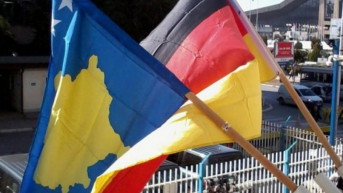
After using all diplomatic and political resources to ensure that Kosovo starts the procedure for admission to the Council of Europe, experts expect Germany to try to speed up Pristina's path to the status of a candidate for the European Union. The interlocutors of Kosovo Online still believe that things will be much more difficult there, because such a decision must be made unanimously, and five EU member states do not recognize an independent Kosovo.
Sweden, which presides over the EU until July 1, already confirmed in January that consultations had begun with member states regarding Kosovo's application for candidate status, especially with non-recognizers - Spain, Cyprus, Romania, Greece, and Slovakia.
Consultations are being conducted to give the green light to forward Kosovo's application to the European Commission, which should then recommend granting candidate status. That decision should be unanimous, however, according to EU rules, the abstention of a country does not prevent the adoption of a decision.
Germany and other countries that support Kosovo, when deciding whether Kosovo should receive candidate status, could play the "card" of restraint by EU member states, which was already demonstrated in the case of Pristina's application for the Council of Europe. Greece and Slovakia, although they do not recognize Kosovo, abstained in the vote in the Committee of Ministers regarding Kosovo's request.
The reason for the intensification of consultations regarding the status of a candidate for Kosovo lies in the fact that, after Sweden, from July until the end of the year, the European Union is chaired by Spain, which firmly stands on the view that Kosovo is not a state. Spain voted against starting the procedure for Pristina's admission to the Council of Europe, and despite the approved visa liberalization, visas will not be canceled for the citizens of Kosovo. Moreover, the postponement of the start of visa liberalization for Kosovo from November of this year to January 1, 2024, came precisely at the insistence of official Madrid, which did not want it to start while Spain presides over the European Union.
Analyst Ognjen Karanovic from the Center for Social Stability tells Kosovo Online that candidate status for Kosovo cannot possibly happen considering that five member states of the Union do not recognize Kosovo's independence.
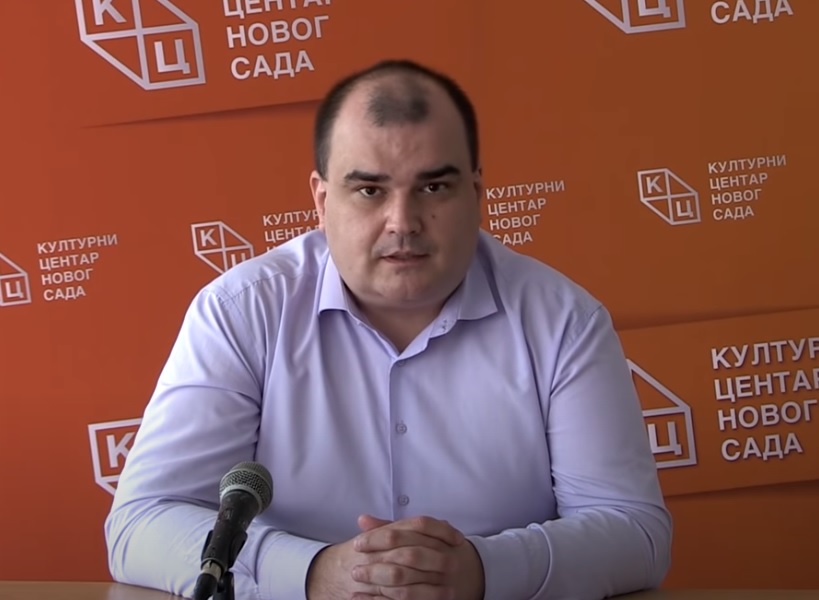
"That is impossible. Of course, they will try to do it, and they would do it every day, but we also saw in the Council of Europe a very clear position of those countries that do not recognize the so-called independent state of Kosovo. Spain was against it, and it is still against it, and Hungary, which recognizes a fake state, Cyprus, and Romania were also against it. Both Slovakia and Greece do not recognize the independence of so-called Kosovo, and their vote is needed so that Pristina can progress towards EU membership," he explains.
Germany, he estimates, will continue with the authority of the strength of its economy and politics with pressure directed towards those countries as well, but adds that at this moment and for some time to come, Kosovo's membership in the EU cannot be expected, but rather Pristina's entry into NATO can be expected. or into some concept of military collective security.
In the short term, the West wanted to push Kosovo into the EU before the Spanish presidency, said Karanovic, emphasizing that their "goal is to marginalize the issue of the southern Serbian province or the issue of the Western Balkans and disempower all political processes that, according to their opinion, disrupt their global, geopolitical and political agenda directed towards the East - China and Russia".
He explains that the West is thinking in the direction of "the background being peaceful" and that they believe that by completely marginalizing the voice of the Serbs from Kosovo, they will achieve this.
"We saw on Sunday in the elections what concretely means democracy and the existence of human rights in the north of Kosovo, and probably Pristina, led by Albin Kurti, as a reward for that celebration of democracy, received a proposal for so-called Kosovo to become a full member of the Council of Europe. I don't know how else we could explain this blasphemy from the quasi-political process in CoE, and that a day after the human and political rights of the Serbs in Kosovo were violated and when their right to be heard was violated, not in connection with these ridiculous elections, but their voice in connection with their status in Kosovo. That voice has not been heard for several decades, and Pristina receives a positive opinion from the Committee of Ministers of the Council of Europe, which will be forwarded to the Parliamentary Assembly, that such a quasi-state becomes a member of one of the oldest European institutions," Karanovic says.
He adds that the Council of Europe, since Russia's exit from that organization, is completely in the hands of the political West, whose goal is Kosovo's independence, and that Germany, as one of the members of the Council of Europe, is trying with all its power to strengthen such an idea in order to fit in, against their own interests, into the "foreign and security policy of the entire political West led by the US".
"It is clear that the great powers from the political West, and therefore Germany, practically since 2008, when they recognized the fake state, are trying to strengthen their recognition, by making the Albanians from Kosovo and Metohija, who settled on that 'political game', to introduce it into all international institutions where possible. The Council of Europe is completely in the hands of the political West, especially since the moment when Russia suspended and excluded itself from that institution the previous year. Since the beginning of the Russian-Ukrainian war, things are now quite exposed - the political West has one political agenda and one goal, especially when it comes to Kosovo and Metohija," Karanovic said.
For a whole decade, adds Karanovic, the West has been trying, using platitudes about respect for human rights, the will of citizens, and the right of people to self-determination, to implement their primary goal - "to strengthen the illegal secession of part of the Serbian territory in such a way that the southern Serbian province, i.e. that fake state, get some status in the Council of Europe and the EU".
Karanovic also points out that in the case of Kosovo, German foreign policy somehow gets its own stamp by accepting an original American idea as its own and trying to strengthen it on the political level, leading in this regard compared to other countries.
He emphasizes that, on the other hand, it is generally known that the interest of the German economy has always been a particular Europe, that is, the particularization of political communities and the fragmentation of states.
"According to those interests, it is logical that they will support the Western political project in the southern Serbian province," he concluded.
As Zoran Milosavljevic, from the Institute for Political Studies, evaluates for Kosovo Online, it is extremely negative that the international community is pushing Kosovo to join the Council of Europe and pushing it towards the European Union. He points out that in this way the reputation of both those organizations and the countries that support the membership of the "non-existent state" in it is destroyed.
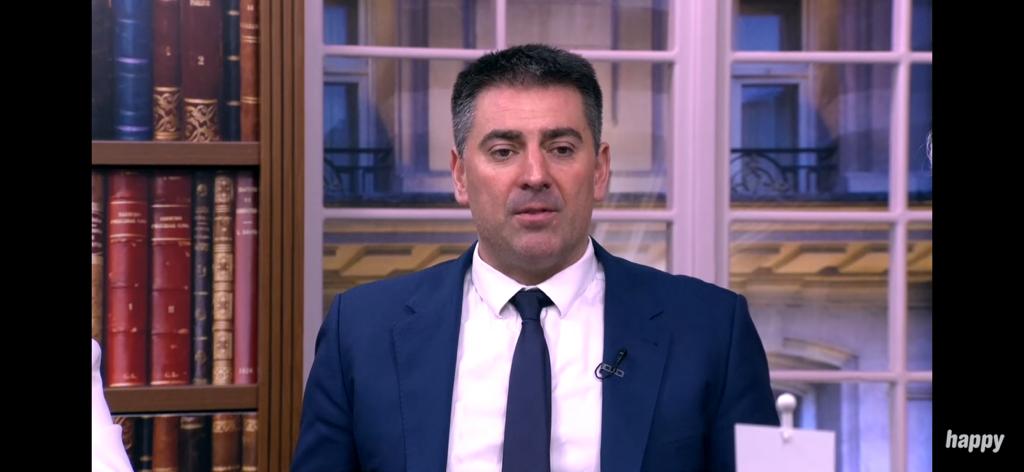
However, he emphasizes that Germany and certain countries insist on this, precisely in order to justify the attempt to grant independence to Kosovo.
"Kosovo, first of all, does not have its own identity; there is absolutely nothing for which the EU would allow itself to question its reputation. Kosovo is a black hole in Europe and its eventual push towards the EU would create an even bigger problem for the Union in this geopolitical situation," Milosavljevic told Kosovo Online.
He points out that there is already a problem in the EU that there is no unanimity among the members on numerous issues, stressing that they should "stop and ask themselves" and realize that Serbia is a factor of stability, peace, and preservation of European values.
When asked whether Germany would now push Kosovo towards EU membership, Milosavljevic says that Serbia cannot expect the long-standing policy to suddenly change and be on "our side". He points out that there is certainly a rush by some countries to start Pristina's European integration before June when the EU presidency is taken over from Sweden by Spain, which does not recognize Kosovo.
"We see, however, that a consensus is seriously emerging in the EU on many important issues. When it comes to Kosovo, five countries do not recognize Pristina, but some other countries, such as Hungary, have great reservations about Kosovo's entry into international institutions, and also according to its progress towards membership in the Union," Milosavljevic assesses.
He adds that certain countries, among which Germany is the leader, do not shy away from abusing the institutions of Europe in order to somehow try to legitimize Kosovo as a state.
"Germany is trying to get Kosovo into the Council of Europe, and one day into the EU, in order to relieve itself of responsibility, because it is one of the countries that took the lead, together with the Quint countries, in the attempt to grant Kosovo statehood. We are still, unfortunately, on the target of the great powers, which raise the intensity and create a crisis if they need it," our interlocutor points out.

comments