
Albania at the crossroads: Why is the Berlin Process closer to Tirana than the Open Balkan?
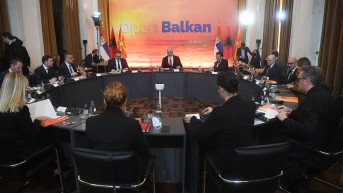
Analyst Ben Andoni and adviser in the Albanian Ministry of Infrastructure Eduart Gjokutaj explain for Kosovo Online the situation in Albania regarding the further development of the Open Balkan initiative and point out that the regional initiative is at a crossroads after the recent statements of Edi Rama, who has now given priority to the Berlin process.
They believe that Edi Rama undoubtedly believed in the idea of the Open Balkan, but that there were some changes in his attitude.
Analyst Ben Andoni tells Kosovo Online that Albania has so far benefited less from the Open Balkan than Serbia and North Macedonia.
"Something was achieved with diplomas, but not as much as it should have been and could have been. It seems that Serbia and North Macedonia have made better progress in the economic field and that they have many joint projects in other areas as well, which Albania lacked. Also, after Rama's request for the release of three Kosovo policemen, captured by Serbian police forces, the Open Balkan, as far as Albania is concerned, has come to an end. All the energy of Tirana is devoted to the Berlin Process. Tirana expects to receive funds from the Berlin process, although the funds are more allocated to the neighbors," Andoni says.
Andoni recalls the problems of Albania.
"Albania has problems with obtaining funds, but also with managing that money. North Macedonia and Serbia are more capable of developing projects. It seems that our education system is inferior compared to other countries of the Western Balkans. To this, we must add the fact that we failed to create a common market with Kosovo, with which we have agreements. We do not have an open market with Kosovo. There are protectionist barriers, and when that happens between Albania and Kosovo, imagine how it could be with Serbia and North Macedonia. There is a lack of trust; there is a lack of capacity. Delays in the movement of goods continue even today," Andoni concluded.
Eduart Gjokutaj, an expert in economics and finance and advisor to the Minister of Infrastructure and Energy Belinda Balluku, believes that Albania should not feel like a winner or a loser with the Open Balkan.
"I think that the signed agreements, first four, then nine more, are effective. I do not believe that they hinder the process that will follow, because those agreements opened the way for the implementation of the free movement of people and goods. The goods agreement was better implemented. I think that with the Open Balkan, we should feel neither losers nor winners", the Minister's adviser said.
Gjokutaj believes that the Albanian economy is more oriented toward Italy or Greece.
"Foreign trade statistics that show the relationship with the countries of the region tell us that, except for Kosovo and partially with North Macedonia, exchanges with Serbia, Montenegro, and Bosnia and Herzegovina are at a lower level, with no major impact on the Albanian economy. There are a lot of bilateral agreements with Kosovo, which seem to be becoming effective. Kosovo is our second export partner, while imports are smaller. It goes without saying that Albania's main partners are Italy, Greece, and other countries. Also, the agreements on the free movement of people, within the framework of the Open Balkan, have not been sufficiently implemented so far. But the Open Balkan helps our countries to adapt to the rules of the European Union," Djokutaj says.


comments