
The anniversary of the war in the Gaza Strip: With no hope for a ceasefire, is the Middle East sinking into a general conflict?
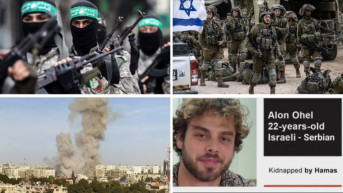
On this day, October 7th of last year, in coordinated actions, several militant groups led by Hamas attacked Israel's border areas in the Gaza Strip. The attack prompted a fierce response from Israel, with the conflict spreading to parts of Lebanon, Yemen, Iran, and Iraq. According to Palestinian reports, over 40,000 civilians have been killed so far, and the death toll continues to rise daily. For foreign policy analysts interviewed by Kosovo Online, it is increasingly likely that this conflict could escalate into a regional war with unforeseeable—apocalyptic—consequences.
Written by: Arsenije Vuckovic
"We are at war, this is not a military operation," Israeli Prime Minister Benjamin Netanyahu declared that morning, on October 7th.
He was very serious. The war in the Gaza Strip has already resulted in numerous civilian casualties and hundreds of thousands of people displaced due to the fighting.
Due to the intensity of the military operations Israel has undertaken, South Africa has filed a lawsuit against the country at the International Court of Justice in The Hague, accusing it of genocide.
Israel retaliated with a countersuit for "bias and false accusations."
At the same time, Israel declared UN Secretary-General António Guterres persona non grata.
"Today I declared UN Secretary-General António Guterres persona non grata in Israel and banned him from entering the country. Anyone who cannot unequivocally condemn Iran's heinous attack on Israel, as almost every country in the world has done, does not deserve to set foot on Israeli soil," said Israel’s Foreign Minister Israel Katz.
Guterres claims that the people of Gaza are living in a hell "that worsens by the day."
"The United Nations was not founded to take us to heaven, but to save us from hell. We have failed the people of Gaza. They live in a hell that is worsening by the day," Guterres said at a recent UN meeting of the Agency for Palestinian Refugees in the Middle East.
The war in the Gaza Strip has also led to a series of recognitions of the State of Palestine by several Western countries, including Spain, Norway, Ireland, and Slovenia.
Since the beginning of the conflict, efforts to locate the hostages Hamas abducted on October 7th have been ongoing.
In the initial days of the attack, 1,150 Israelis were killed, and 250 were taken hostage. Most of them were young people attending a music festival near the Gaza Strip.
In a special operation conducted by the Israel Defense Forces (IDF) in June of this year, some of the hostages were freed.
"All the released hostages are safe. The rescue operation was based on precise intelligence. It was planned for weeks. Israeli soldiers were under fire during the operation, which took place in houses and residential buildings where Hamas militants were hiding. We will do everything we can to free the remaining 120 hostages," said IDF spokesperson Daniel Hagari.
Among those still waiting is Idit Ohel, the mother of Alon Ohel, a Serbian-Israeli citizen.
"It's not easy. I have no information about where he is or how he is. I know he was abducted alive. I am his mother, and I feel that he is okay. But I have no official information about his whereabouts or condition," Ohel told Kosovo Online in early April.
Since then, nothing has changed. This mother is still waiting for her son.
And she is not the only one in fear.
A New Phase of the War
Professor Aleksandar Zivotic, from the Department of History at the Faculty of Philosophy in Belgrade, told Kosovo Online that the war in Gaza has entered a new phase and threatens to expand beyond regional borders.
"The anniversary of the war in the Middle East indicates that the conflict in the region has entered a new phase, threatening to escalate not only regionally but also globally. This comes after the latest Iranian strike on Israel, followed by Israel's entry into Lebanon, the potential Israeli response to Iran’s attack, and the possibility of the most significant global powers becoming directly involved in the conflict. This shows that we are now in a phase where the conflict could extend beyond regional boundaries," Zivotic emphasized.
Zivotic emphasizes that this part of the world is moving further away from the cessation of hostilities and peace because none of the key actors are inclined towards it.
"We are far from peace in the Middle East, and this is not only based on historical experience. When we look at the nearly century-long Middle Eastern conflict, and the current mindset of the actors involved, it is clear. The Israeli leadership—primarily the government and military—does not believe this conflict should simply end with some temporary agreements. They believe the current situation is favorable to them, and nothing short of a decisive military victory is acceptable. On the other side, Iran and the axis of resistance, which includes Hamas, Hezbollah, and the Houthis, who are backed by Iran, are also not ready for an agreement that would acknowledge the Israeli supremacy established on the ground," Zivotic concludes.
Two Sides of the Truth
Former high-ranking officer of the French Foreign Legion and commander of France’s special forces in the KFOR mission in 1999, Colonel Jacques Hogard, believes that the war in the Gaza Strip is marked by a significant amount of disinformation, with each side presenting its own version of the truth.
"After a year, I think that all wars in the world today are marked by disinformation, and that is the biggest problem. Each side will tell its own truth," Hogard told Kosovo Online.
Hogard adds that for him, a key question remains why the Israeli government, despite being informed about the impending attack on October 7, 2023, did not take any measures to prevent it.
"The Israeli government was informed about the attack on October 7, 2023, but took no action to prevent it. This is a question that must be resolved one day. Why did Prime Minister Netanyahu do nothing to prevent Hamas' attack on October 7? That is the crucial question, but no one has answered it," Hogard stated.
He emphasized that the Hamas attack was horrific, prompting Israel's response with bombings that also resulted in a terrible tragedy.
He believes it is up to lawyers and politicians to define the nature of Israel's response and whether it can be called genocide, as some parts of the global public suggest.
"Of course, the attack by Hamas was terrible. I don't know exactly how it unfolded or its intensity, but it was undoubtedly a horrific attack. After that, Israel responded by bombing Gaza in a dreadful way. Civilians, the elderly, men, women, children… there are many video clips showing this terrible tragedy. Some are calling it genocide. When a population is killed based on their skin color, language, or culture, that raises questions. I'm not a lawyer or politician, just a former soldier, and as a former soldier and citizen, I pose that question," Hogard concluded.
Jerusalem, Galilee, and Kosovo
On the other hand, Serbia's honorary consul in Israel, Aleksandar Nikolic, described the war in the Gaza Strip as a "horrific war vortex that has resulted in civilian suffering on all sides," while also warning about the rising wave of antisemitism directed at Jewish communities in Western cities.
Commenting on the anniversary of the conflict in Gaza, Nikolic noted that since October 7 last year, there has been a "deterioration of the political-security situation across the world."
"From then until today, we have witnessed the worsening of an extremely complex situation not only in terms of security and politics globally but also with the rise of inexcusable antisemitism," said Nikolic.
Nikolic emphasizes that such messages are increasingly heard in Western metropolises and even in the highest intellectual circles.
"I never thought I would live to see the day when presidents of such globally prestigious universities like Columbia and Penn were unable to answer such simple questions before the U.S. Congressional Committee regarding calls for violence against Jewish students. We're not talking about the legitimate right to criticize the policies of a foreign government or the consequences of military actions, as it is clear that civilian casualties of this horrific war, now entering its second unimaginable year, are on all sides. We are talking about brutal outbursts of hatred toward local Jewish communities across some Western cities," Nikolic stresses.
Speaking about the current situation in Israel, Serbia's honorary consul stated that the population is living in fear, particularly because part of Israel is facing rocket and drone attacks for the first time, and the entire country is now dealing with ballistic missiles launched from Iran.
The northern sector, especially Galilee and the port of Haifa, has been most affected by the military actions.
"There is no doubt that the society here is living in anxiety. Recent days indicate that the war has impacted the region not only through rocket attacks but also through drone incursions, and not just from Lebanon but from the east as well. This mainly concerns the northern sector, particularly Upper and Lower Galilee, as well as Israel's third-largest city, the northern Mediterranean port of Haifa. The central and southern parts of the country are, in many ways, more relaxed and experiencing a more normal state of affairs. This underscores the general anxiety among the local population. Even if people are not directly threatened geographically, their family members and loved ones have been recruited or mobilized into the reserves, and there is no doubt that anxiety is high, not only regarding developments in Lebanon but also concerning a broader escalation on a regional scale," Nikolic explains.
Nikolic believes that the war in Gaza has diverted global attention away from the issue of Kosovo, while simultaneously demonstrating that there is less and less room to present Kosovo as a sui generis—unique—case.
"There is no doubt that the current horrific wars, along with other open conflicts worldwide, have periodically shifted focus away from Kosovo and Metohija, despite the complex situation faced by the remaining Serbian population in the southern Serbian province. However, despite ongoing efforts to treat Kosovo and Metohija as a unique case, sui generis, there is increasingly less space to manipulate this narrative, particularly when viewed in the context of analogous cases and turbulent regions elsewhere in the world where UN Security Council resolutions and international law in general are also being disregarded," Nikolic emphasized.
He further explained that one of the key causes of the current conflicts is the disregard for UN Security Council Resolution 1701 from 2006.
"When we talk about the Levant, particularly the current horrific conflict in the Middle East, the question of the fate of UN Security Council Resolution 1701 from 2006 has certainly been brought to the forefront, particularly in terms of the failure to implement troop separation, which has had tragic consequences," added Nikolic.
He explained that for informed Israeli citizens, as the conflict expands into Galilee, Serbia’s position on Kosovo becomes more understandable.
"Kosovo is not just our Jerusalem, which it certainly is, first and foremost, in its spiritual, civilizational, and national-historical context. Kosovo is also our Galilee, when we explain it to people here. It is a territory over which there can be no question of sovereignty, but which is in a demographically complex position. This is something that resonates with interlocutors, as it raises the question of the latent danger of the current situation for them. The nature of imposing a solution without the consensus of the directly involved parties in the dispute becomes evident. Finally, the question of the finality of will as a basic presumption for the validity of a legal agreement arises—whether a contract closes mutual claims or is merely a springboard for further and more severe claims," Nikolic concluded.
Disputing the Death Toll
Foreign policy analyst Mirko Dautovic explained to Kosovo Online that the conflict will most likely expand in the Middle East, and the greatest tragedy is that "there is no one left to count the dead."
"The war has not only failed to calm down, but it will most likely spread, and it has already extended to Lebanon. I fear there is a strong possibility that Israel will attack Iran, bombing their oil fields or nuclear facilities," Dautovic told Kosovo Online.
He added that all estimates of the death toll should be taken with caution.
"There’s no one left to count the dead. The figures provided by the Ministry of Health in Gaza reached over 30,000 as early as March, and that growth has been very slow," Dautovic pointed out.
Dautovic identifies the key reason for the high death toll in the fact that Israeli attacks have destroyed a large number of hospitals, estimating that over the past year, the number of casualties may be in the hundreds of thousands.
He suggests that precise figures could only be obtained through a census conducted in Gaza after the war, although he expresses doubts that this will happen.
"I doubt that will ever happen," the analyst emphasizes.
In his view, Israel has committed genocide, not only through direct killings but also by destroying the entire territory of Gaza.
"You see, genocide doesn't have to be carried out solely by directly killing people. You can achieve it by making life on a certain territory impossible, and that's what has been done in the Gaza Strip. Nothing can be rebuilt there anymore, nor can anything grow. The people who survive, whenever this all ends, simply won’t be able to live there. It has become an uninhabitable zone," Dautovic stresses.
When asked whether the war in the Middle East has pushed Kosovo out of focus on the international stage, Dautovic responds that Kosovo has not been a priority for a long time and that this issue was forgotten back in 2008.
"Kosovo is not a priority, and hardly anyone even knows about it. Few people know about Serbia in much of the world. As far as Western countries are concerned, that issue was resolved in 2008. For other countries, Kosovo is certainly a precedent," Dautovic concludes.
Dautovic emphasizes that anyone studying the history of international relations in the future will recognize the significance of the violation of sovereignty and international law in 1999 with NATO's intervention, as well as what, he notes, emerged from that event, referencing the invasion of Iraq by Western allies and later Russia's invasion of Ukraine.
"It all stems, you see, from that violation. That was the first clear example of such a blatant breach of international law. However, the Kosovo case itself has been largely forgotten. Very few people even know where Serbia is, where Kosovo is, and few are familiar with the details. So Kosovo hasn't been a priority for almost anyone in the international community for a long time now, across the entire planet," Dautovic concludes.


0 comments