
The visit of Isaac Herzog to Belgrade – a new chapter in relations between Serbia and Israel
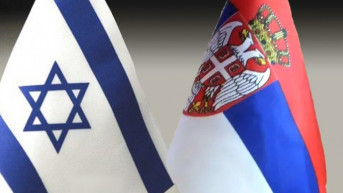
President of Israel Isaac Herzog arrives in Serbia tomorrow, marking the first visit at this level since Israel recognized Kosovo on September 4, 2020, and subsequently established diplomatic relations with Pristina on February 1, 2021. According to announcements, the main topics during Herzog's stay in Serbia will be the expansion of cooperation in the fields of economy, tourism, high technology, artificial intelligence, etc. Serbian officials have previously stated that despite Israel's recognition of Kosovo, Belgrade expects Israel to show understanding of Serbia's stance on this issue, which is sensitive for Serbia.
Written by: Dusica Radeka Djordjevic
Israel recognized Kosovo during the term of President Reuven Rivlin, who visited Belgrade in 2018, marking the first visit of an Israeli president to Serbia.
In early January of this year, Serbian President Aleksandar Vucic had a telephone conversation with President Isaac Herzog, where it was stated that relations between the two countries should reflect the closeness of the two nations.
During a meeting with the new Israeli ambassador to Serbia, Avivit Bar Ilan, Serbian Foreign Minister Marko Djuric stated yesterday that the visit of the Israeli president would be an opportunity to improve bilateral relations at all levels. The ambassador was also informed about the difficult situation of Serbs in Kosovo.
Regarding economic cooperation and investments in Serbia, Israeli companies have invested nearly 3 billion dollars since 2000, particularly in real estate and shopping mall sectors. There is also interest in investing in renewable energy sources, water purification and management technologies, and the software industry.
Serbia's ambassador to Israel, Miroljub Petrovic, told Kosovo Online that Isaac Herzog's visit comes at a time when bilateral relations are on an upward trend in almost all spheres of cooperation. Plans include signing memoranda of cooperation between the Serbian Chamber of Commerce and the Israeli Export Institute, the Federation of Israeli Chambers of Commerce, and the Association of Israeli Industrial Manufacturers.
"Up to this point, cooperation between Serbia and Israel has yielded significant results, especially in the economy. We have substantial investments in renewable energy, real estate, and increasingly intense cooperation in trade. This year, we are recording significant growth, taking into account some changes in the Israeli market and the closing of cooperation with certain partners while opening new opportunities. There is also a noticeable increase in interest from Israeli citizens in tourism to Serbia, and in this context, we can expect additional flights between Tel Aviv and Belgrade starting from the winter flying season," said Ambassador Petrovic.
Israel's decision in 2020 to recognize Kosovo, according to the ambassador, has left its mark on the relations between the two countries. However, he emphasizes that this is a topic that continues to be discussed.
"Our job is to explain all the facts, to point out the circumstances that are still relevant today, and to work intensively in the coming period to create conditions for a different perspective on this issue. The basic principle we follow, and in this sense, we recognize and expect Israel's willingness to apply this principle in building bilateral relations, is the principle of mutual respect and respect for the national interests of the other side. For us, the priority national interest is the preservation of Serbia's sovereignty and territorial integrity, and in this context, we expect Israel to have a clearer stance. We believe that the coming period will show that we are right in this regard. In any case, the issue of Israel's recognition of the unilaterally declared independence of Kosovo is still present in our discussions, but it is not an obstacle to continuing and intensifying cooperation in other numerous areas of mutual interest," says Petrovic.
He pointed out that the visit is taking place under very complex circumstances in the Middle East, as it is now the twelfth month of the conflict between Israel and Hamas, following the terrorist attack on October 7 last year, which Serbia clearly condemned.
"Since then, the Republic of Serbia has maintained a clear and principled stance condemning terrorism, advocating for a peaceful resolution of the conflict, and demanding the unconditional release of all individuals kidnapped on October 7. Among them, I should remind, is a dual citizen of Serbia and Israel, Alon Ohel, and we truly have great hopes that he will be released soon and returned to his family. Under these circumstances, this visit is being carried out, and its significance is very great for both the cooperation between Serbia and Israel and the relationship between the Serbian and Jewish people," Petrovic said.
Regarding Herzog's visit, the director of the Institute for European Studies in Belgrade, Slobodan Zecevic, noted that the state of Israel has a much greater influence in the world through the United States than its size and population would suggest, and that relations with Israel are very important for Serbia. He emphasized that the Serbian and Jewish people share many things, particularly in a historical sense, as both have been victims of genocide and fascism in Europe.
"Unfortunately, Israel is one of many countries from the Western bloc that recognized Kosovo, but the Jewish and Serbian people share much, especially in a historical sense, as we have been victims — of course, the Jews much more so — but we, too, are victims of genocide and fascism in Europe. We should stand in solidarity with each other and not allow revisionism, which exists in certain countries around us, regarding the suffering of the Jewish and Serbian people. Historically and politically, we should show solidarity when it comes to historical facts, and at the same time, we would like Israel to have much more understanding of our positions, as we, too, are confronted with Islamic extremism," Zecevic said for Kosovo Online.
In this context, he recalled the attempted murder of a member of the Serbian Gendarmerie in front of the Israeli embassy in Belgrade in June of this year, as well as extremism in the Sandzak region.
"In that sense, there aren't significant differences between Israel and us when it comes to policies and political positions. We should foster the best possible relations, which is particularly important for cooperation between Israel and Serbia in the U.S., especially in terms of lobbying in America," Zecevic stated.
The very fact that President Isaac Herzog chose to travel from Israel to Serbia during a time of war, according to Avital Leibovich, director of the Jerusalem office of the American Jewish Committee (AJC), is a clear indication of the importance Israel places on Serbia and on relations between Israel and Serbia.
In an interview published by Kosovo Online on Sunday, Leibovich stated that she believes the recognition of Kosovo by Israel, under the mediation of the United States four years ago, had an impact on Israeli-Serbian relations, but that it is necessary to move forward in understanding and relations.
"This issue is in the background, but the potential of Israeli-Serbian relations is enormous. The question is whether both countries want to tap into this potential and maximize it. I think Herzog's visit is a clear indication of this direction. It is a time of war in Israel, and the plane I arrived on (to Belgrade) was packed. Not a single seat was empty, which means that Israelis see Serbia as a destination to visit, to do business... I see great potential for cooperation in tourism, economy, investments, high technology, agriculture, water technology, education... The list is endless," Leibovich said.
She also highlighted that Serbia has a Jewish community with strong ties to the Jewish community in Israel, which is very important for the country.
After his visit to Serbia, the President of Israel will also visit Albania, where, according to media reports, he is scheduled to meet with the country's President Bajram Begaj and Prime Minister Edi Rama.

0 comments