
Another decision to the detriment of the Serb List – Is the CEC an (in)dependent body?
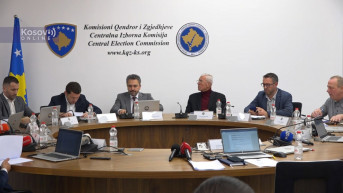
Absurd, undemocratic, directed against the Serbian community, unlawful—these are some of the reactions to the decision of the Central Election Commission (CEC) to proclaim the results of the parliamentary elections for 23 out of the 24 political entities that participated, while refusing to certify the results for only one—the Serb List. The CEC’s conduct, Kosovo Online interlocutors point out, reveals Self-Determination’s desire to label the Serb List and fuels suspicion that the Commission has become a political body that accepts only the results it finds agreeable.
Written by: Dusica Radeka Djordjevic
According to results published on the CEC website, the Serb List won 42,759 votes and nine seats in the Kosovo Assembly on 28 December, but those figures were not confirmed at the CEC session held on Saturday.
After members of the Commission from Self-Determination announced they would not vote for the Serb List’s results, the vote on certifying the results for this party was conducted separately from that of the other parties.
Voting in favor were CEC Chair Kreshnik Radonjiqi, Almir Saiti of the Bosniak New Democratic Party, and the representative of the Serbian community, Gordana Laban; voting against were two members from the Self-Determination Movement, Sami Kurteshi and Alban Krasniqi; while the remaining members—representatives of the LDK, PDK, AAK, as well as representatives of the Turkish and Roma communities—abstained.
It should be recalled that CEC members from Self-Determination also voted against the certification of the Serb List to participate in the elections when the issue was on the agenda in December, a negative decision that was later overturned by the Election Complaints and Appeals Panel.
The Serb List has today again filed an appeal against the latest CEC decision, considering it discriminatory and unlawful.
Eugen Cakolli of the Kosovo Democratic Institute believes that the CEC has formalized an unlawful practice.
In his assessment, election results constitute a single act that produces consequences for all participants simultaneously. Challenging election results, he said, cannot remain an undefined political opinion without any concrete claim of a legal violation; therefore, what happened at the CEC session should be considered absurd and a dangerous precedent.
In response to the CEC’s decision, the OSCE Mission in Pristina issued a statement today emphasizing the need for full respect of international electoral standards and for transparent and comprehensive publication of election results as, they noted, a means of ensuring legal certainty and equal treatment for all election participants.
By deciding not to verify the election results solely for the Serb List, according to Aleksandar Rapajic, Program Director of the NGO Center for the Advocacy of Democratic Culture from North Mitrovica, the Central Election Commission has shown that it has become a political body.
Political Decisions
“It is obvious that Self-Determination wants to continue denying the Serb List anything at all, even what it is entitled to under the law and the Constitution. This only shows that the CEC has become a political body that makes political decisions, rather than verifying election results as they actually were,” Rapajic said, adding that he expects the Appeals Panel to overturn the CEC’s decision.
It is impossible, he stressed, to ignore the results achieved by the Serb List in the elections.
“You cannot refuse to accept election results simply because you do not like them. With such decisions, the Central Election Commission is only harming itself and its own legitimacy, because I do not believe that foreign representatives and embassies will fail to note that such a fairly undemocratic decision has been made by preventing the verification of election results, which should be sacrosanct,” Rapajic emphasized in a statement to Kosovo Online.
Labeling the Serb List
Miloš Pavkovic, Director of Strategy at the Belgrade-based Center for European Policy, also believes that if the erosion of an institution such as the Central Election Commission continues, condemnations from the international community, criticism, and potentially additional actions should be expected.
“Of course, it will depend on how events unfold, but it is obvious that there is a tendency to undermine the Central Election Commission as an independent institution,” Pavkovic told Kosovo Online.
Behind the CEC’s decision, he sees Self-Determination’s aim to marginalize and label the Serb List as an “anti-state element” and a terrorist organization.
This, he says, has become Self-Determination’s standard practice, continued through this vote at the CEC session.
“Regardless of the fact that the Serb List legitimately won votes and seats in the Kosovo parliament, Self-Determination votes against them at every possible step and uses every opportunity simply to demonstrate its position,” Pavkovic said, pointing to another conclusion suggested by the CEC’s decision.
That is the possibility that Self-Determination is buying time—delaying the publication of the final election results and, consequently, all subsequent procedures required to constitute the Kosovo Assembly.
“Given that presidential elections are ahead of us, there is probably some political calculation on Self-Determination’s part as to why this is important to them,” he added.
The CEC Should Be Impartial
University professor Mazlum Baraliu says that the CEC should be impartial and take care of the general interest of citizens, and that the latest decision was made as a result of political influence by parties on the delegates within the CEC.
“The CEC is an independent institution, but political influence exists there, because it is structured in a way that allows political parties to exert influence through their delegates, that is, members of the CEC. Without going into political connotations, due to the positions of political parties that either did not vote, abstained, or voted against, this is a stance of political parties that is reflected in the CEC—an institution that should be impartial, neutral, and focused on the general interest of citizens,” Baraliu told Kosovo Online.
He notes that the outcome of the appeal filed by the Serb List with the Election Complaints and Appeals Panel cannot be predicted, but that the matter should be resolved there.
“It cannot be predicted in advance what anyone will do. I believe the issue will be clarified before the Election Complaints and Appeals Panel. If the outcome there is not satisfactory, then an appeal can be submitted to the Supreme Court,” Baraliu concluded.



comments