
Enduring symbol of the strategic partnership between Serbs and Americans
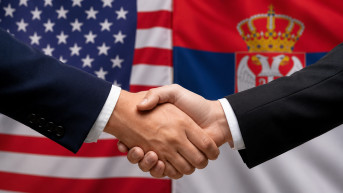
The culture of remembrance surrounding the most illustrious chapters in the relations between the Serbian and American peoples and states laid the foundation for a new era, exemplified by the joint commemoration this year of a triple jubilee shared by Serbs and Americans: 145 years of diplomatic relations, established through the exchange of diplomatic notes on 1 February 1881 by John Kasson and Filip Hristic; the 170th anniversary of the birth of the immortal Nikola Tesla; and the 250th anniversary of American independence, the development of which is inextricably linked to the work of the Serbian-born genius.
It is important that both Serbs and Americans remember that, in modern terminology, the strategic partnership between the two nations began as early as 1814, with the arrival of Djordje Sagic in the United States. He would become one of the leaders of the Texas Revolution. The partnership was further strengthened by the participation of the American Felix Wright in the Second Serbian–Ottoman War (1877–1878) as Chief of Staff of the Volunteer Battalion, and later through the humanitarian work of Dr. Edward Ryan and Ruth Farnam, whose compassion rose above the sounds of war during the Great War. This strategic partnership was reaffirmed when the Serbian people rescued more than 700 American airmen during Operation Halyard (Operation Air Bridge) in the Second World War.
Every 28 July, Serbian diplomacy commemorates two gestures unparalleled in the history of world diplomacy:
o The "Key of Trust" of 1868, involving the American and Serbian consuls in Bucharest, Louis Czapkay and Kosta Magazinovic. When Czapkay received orders to leave his post, he refused Washington's instructions to hand over the consulate and safe keys to the Swiss consul. Instead, he declared: "I will hand the keys exclusively to the Serbian Consul Magazinovic, because I have complete confidence in him," even though diplomatic relations between the two countries had not yet been established.
o President Woodrow Wilson's gesture of friendship—the proclamation of Serbian Day in Washington on 28 July 1918, accompanied by his order that the flag of allied Serbia be flown on all U.S. government buildings. On that day, the Serbian flag flew above the White House, becoming the first foreign flag in the history of that building to do so. The raising of the Serbian flag at the White House was an unprecedented act in American diplomatic history, proclaiming "Serbian Day" as a tribute to the heroic struggle, military endurance, and sacrifice of the Serbian people during the First World War, in recognition of Serbia's role and contribution to the Allied victory.
Why 28 July? Because it was on that very day, four years earlier, that Austria-Hungary, with a military force ten times larger, attacked the Kingdom of Serbia, firing the first shells at Belgrade from the river monitor Bodrog. It marked the beginning of the first great war in human history.
Serbian diplomacy launched the "Serbian Day in Washington" campaign as early as 2017. As a result, since 2018, the website of the U.S. Embassy has featured information about the day when the Serbian flag flew above the White House. Since 2019, the Museum of Serbian Diplomacy has displayed the flags of the United States and Serbia together with a certificate from the United States Congress.
In the almanac of remembrance culture, this very page could be opened every year on this date. It certainly did not escape the attention of President Donald Trump in 2019. In his Statehood Day message to Serbian President Aleksandar Vucic on 15 February, Trump wrote:
"This year, as we commemorate the centennial of the Serbian flag flying over the White House, we look forward to ensuring that the next century of our partnership will likewise be dedicated to peace, prosperity, and freedom."
It should be recalled that on 28 July 2018, thanks to the extensive efforts of Serbian diplomacy, a ceremony marking the centenary of that historic event was held in the U.S. House of Representatives, attended by then Serbian Prime Minister Ana Brnabic. On the same day, the then U.S. Ambassador to Serbia, Kyle Scott, raised the Serbian flag at his residence in Belgrade and published an editorial in the newspaper Politika, concluding with the words: "Long live Serbia." His successor, Ambassador Anthony Godfrey, later presented the American flag to then Serbian Foreign Minister Ivica Dacic as a gift from the U.S. House of Representatives to the Museum of Serbian Diplomacy, where it remains on display today.
The representative monograph "When the Serbian Flag Flew over the White House", dedicated to the events of 28 July 1918, was published by the Belgrade publishing house Knjiga Komerc.
Ambassador Godfrey and the Deputy Chief of Mission at the U.S. Embassy in Belgrade, Gabriel Escobar (later the U.S. Special Envoy for the Western Balkans), became the first American diplomats to visit the Veterans' Home in 2020, more than two decades after the NATO bombing, where they attended the gathering entitled "A New Era of Diplomatic Relations – The Day the Serbian Flag Flew over the White House." Among those present were descendants of Vojvoda Stepa Stepanovic, Milunka Savic, and Mihajlo Pupin.
The diplomatic diary, together with its collection of archival documents and valuable correspondence of leading figures of the era, was sent to President Donald Trump following the event. The Public Diplomacy Section of the U.S. Department of State authorized the U.S. Embassy to broadcast a series of television spots entitled "You Are the World" on RTS and leading Serbian television stations. The most frequently aired featured Woodrow Wilson and Mihajlo Pupin observing the Serbian and American flags flying side by side above the White House. This was followed by a 25-part series published in Politika, based on the diplomatic diary and edited by veteran Serbian journalist Slobodan Kljakic.
These days, we are witnessing the continuation of strategic dialogue and strategic partnership through NASA's Artemis programme, one of whose founders was Mihajlo Pupin, on 23 April 1915, a close friend and trusted confidant of President Woodrow Wilson.
In the writings of DJordje Stanojevic, physicist and close friend of Nikola Tesla, it is recorded that in 1892 Tesla brought to the Serbian Government in Belgrade what was described as the world's first space programme. The programme was immediately initiated on Ada Ciganlija, only to be discontinued the following year.
It was an honour to organize and host in Belgrade the visit of the last surviving engineer from the "Serbo 7" group, David Vujic, one of the seven Serbian-Americans who worked on NASA's Apollo 11 programme. In 2023, Vujic brought us a proposal for cooperation within the Artemis programme and regarded his final mission as the establishment of the Tesla–Pupin Space Centre for space research in Belgrade. Sadly, he did not live to witness Serbia's recent accession to the Artemis Accords.
The visionaries Tesla, Pupin, and David Vujic rendered immeasurable service not only to Serbs and Americans but to humanity as a whole by expanding the horizons and reach of our civilization. Therefore, the day when the Serbian flag flew above the White House represents the culmination of all gestures of friendship between Serbs and Americans. It is a beacon and an instructive guide: should we ever lose our compass for any reason, the answers regarding the proper course should be sought two centuries in the past. We should examine the deeds of our forebears, upon whose shoulders the paths of strategic partnership continue. They laid those foundations believing that future generations would preserve the alliance forged through fire and steel during the First and Second World Wars—particularly in light of today's geopolitical challenges and global upheavals.
President Trump's Letter of Appreciation
In October 2020, Ambassador Ljiljana Niksic received a letter of appreciation from President Donald Trump, a distinction without precedent in diplomatic history, bestowed by the head of the executive branch of a global superpower upon an ambassador serving in our country.
The letter, bearing President Trump's signature, stated:
"Thank you for the book 'When the Serbian Flag Flew over the White House.' Today we remember the great contributions of Mihajlo Pupin to the United States and celebrate our shared values of freedom and independence. We look forward to continuing our cooperation, strengthening the good relations between our two great nations, and ensuring lasting security, peace, and progress in the Balkans."
Written for Politika by Dr. Ljiljana Niksic, Ambassador at the Ministry of Foreign Affairs of the Republic of Serbia.

comments