
Albanians unconcerned about the Euro: Economy and citizens ready for the common European currency
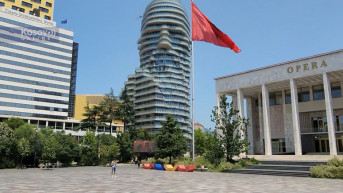
While the introduction of the euro represented one of the most significant economic changes in many European countries, the possibility is viewed with considerably greater optimism in Albania. According to estimates, around half of all transactions in the country are already conducted in the European currency, leading economists, business leaders, and citizens alike to believe that the euro is no longer a foreign currency to the Albanian economy.
Written by: Bledar Kuka
One of Albania's best-known entrepreneurs and owner of the tourism company ATHS, Besnik Vati, believes that Albania should put an end to the current dual-currency system in which both the lek and the euro are used.
"The dual-currency system in our economy must come to an end. Either we will use only the lek, as before, or only the euro. I believe it is natural for us to move toward adopting the euro. Albanian citizens are already accustomed to the currency. The euro is widely used in calculations, valuations, pricing, and business operations, and it is broadly accepted. Any further delay could prove harmful because of exchange rate fluctuations, whether due to the weakening of the euro or the lek," Vati said.
He points out that Albania is in a different position from some countries that have recently adopted the euro.
"Bulgaria is a good example. There was considerable debate there before the introduction of the euro. Unlike in Albania, citizens were not accustomed to using the European currency, despite the country being an EU member. After the switch to the euro, prices rose temporarily, much as they did in Croatia, but that period did not last long. I do not expect Albania to face such problems. Our economy stands to benefit from adopting the euro," Vati assessed.
Economist Eduard Gjokutaj believes that the transition to the euro is feasible but cautions that it is a lengthy process requiring the fulfillment of numerous conditions.
"Joining the eurozone depends on complex mechanisms, but above all on the consistent implementation of laws and regulations. Croatia is a good example of how much time is needed to meet all the criteria. Even that country required more than a decade before it could adopt the euro. Therefore, this process should not be presented as a political project that will be completed quickly, but rather as a long-term undertaking dependent on fulfilling obligations toward the European Union and developing the private sector," Gjokutaj said.
In his assessment, Albania will need at least ten years to meet the economic criteria for adopting the common European currency.
"It is necessary to ensure a sustainable level of public debt, fiscal discipline, greater formalization of the economy, and the digitalization of financial transactions. In addition, much will depend on the political will of EU member states, which may in certain cases show a degree of flexibility regarding compliance with specific criteria," Gjokutaj noted.
He stressed that the introduction of the euro should not be portrayed as a political victory but rather as part of the long-term process of European integration.
"Integration involves transferring part of national competencies, but Albania has voluntarily chosen that path. The independence of the Bank of Albania will be preserved within the European system, while the central bank will continue to play a significant role in conducting monetary policy. It is important that this process not be used for political purposes, because EU membership depends on many more factors than the adoption of the common currency alone," Gjokutaj concluded.
Citizens who spoke to Kosovo Online generally support the possibility of replacing the lek with the euro, although some believe that the dual-currency system should remain in place until detailed analyses have been conducted on all the economic consequences such a decision could entail.
0 comments