
Are the EU and the US abandoning their demands to the authorities in Pristina regarding de-escalation in the north of Kosovo?

The Kosovo authorities have not fulfilled any of the demands to calm the tensions in the north, among which the key ones are the withdrawal of the special police, the calling of elections in four municipalities with a Serbian majority and the formation of the Community of Serbian Municipalities. After the tragic events in Banjska, almost no one in the EU and the USA mentions these obligations of Pristina.
The interlocutors of Kosovo Online point out that the sudden "forgetfulness" of Western diplomats does not inspire optimism and warn that it would be dangerous if the pressure when it comes to de-escalation were completely transferred to Belgrade, and issues that are the responsibility of Pristina and concerning protection of Serbs in Kosovo.
After Banjska, the new rhetoric of the EU and the USA is noticeable when it comes to relations between Serbia and Kosovo. Messages from Brussels and Washington, which in recent months were mostly critical of Kosovo Prime Minister Albin Kurti's policy and his refusal to implement steps for de-escalation, are now not only visibly moving in the direction of easing those pressures, but the focus is largely shifting to Belgrade, as an address that should influence the lowering of tensions.
Assistant professor at the Faculty of Political Sciences, Stefan Surlic, assessed for Kosovo Online that after the events in Banjska, the main topic that is still discussed is de-escalation, but that the latest messages from the EU and the USA seem to be primarily moderated to more pressure on Belgrade and less confidence in the idea of forming the Community of Serbian Municipalities.
"Based on the debates held in the European Parliament and what we hear from European officials, there is an insistence on the continuation of the dialogue, but with an emphasis on de-escalation, which in translation can mean above all greater political pressure towards Belgrade and less confidence in any idea of forming the Community of Serbian Municipalities," says Surlic, answering the question of whether, after the events in Banjska, the pressures of the EU and the US on Pristina to de-escalate the situation in the north and form the CSM are "relenting".
Surlic adds that "if de-escalation in the coming period is presented as something that is the responsibility of Belgrade, then the CSM will present itself more as Pristina wants".
"And that is that it is some kind of disruptive, institutional framework where in fact the Serbs will only make it more difficult for the institutions to function, and not achieve what for them is essentially autonomy in vital spheres," he says.
He points out that the CSM was the first topic until now and that it was formally presented as such by international officials and the mediator, but adds that, in his opinion, the topic of de-escalation can also disrupt that idea.
"I am afraid of the worst possible concept, the outcome of further dialogue, to set a concrete, unacceptable, political condition for Belgrade, which is to implement the other points of the Franco-German agreement, and to move the CSM from the list of priorities," says Surlic.
He believes that the recent events have also stopped the withdrawal of Kosovo police forces from the north.
"That has been stopped, Pristina has now received the full support of international actors in terms of managing the situation on the ground. We hear unanimity that the Kosovo Police and its units, including special formations, are solely in charge of security in the north, that EULEX and KFOR will only help where it is necessary, but that they are not exemplary forces in charge of security, which makes the position of the Serbian community even more difficult, first of all, in the north of Kosovo," explains Surlic.
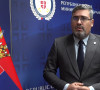
State Secretary of the Ministry of Defense of Serbia, Nemanja Starovic, tells for Kosovo Online that de-escalation today, after the tragic events in Banjska, is the same as it was before them, and this is what is contained in the official statement of the European Union from June 3, which says on the need to proceed without delay to the formation of the Community of Serbian Municipalities and to withdraw special units of the Kosovo Police from the immediate vicinity of municipal buildings in the north of Kosovo.
"When the passions calm down a little and when this one black campaign, which is being conducted from Pristina, but unfortunately also from many addresses around the world, is directed towards transferring some kind of blame to the state bodies of the Republic of Serbia, which does not even pass the test, nor does it come from common sense or elementary logic, I think we will return to what remains. And we are left with the official statement of the European Union from June 3, which calls for de-escalation and which explains in great detail what that de-escalation must entail," says Starovic.
He reminds that that statement speaks of the need to proceed without delay to the formation of the CSM and to withdraw the special units of the Kosovo Police from the immediate vicinity of municipal buildings in the north of Kosovo.
"That statement of the European 27 speaks about the need to proceed urgently, i.e. immediately and without delay, to the formation of the CSM, to withdraw the special units of the Kosovo Police from the immediate surroundings of the municipal buildings in the north of Kosovo. Regardless of how much the Pristina side is now trying to retroactively justify all his unilateral moves with the incidents of September 24, which led to de-escalation in the last 20 months, I want to believe that this will not be the case and that we will really approach a fundamental de-escalation that would remove the incredible pressure that the Serbian population is under in the north of the Republic of Kosovo for 20 months," says Starovic.
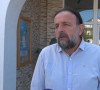
After the recent events in the north and the tragic events in Banjska, Pristina is no longer required to do anything and everything is allowed to it, says online journalist and writer Zivojin Rakocevic for Kosovo.
Rakocevic, commenting on whether, after the tragic events of September 24, when three Serbs and an Albanian policeman were killed, the months-long pressure of the EU and the USA on the Kosovo authorities to lower tensions in the north and start implementing the commitments made in the dialogue subsided, indicated that things have clearly changed, and that "Banjska and the Community of Serbian Municipalities are now not going together at all".
"We are put outside the system, outside the law, and in some cases completely outside life. Banjska and the Community of Serbian Municipalities do not go together at all now and the Community of Serbian Municipalities is something that is not mentioned at all, and to be honest, we do not know nor have we ever found out what the CSM is and what it could be. Today, it is the furthest as far as all of us are concerned," Rakocevic said.
He recalls the support that Pristina has always had from the international community, and which, in a way, increased after the events in Banjska.
"Albin Kurti is a child of the international community and Albanian politics is a child of the international community, they will not allow that policy to collapse and disappear. Often the international community, and Brussels and Washington, think better of Kosovo and the political elites of the Kosovar Albanians than they do themselves, and they did this job and they will live on the Banjska disaster for years. It will take years to get us out of this political and general despair that has engulfed us," concluded Rakocevic.

0 comments