
Arguments and promises: What messages does the pre-election campaign in Kosovo bring?
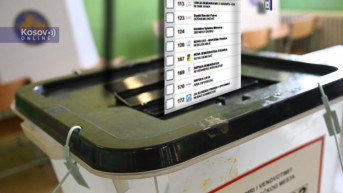
The pre-election campaign for the snap parliamentary elections began at midnight and will last until polling stations open on 28 December. Accusations against political rivals, issues related to northern Kosovo, and corruption scandals will be among the key messages put forward by party leaders during this period, interlocutors told Kosovo Online. Although, as they note, this is nothing new compared to previous parliamentary campaigns, one thing is certain—voters are tired of repeated electoral processes.
Written by: Milena Miladinovic
The campaign officially started today, although even before its launch parties had used social media to call on citizens to participate in the elections, promising a better future and a stable Kosovo.
Particular attention is being paid to the diaspora, which will be present in large numbers in Kosovo during this period.
Messages in previous campaigns were harsh, offensive, and accusatory, with opponents being labeled as “hajvani” (animals).
This time, according to our interlocutors, nothing substantially new is expected, except that the Self-Determination Movement (Vetëvendosje), aware that such rhetoric does not work in its favor, may change its offensive narrative toward its rivals.
Experts assess that the Serbian community—apart from remarks by the leaders of Self-Determination and its prime ministerial candidate Albin Kurti—will not be a major topic in the campaign of Albanian parties, while the narrative of the “liberation of the north” no longer resonates with voters.
Who Is to Blame for the New Elections?
Security studies researcher Nikola Vujinovic believes that the central message of the campaign will revolve around who is responsible for calling new elections, while closing messages will focus on the decision of the Council of the European Union regarding the lifting of sanctions on Kosovo.
Vujinovic told Kosovo Online that during the campaign both sides—Self-Determination and the opposition parties—will trade accusations.
“The essence is that only one new message has emerged, one new dimension of the campaign, and that is who is to blame for going to snap parliamentary elections. The paradox of the whole debate is that both sides criticize the other for something the other side actually accepts. The opposition criticizes Self-Determination for failing to form a government because it did not want partners or a coalition, but rather sought outside support—a minority government—which Self-Determination itself confirms. On the other hand, Self-Determination criticizes the opposition for refusing to support it in any way to make the government functional, which the opposition also openly acknowledges,” Vujinovic said.
He added that campaign messages will also depend on whether the EU sanctions imposed on Kosovo remain in force, are fully lifted, or are gradually eased in the coming months.
“If the measures are not lifted, the opposition will use this very harshly against Self-Determination. If there is even a minimal easing, or a postponement—for example for the next three months—Self-Determination will use that to argue that the opposition is wrong when it claims that Kurti has alienated Kosovo from the entire world,” Vujinovic explained.
Voter fatigue is certainly present, he noted, and turnout among residents of Kosovo is expected to be lower. However, around 120,000 votes from the diaspora—cast either in Kosovo or by mail—are anticipated.
“This will level out turnout somewhat, but I do not expect it to exceed 40 percent, because there is genuine fatigue with elections. At the same time, each political party is trying to consolidate its core electorate, while it is evident that the opposition is attempting to further reduce Self-Determination’s share, particularly within the diaspora, where the campaign has effectively been underway from day one,” Vujinovic stressed.
According to him, Serbs are already part of the campaign of Albanian parties, and messages directed against them are likely to intensify as election day approaches.
“They are already a topic, though not as dominantly as I would expect. We see the harassment of the Serb List and its candidates. I expect anti-Serb rhetoric to intensify toward the very end of the campaign.
The fact is that both Self-Determination and the Albanian opposition parties have already stated that they do not want any cooperation with the Serb List, which was one of the reasons a new government was not formed, since Serbian MPs will be decisive in determining who forms the government,” Vujinovic said.
He added that the Serbian community would benefit most from a weak coalition government susceptible to international influence, but that everything depends on whether Albin Kurti would be willing to cede the prime minister’s post to Bedri Hamza in exchange for the presidency.
“The fact is that a weak coalition government—formed by the PDK, LDK, or AAK—would suit the Serbian community best, because such a government would be more receptive to international influence, which could help the Serbian community and local municipalities break out of the vicious circle of Self-Determination’s manipulations and hostility. But I am skeptical that this will happen. I agree with most analysts who believe the election results will be similar. Then everything will depend on the relationship between Kurti and Hamza, and whether Kurti is ready to hand over the prime minister’s office in exchange for the presidency in the next elections,” Vujinovic concluded.
All Topics Exhausted
Political analyst Nexhmedin Spahiu assessed that all campaign themes have been exhausted and that party messages will be the same as in previous elections. He added that even the narrative of “pacifying the north,” promoted by caretaker Prime Minister Albin Kurti, no longer appeals to voters.
According to Spahiu, the only novelty is that the Alliance for the Future of Kosovo and Nisma are not running together.
“Everything has been exhausted. I see nothing particularly new in this campaign compared to the national elections on 9 February. There are not even significant changes on candidate lists. The only novelty is that Haradinaj and Limaj are no longer together—this is Kurti’s hope that neither will cross the threshold and that he will secure most of those parliamentary seats. Whether that will happen remains to be seen, but there is nothing special about the campaign, and I do not expect different results from those of 9 February,” Spahiu told Kosovo Online.
He believes that parties do not have any trump card reserved for the final stage of the campaign.
“We are going in circles. They have already begun sending the same messages, though mutual insults have been significantly reduced, likely because they have realized that this does not work in their favor,” Spahiu added.
According to him, voters are exhausted by repeated elections.
“Those who usually do not vote behave in a rather strange way. I do not know whether anyone will manage to persuade them to vote. People are tired, of course, and are waiting to see what will happen next,” he said.
He added that all parties will focus on the diaspora.
“With the New Year approaching and the diaspora arriving, most appeals are directed at them, and parties are striving to secure their votes to achieve some shift compared to the previous elections,” Spahiu said.
In his view, Serbs will not be a central theme of Albanian parties’ campaigns, and even Kurti’s slogans about the north no longer resonate with voters.
“Albin Kurti claims he has pacified the north and presents this as a success his predecessors could not achieve, and that is the only thing he can boast about, but I do not believe it will work anymore,” Spahiu concluded.
Voters Are Exhausted
Dušan Radakovic, Executive Director of the Center for Advocacy of Democratic Culture in North Mitrovica, told Kosovo Online that he does not expect a campaign different from that in February, noting that voter fatigue will result in lower turnout on 28 December.
“If we talk about Serbian parties, nothing special will happen in the new campaign. Municipalities have been returned, so other issues—such as the rights of Serbs—will now come to the fore. As for Albanian parties, nothing new. In the last campaign we had the famous Ibar bridge, the closure of Serbian institutions, ultra-nationalism… I fear there could be some hasty moves by Pristina, but I think the EU, due to the lifting of sanctions on Kosovo, will not allow that. We have not seen concrete outcomes from what was talked about in the campaign—so it will be the usual attacks, accusations of corruption, and debates over who attacked whom more, but nothing concrete about improving people’s lives or what the new government will actually do,” Radakovic said.
He expects turnout to be lower, possibly by 10 to 20 percent.
“My projection is that all parties will receive fewer votes this time, including Serbian parties. There are far fewer Serbian parties now than in the local elections—only three are competing. I expect turnout to be 10, perhaps even 20 percent lower, because we have had three election cycles—parliamentary, local, parliamentary—plus second rounds of local elections in almost half of Kosovo’s municipalities, including South Mitrovica and Klokot. Voters are simply exhausted by election cycles, campaigns, posters, and ads that offer nothing substantially new,” Radakovic explained.
Asked whether he expects Serbs in Kosovo to be a topic for Albanian parties, Radakovic answered in the affirmative, stressing that Self-Determination has little to offer voters beyond ultra-nationalism and slogans about the north.
“We have seen in recent cycles the rejection of the Serb List—first its registration, then its candidates. That is a political pamphlet aimed at short-term political gains, so there will certainly be attacks on the Serb List and other Serbian parties. I fear that in the future it will be difficult for some parties to form coalitions with the Serb List due to the prevailing narrative that places the Serb List on one side and all Albanian parties on the other. Self-Determination has not delivered anything concrete in the past five years; the only thing it relies on is the ultra-nationalist slogan ‘the north is ours, we control it.’ That is the only message that resonates with its supporters and brings in votes, so it will certainly continue along that path,” Radakovic concluded.


0 comments