
The ban on dinar after the UNSC will also be discussed in Brussels, will the CSM also be on the table?
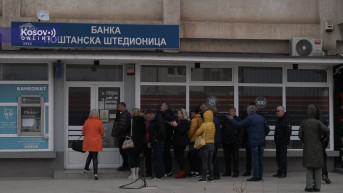
After the emergency session of the UN Security Council convened due to Pristina's decision to abolish the dinar in Kosovo, this issue will also be on the table in Brussels on February 27, despite the objections of Pristina's chief negotiator in the dialogue with Belgrade, Besnik Bislimi, who stated that "the dinar is not a part of the dialogue".
The call for both sides to discuss the issue of the dinar in Brussels was made by the EU's representative for the dialogue, Miroslav Lajcak, which Bislimi commented on quite resentfully, stating that Lajcak had "violated principles" he had set for himself because he had scheduled the meeting without prior agreement with the parties on the agenda.
Such behavior by Bislimi towards EU officials is not acceptable, EU spokesperson Peter Stano said today, emphasizing that the EU hoped Bislimi would appreciate the effort, instead of unfairly accusing European officials.
What is undoubtedly a topic of the dialogue, and an obligation of Pristina for over a decade, is the formation of the Community of Serb-majority Municipalities, and according to the opinion of Kosovo Online's interlocutor, the dinar and the CSM are interconnected topics.
Milica Andric Rakic, the program manager of the NGO Social Initiative, says that these are essentially closely related issues, although she believes that Kosovo wants to treat these two topics differently.
"One way to resolve the issue of the dinar without serious consequences for the Serbs and other communities in Kosovo, which depend on the Serbian budget, is to form the CSM. The point is to establish an institution that will be recognized by both Serbia and Kosovo and through which Serbia can continue to finance without hindrance, thereby solving the problem of financing Serbian communities in Kosovo from Serbia. So, these are not necessarily separate issues. I assume that the government in Pristina calculated that by abolishing the dinar, they could abolish Serbian institutions in Kosovo without forming the CSM and without transforming them into the CSM," Andric Rakic said for our portal.
She adds that there are currently no announcements that Pristina is ready to discuss this in the dialogue.
"We've heard that Albin Kurti said he's going to Brussels only to sign agreements and that he is only called when there's something to sign. However, it's true that if Pristina continues to refuse these meetings, we will increasingly see discussions about Kosovo in the Security Council, for which I assume they will eventually calculate that it's not politically convenient for Kosovo's interests," Andric Rakic emphasizes.
Aleksandar Rapajic, the Program Director of the NGO "ACDC" from North Mitrovica, also assesses that the issue of the dinar could be resolved through the CSM, but says that Pristina is not interested in the Brussels dialogue.
"From what we see, Pristina is not interested in the Brussels dialogue; instead, it wants to solve things unilaterally by making a decision and then insisting on its implementation. That's the case with the dinar now. Instead of solving this problem through the CSM, which nobody talks about, it is resolved by Pristina making unilateral decisions that essentially benefit no one. No Albanian in Kosovo will live better after the CBK decision; only the Serbs will live worse," Rapajic says for Kosovo Online.
As he points out, a return to the Brussels process and the CSN is needed because the CSM has already defined how all these issues should be resolved.
“For example, the issue of the dinar could be resolved through the CSM by regulating how Serbia has the right to send money for the assistance of the Serbian community and for the financing of healthcare, education, and social services. Everything is already planned; it just needs to be implemented,” Rapajic says.
Despite the existence of agreed points from negotiations that are not being implemented, political scientist Dimitrije Milic from the New Third Way does not believe that the draft statute of the Community of Serb-majority Municipalities will return to the table at this moment. Instead, he says that the focus will be on the dinar as the most pressing issue. As he points out, there is too much intensity of new escalatory events that impose new topics.
“It's always a question of the extent and results of the talks because I assume that even the Kosovo side is not currently too interested in making concessions, considering that the European Parliament elections are approaching, which will pause EU activities for a significant period. I don't believe that the CSM will return as a topic because, in politics, the rule is that when you don't have power, you buy time. As for the Kosovo side, they are buying time and waiting for better circumstances, and in practice, on the ground, the situation is getting more difficult for the other side, so decisions are made only when you are pressed into them, and currently, that's not the case. So, I don't believe that the CSM will return as a central issue in the dialogue,” Milic says.
Who will represent Pristina and Belgrade at the meeting on February 27th is still unknown, and although there hasn't been a meeting in the trilateral format at the highest level within the dialogue for several months, Milic says he doesn't rule out that it could happen by May and that Aleksandar Vucic and Albin Kurti could sit at the same table with European mediators.
“This could happen by May if the EU invests some of its political capital. I believe that a high-level meeting is possible because it would be beneficial from the EU's perspective to send a message that despite tensions and disagreements, there must be continuous dialogue at the highest level,” says Milic.
There hasn't been a dialogue between Belgrade and Pristina, including a meeting between Aleksandar Vucic and Albin Kurti, since mid-September last year. They were in Brussels on October 26th, but there was no joint meeting then, nor on November 16th when the chief negotiators Petar Petkovic and Besnik Bislimi separately met with Brussels mediators.

0 comments