
Belgrade and Pristina between the European "hammer and anvil": Are the next months crucial for the dialogue?
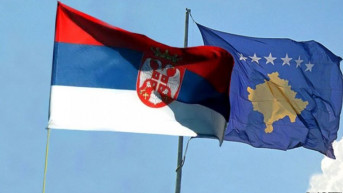
Since the beginning of the year, there have been increasing statements that the European Union could intensify pressure on both Belgrade and Pristina in the first months of this year to reach an agreement and normalize relations. However, Kosovo Online's interlocutors are skeptical that the EU could effectively implement these threats as it enters an election process.
Most opposition leaders in Pristina are convinced that, in case the agreed-upon measures are not implemented, especially the formation of the Community of Serb-majority Municipalities, Kosovo will face a "second wave" of sanctions.
The latest warning came from the vice president of the Democratic Party of Kosovo, Lutfi Haziri, who claims that an agreement must be reached in the next 90 days. Since the government did not meet the demands of the EU summit in Moldova, Kosovo expects a second package of EU measures.
That something is "brewing behind the scenes" and that such a fate could befall Serbia was recently confirmed by Serbian Foreign Minister Ivica Dacic, who warned that the strongest pressures on official Belgrade could be expected in February and March of this year.
Helena Ivanov, a research associate at the Henry Jackson Research Center, assesses that the statements from EU officials about exerting pressure on Belgrade and Pristina for not fulfilling their promises are only verbal threats and that both sides know that they will not face sanctions for inaction.
"So far, we have not seen either side being substantively penalized or pressured to implement anything. Consequently, we have not witnessed any substantive steps toward normalization of relations or implementing what has been agreed upon. Simply put, both sides are aware that their inaction won't be sanctioned to the extent that the EU might say, so they see that they can 'get away' with not implementing what they claim they want to", Ivanov emphasizes.
Ivanov states that if the EU wants to achieve diplomatic progress in the implementation of agreements and normalization of relations, then these pressures need to move from verbal threats to some form of sanctions or measures against the party unwilling to implement what it has signed or verbally committed to.
"Now, if the European Union wants to score some diplomatic points, if it wants to substantively contribute to the normalization of relations, I think these pressures should really start to include some sanctions or at least some measures that would punish the parties not implementing what they previously signed or verbally declared they would implement in practice. Whether the EU will really do this because this is a verbal threat that won't result in concrete measures, remains to be seen," Ivanov concludes.
Political analyst Ognjen Gogic assesses that it is unlikely for the EU to intensify pressures in the coming months in the dialogue process between Belgrade and Pristina. He also questions whether, at this moment, the EU even has mechanisms for such threats.
Gogic says that given the upcoming elections in the European Union and the United States, it is unlikely that the EU currently has the mechanisms to exert such pressure.
Reminding that the EU Special Envoy for the dialogue, Miroslav Lajcak, was appointed to this position in 2020, and his mandate expires in April, Gogic says for Kosovo Online that it is unlikely to achieve any success in the normalization process in four months when it has not happened in the last four years.
Gogic recalls that in September 2022, a Franco-German plan was presented to Belgrade and Pristina, supported by both the EU and the United States. The idea was to implement this initiative during 2023.
As he says, last year was designated as the year when significant progress was supposed to happen, a breakthrough in the normalization process between Belgrade and Pristina.
"That initiative was conceived to achieve an agreement at the beginning of last year and then implement it before the end of the year. In the agreement accepted in February, later supplemented in Ohrid in March, it was stated that it would be implemented within 150 days, followed by a donor conference. None of that materialized, and the EU and the US envisioned finishing this job during 2023 or making significant progress because they knew there would be no one to deal with it in 2024", Gogic emphasized.
He emphasizes that the question now is who can exert that pressure.
He points out that it should be kept in mind that Miroslav Lajcak's mandate as the main mediator for the EU expires in April.
"His mandate has already been extended several times; he was appointed to this position in 2020 with the task of bringing the dialogue process to an agreement on normalization. Four years later, it seems that we are not any closer to that agreement, and some previous agreements have collapsed in the meantime. So, it is indeed unlikely that if progress could not be made in four years, it would be achieved in the last three months of his mandate. It is a big question whether his mandate will be extended because it is again a question of who can extend it since the EU is going to parliamentary elections", Gogic states.
Journalist Leart Hoxha stated that the European Union, aiming to reach an agreement between Pristina and Belgrade, might exert pressure on Kosovo only in financial terms in the early months of this year, considering the lack of deeper relations between the EU and Pristina.
Hoxha told Kosovo Online that the EU had repeatedly stated that there must be progress in the dialogue in the first quarter of this year.
"It is expected that around the anniversary of the Agreement in Brussels, or the Ohrid Annex, something will be signed, sealed, that there will be some more concrete progress on both sides", Hoxha stated.
As he emphasized, elections in Serbia and Kosovo cannot postpone the implementation of the agreement, even though both sides hope for that, and this is the official stance of the United States.
"If this is not President Vucic's post-election tactic to delay the process of forming the government and thus postpone the dialogue, buying time for himself and the Serbian side with all these maneuvers, then it somewhat coincides with some statements in Kosovo. For example, Lutfi Haziri, the deputy chairman of the Democratic League of Kosovo, explicitly said that he expected things to be settled in the first 90 days of this year. At the same time, we have a very clear message from O'Brien from the State Department, who said before the elections in Serbia that whatever the election result, he expected Serbia to adhere to what it had accepted or what had been agreed upon. I think that the American stance that neither side can escape obligations despite elections means that, at best, they are trying to buy time, but progress toward what has been agreed upon is inevitable", Hoxha added.
However, according to political analyst Ognjen Gogic, it currently seems unlikely that the EU has the mechanisms to exert pressure on any side in the dialogue process.
He explains that after the EU elections, a new composition of the European Parliament and the European Commission will be formed, and currently, these bodies do not have the capacity to embark on new initiatives.
Considering all this, as Gogic says, it seems unlikely that the EU has mechanisms to exert pressure on the parties.
Gogic also points out that it should be taken into account that Serbia currently has a caretaker government, and while Serbia completes the process of forming a new government, Kosovo will likely enter the process of parliamentary elections.
"In fact, this year, at no point, will we meet halfway, that is, we will not have mediators on both sides, negotiators who will have the legitimacy to discuss agreements. When all this is taken into account, it seems that attempts to impose a solution in the next three months are unlikely", he says.
Gogic believes that the EU will now seek some exit strategy, a way to round off the story somehow so as not to declare failure and avoid a collapse.
Referring to the narrative that the EU will formalize agreements by the end of January and introduce them into negotiating documents for both Serbia and Kosovo, Gogic says that this has been misinterpreted in public, and it is not a new form of pressure, but an internal matter, a bureaucratic job - for the EU to incorporate those documents into its own.
"In a way, it's putting things in a drawer. It's not a new approach; it's actually putting that matter on hold for the time being. In this way, the EU would leave it in trust for a new session of the European Parliament to deal with", he adds.
Gogic expects that in the next few months, efforts will be made to find an exit strategy, and that, at some point when conditions are met, Belgrade and Pristina will somehow confirm their commitment to continuing the process.
"But not more than that because it cannot be a miracle that changes so many things overnight. We have agreements that have not been accepted properly or implemented, and achieving an unprecedented result and miracle in a few months is unlikely. It is more about rounding off the story so that the EU does not enter the election process by declaring failure in this process", he notes.
Commenting on statements from the EU regarding the removal of stickers for license plates, in the context of expected pressures, Gogic says that they precisely show that the EU is grasping at straws and wants to see any progress to declare it an unprecedented success.
"There are comments that the removal of these stickers demonstrates the will of both sides to return to the dialogue process, although it is a minor concession that does not indicate a desire to make any serious progress, such as holding elections in northern Kosovo or even forming the Community of Serb-majority Municipalities. This shows that the EU needs any progress, and they are even willing to latch onto the smallest thing to show some result", Gogic says.
According to his words, if Belgrade and Pristina demonstrate goodwill on minor issues in the coming period, it will be enough for the EU to conclude this story in March when the European Council summit is expected.
"Minimal concessions are needed from both sides for the EU to acknowledge some progress at the European Council and then round off and conclude this story for the time being. However, this actually means that the whole thing will only be paused in light of these alleged moves, and only when elections are held in both the EU and the US, and when we have administrations in both the EU and the US with full capacity, can the process continue, and that is not expected before next year", Gogic concludes.
According to reports in the Belgrade press, Serbia is facing a "new-old package" of pressures that includes four mechanisms without time limits.
Alongside imposing an "authoritarian regime" image and additional pressures on the Serbs in Kosovo and Republika Srpska, this "package" would prevent Serbia from further approaching the EU by hindering the opening of new clusters.
Particularly mentioned is the possibility of "economic stumbling", meaning preventing further investments and halting ongoing projects, which would also involve problems with loan repayments.
Journalist Leart Hoxha notes that the European Union has largely used economic pressures as a form of conditioning.
He recalls that Kosovo has faced such measures to pressure official Pristina regarding dialogue with Serbia and the implementation of agreed-upon agreements.
"In Pristina, nothing major is expected, as punitive measures, as the EU calls them, are still in effect towards Kosovo. I think this will cost the Kosovo Government and all Kosovo citizens hundreds of millions. The European Union mostly uses economic measures to pressure Kosovo because its stance toward Kosovo is neutral, and there are no other relations between Kosovo and the EU, as there is no start of accession negotiations, and Kosovo's request for accession submitted in December 2022 has not been accepted. Unless they continue to maintain punitive measures towards Kosovo, it is unlikely that the EU will do much more about it", Hoxha said.
Speaking about EU pressure on Serbia, Hoxha notes that if Serbia's involvement in the events in Banjska is proven, it could open the door to severe sanctions.
"I think that if something is published proving that the state of Serbia was directly involved in the terrorist attack in Banjska, then it would open the door to sanctions or other measures against Serbia. For now, this exists in a report from the Ministry of Foreign Affairs of Kosovo, and it is also in some media reports, but it does not officially exist in Brussels. For example, if something like that is published or adopted as a document within the European Parliament by February or March, then it would open the door to greater pressure on Serbia, not only as a state that sponsors terrorism but also as a destabilizing factor in the Balkans", Hoxha concluded.



0 comments