
The Berlin Process is gaining momentum, while the Open Balkan Initiative is on hold; can they go hand in hand?
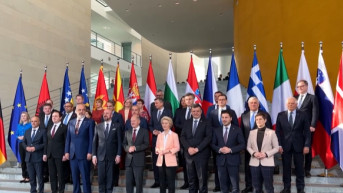
Albania will host the Berlin Process Summit tomorrow, bringing together representatives from the Balkan six and officials from the European Union, including German Chancellor Olaf Scholz and French President Emmanuel Macron. The goal of this initiative, launched in 2014, is to advance regional cooperation and the European integration of the region. Since Belgrade, Tirana, and Skopje launched the Open Balkan Initiative in 2019, there has been an ongoing debate about whether these two initiatives are competitive, which one will outlast the other, whether they hinder each other, or if they will eventually integrate.
Albanian Prime Minister Edi Rama's statement at the beginning of July that the Open Balkan Initiative had "fulfilled its mission" and that the focus should be on the Berlin Process only gave momentum to those who never viewed the initiative favorably and saw in Rama's words the beginning of the end of this initiative. According to the assessment of Kosovo Online's interlocutors, however, these two platforms do not exclude each other, and each of them has its advantages and disadvantages.
The Berlin Process, initiated by former German Chancellor Angela Merkel, includes Serbia, North Macedonia, Bosnia and Herzegovina, Kosovo, Montenegro, and Albania as its members. They signed agreements on mutual recognition of personal documents, university degrees, and professional qualifications last November. In 2020, an Action Plan for a common regional market was adopted.
The Open Balkan Initiative emerged five years after the launch of the Berlin Process, in 2019, initially under the name Mini Schengen. It was supported by Serbian President Aleksandar Vucic and the Prime Ministers of Albania, Edi Rama, and North Macedonia, Zoran Zaev. There were expectations that Bosnia and Herzegovina, Montenegro, and Kosovo would join this initiative, but it has not happened to this day. There is resistance from all three sides. Within the Open Balkan Initiative, agreements have been signed that allow every citizen of the three countries to work under the same conditions as local residents, related to the connection of schemes for electronic citizen identification, cooperation in the field of veterinary, food safety, and phytosanitary issues, recognition of academic qualifications, cooperation in tourism and culture, among other things.
Stefan Vladisavljev, Program Coordinator of the BFPE Foundation, says for Kosovo Online that the Berlin Process and the Open Balkan Initiative should not be seen as competitive initiatives because they are complementary and share the same goal of promoting regional cooperation and connectivity between Western Balkan countries.
"This can only be beneficial. Whichever of them is implemented, or if they are implemented together, we can only benefit from these initiatives," Vladisavljev says, adding that Tirana has not left the Open Balkan Initiative and that this initiative is currently "on hold".
He says that within the framework of the Berlin Process as a pre-phase of European integration, regional cooperation has been enhanced. Still, it has also faced some insurmountable obstacles within that process.
“Since the Berlin Process (BP) concerns all six actors from the Western Balkans, one of these obstacles was that decisions were made by consensus. So, to implement something within the BP, all six actors must agree on it and make a joint decision. Given some bilateral tensions in the region, there was simply no agreement on all the decisions that were important for regional cooperation, creating the need for those states that want to move forward and can agree to move forward to find a way to do so. This is how the Open Balkan was created. It emerged as a response to the inefficiency of the Berlin Process and the impossibility of achieving all the benefits of regional cooperation through that consensus decision-making in which everyone had to agree for anything to be done," Vladisavljev says.
Our interlocutor believes that the Open Balkan is useful, especially because it can be "switched on and off" when needed.
"When the Berlin Process is active, the Open Balkan initiative may not be necessary. I would say these are complementary initiatives, each having its own advantages and disadvantages. The Berlin Process definitely has a form of institutionalization with the support of EU member states. On the other hand, the Open Balkan is more of an ad hoc initiative owned by the regional states that use it as needed, and its future depends on how much the Western Balkan states want to improve their regional cooperation without significant obstacles. It can happen that some things agreed within the Berlin Process are simply not implemented because to implement them, Belgrade, Pristina, Sarajevo, and Podgorica must agree, and then we find ourselves in a situation where representatives of Tirana, Belgrade, and Skopje meet again and say: well, maybe not all six of us can do this, let our three countries take a step forward again, and then within the Open Balkan Initiative, we sign some agreements or implement certain decisions," Vladisavljev says.
Speaking about the achievements of both initiatives, Vladisavljev emphasizes that the greatest achievement of both processes is a higher level of regional cooperation.
"The advantage of the Berlin Process is that it includes all Western Balkan actors, all six economies, and the fact is that if something is successfully agreed upon within the Berlin Process, it is applied throughout the region. One example is the issue of roaming, which has been widely popular. When traveling to Montenegro, Albania, or North Macedonia, you can use your mobile phones without roaming charges, at least for a certain period. On the other hand, efficiency is associated with the Open Balkan Initiative. You don't need to have all six members; there were three members so far, and if they agree on something, they can implement it very quickly because there is both political will and an economic benefit to apply those decisions," Vladisavljev says.
Commenting on negative comments regarding the Open Balkan, Ivan Stoilkovic, the President of the Democratic Party of Serbs in North Macedonia, believes that anyone trying to undermine this initiative surely has a different view of the development of the situation on the Balkan Peninsula, especially when it comes to relations between Serbia and North Macedonia.
"The criticism of the Open Balkan is essentially a story about another option. The only story we've heard in the last 20 years is 'AlMaKos', which is the unification of North Macedonia, Albania, and Kosovo. In that sense, the establishment of a 'Greater Albania' is not something new; it's simply a confirmation of the policy pursued by the international community," Stoilkovic says.
He adds that the recent instrumentalized visit of Albin Kurti to North Macedonia was the first indication of such a policy.
Comparing the Berlin Process and the Open Balkan, analysts in Tirana tell Kosovo Online that the Open Balkan sent a message that politicians in the region could cooperate when they wanted to. They see the advantage of the Berlin Process as having the support of the EU with its funds.
Ardian Hackaj, Research Director and Coordinator of the Tirana Connectivity Forum believes that the Open Balkan has had a positive effect on regional cooperation and its improvement, while the Berlin Process is seen as more secure and stable.
"A few months ago, the Albanian Prime Minister publicly stated that the Open Balkan would cease to exist, that it had fulfilled its mission. This was interpreted as the end of this process. However, we are informed that there are still activities within the Open Balkan. I think the Open Balkan has brought positive effects, with a focus on regional cooperation and its improvement. This initiative has sent a message that our politicians can cooperate when they want to," Hackaj said to Kosovo Online.
He, however, notes that there was no structure for implementing the Open Balkan initiative, nor a clear action plan.
"For example, for just three signed agreements within the Berlin Process, there were 27 preparatory meetings, while there were very few such meetings for the Open Balkan," Hackaj says.
Returning attention to the Berlin Process is a good and positive step for the Western Balkan countries, according to Merita Haklaj, an Albanian journalist from A2 Television. She told Kosovo Online that the Open Balkan, formed by only three countries, could not function as it was.
Haklaj points out that within the Berlin Process, countries in the region can use EU funds, while within the Open Balkan, they were directed towards mutual reciprocal agreements and their own funds.
"The value of the European Union within the Berlin Process and the common regional market lies in the fact that the EU provided funds for our countries, and it was up to them to compete in projects, develop them, and use them for the benefit of the region, making it ready for integration into the EU. The countries that founded the Open Balkan Initiative were certainly supported by both the EU and the USA, but it was evident that many agreements were not implemented, even though there were no obstacles to their application. In this case, Chancellor Scholz's initiative and the open acceptance by Prime Minister Edi Rama for reactivating the Berlin Process, as a project that brings together all countries that have some obligation to negotiate with the EU, are not obstacles to the implementation of bilateral agreements. For example, we had many signed agreements with Kosovo, but some were implemented, and some were not. So where the EU is, there is also more fertile implementation of major agreements. It is always up to our countries to create projects, compete for them, and carry them forward," Haklaj says.
Albanian analyst and journalist Frrok Cupi says for Kosovo Online that the upcoming meeting within the Berlin Process is essential for the region, but also that "the Open Balkan is within that process". In his view, the Open Balkan is the best initiative of our time for opening borders and unifying the Balkans. Regarding tomorrow's Summit in Tirana within the Berlin Process, he says it will have "several peculiarities".
"The main peculiarity is what is happening in northern Kosovo and southern Albania. In northern Kosovo, there is a conflict, a frozen zone, which from time to time can lead to conflict erupting. Secondly, there is a problem that could escalate in Himare, as Greece is trying in every way to revive it. These are some of the most important topics that will be discussed at the Summit," Cupi says.



comments