Bilateral disputes and the Western Balkans’ path to the EU: A greater obstacle than reforms?
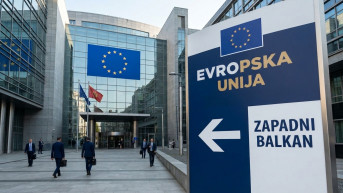
There are numerous differences among Western Balkan countries on their path toward the EU, but they all have one thing in common—bilateral disputes. Montenegro, North Macedonia and Serbia face a similar problem: unresolved issues, often unrelated to the EU acquis, become instruments for blocking progress in a process in which decisions are taken unanimously. Kosovo Online’s interlocutors from Podgorica, Skopje and Belgrade agree that the bilateralization of the enlargement process is one of the greatest obstacles to the region’s European integration. They also argue that candidate countries should not reach a point where their progress depends more on the political will of their neighbors than on meeting European Union criteria.
Written by: Katarina Saicic
Enlargement was the main topic at the EU-Western Balkans Summit held in Brussels on Wednesday. European Commission President Ursula von der Leyen said that enlargement of the Union was a strategic imperative for Europe and that there was significant momentum for advancing the accession process of candidate countries.
The joint declaration reiterated that normalization of relations between Serbia and Kosovo was a condition for European integration and that the current stalemate in the process was slowing both sides on their European paths. Experts, however, stress that the normalization process must be distinguished from the bilateral disputes faced by other countries in the region.
The clearest example of how a bilateral dispute can slow down the technically most advanced candidate is Montenegro. On November 19, the country closed another two negotiating chapters, bringing the total number of provisionally closed chapters to 25 out of 33.
The European Commission assesses that Podgorica has met all the benchmarks for their provisional closure and that completing the negotiations by the end of 2026 is a realistic objective. However, Croatia has stepped up pressure over outstanding issues between Zagreb and Podgorica, including the demarcation of the border near Prevlaka and in the Bay of Kotor, property belonging to Croatian families, persons missing from the war, war crimes and the training ship Jadran.
According to media reports, Zagreb’s opposition resulted in Montenegro closing only two chapters at the latest Intergovernmental Conference, although more had been planned. This raises the question of whether a Member State is using its veto power to impose issues that could otherwise be resolved through negotiations, arbitration or international courts—and whether this is changing the very nature of the enlargement process.
Croatian Prime Minister Andrej Plenkovic was unequivocal in Brussels today, saying that Montenegro would not close negotiations on Chapter 31—Foreign, Security and Defence Policy—until the issue of the land border had been resolved. Any questioning of the land border, he said, would be interpreted by Croatia as a territorial claim by Montenegro.
Plenkovic also responded to Podgorica’s argument that Croatia had joined the Union despite not having resolved its territorial dispute with Slovenia, instead agreeing to submit it to arbitration. He said that Croatia had lost confidence in arbitration as a result of that experience and did not want to repeat the same mistake.
North Macedonia’s dispute with Bulgaria illustrates how disputes between neighboring countries can become incorporated into the negotiating framework.
Following the French proposal of 2022, Skopje is expected to amend its Constitution to explicitly include Bulgarians living in the country. Without those amendments, North Macedonia cannot take the next step in the negotiations.
The European Commission’s 2026 report states that no progress has been made toward adopting the constitutional amendments to which North Macedonia committed itself, which continues to prevent the opening of the first cluster. In this case, experts raise the question of whether Bulgaria’s demand is a legitimate requirement stemming from European standards on minority protection or a bilateral issue that, through decisions by the Member States, has become a condition on North Macedonia’s European path.
When it comes to Serbia, the normalization of relations with Pristina forms part of the European framework and is directly linked to progress toward membership. The European Commission continues to officially insist on a merit-based process—that is, one based on meeting the required criteria—with the rule of law, democracy and the functioning of institutions determining the overall pace of negotiations.
There is, however, a problem: key decisions in the enlargement process require the consent of the Member States. This means that a single country can slow or block a candidate’s progress even when the European Commission assesses that the necessary technical progress has been achieved.
Brussels to help Podgorica?
Strahinja Subotic, Programme Manager at the European Policy Centre in Belgrade, told Kosovo Online that the bilateralization of the European Union’s enlargement policy must be brought to an end.
He said that the European Commission planned to help Montenegro become an acceding country by this time next year, despite its bilateral dispute with Croatia. Subotic said that Montenegro was moving “full steam ahead toward the EU.”
“Montenegro has opened all clusters and closed almost all chapters. The plan is for the Accession Treaty to be signed next summer, and with that in mind, I believe that all Member States will work to make it clear to Croatia that it should not abuse its veto power. The bilateralization of enlargement policy must be brought to an end, because if Croatia insists too strongly on demands that cannot be met within a reasonable timeframe, it could send a negative message to other candidate countries as well,” he said.
In this regard, Subotic said he was moderately optimistic that Croatia and Montenegro would find common ground.
“Even if not all conditions are met or bilateral disputes resolved at this stage, Croatia may be willing to use the ratification period as a ‘grace period’ during which Montenegro can continue resolving bilateral disputes without having to worry about its accession. Ultimately, the Croatian Parliament will have to approve Montenegro’s accession, and I believe the stakes are high enough for Croatia to be persuaded to take the right course and for any problem that could affect enlargement policy to be prevented,” Subotic explained.
Podgorica-based journalist Marko Stojanovic also believes that Brussels has considerable influence. He told Kosovo Online that Montenegro’s path to the European Union depended on Brussels’ ability to exert pressure on Zagreb to ensure that bilateral disputes with Croatia did not hinder Podgorica’s European integration.
Stojanovic said that Montenegro’s current governing majority was relying on support from Brussels and on the fact that enlargement was a geostrategic objective of the European Union, as well as an issue that transcended unresolved regional disputes.
“There is little doubt that Brussels is prepared to mitigate pressure from Zagreb, and it is almost certain that, in that case, the disputed issues will be resolved after Montenegro joins the EU. The outstanding issues include the border, the training ship Jadran, compensation for former detainees of the Morinj and Lora camps, as well as issues concerning the property of Croats in the Bay of Kotor. There are many unresolved issues between the two neighboring countries, but it appears that some form of compromise will be sought after Montenegro joins the European family,” Stojanovic said.
Skopje-based expert in EU law and European integration Leposava Ognjanoska Stavrovska takes a similar view. She told Kosovo Online that Brussels had the power to act, but that problems arose when bilateral issues took precedence over meeting the membership criteria.
“The problem arises when a Member State, in its relationship with a candidate country, uses its veto power in disputes that are closely linked to its own national interests. We are currently seeing such a situation in Montenegro’s accession process in relation to Croatia. It is very important to distinguish whether the veto is being used in connection with criteria that form part of EU law and are linked to the obligations of EU membership, or whether we are dealing with an entirely different type of dispute,” Ognjanoska Stavrovska said.
She added that, in this context, it would be important to determine whether such a dispute could potentially be referred to other international bodies competent to resolve disputes of that nature, or to the Court of Justice of the European Union following eventual accession.
Kosovo issue third in importance for Serbia’s EU path
When it comes to Serbia’s European integration, Subotic stressed that the rule of law was Brussels’ top priority.
“I have been in Brussels twice over the past two weeks, and I can say that the priorities are, first, the rule of law, then foreign policy and the normalization of relations with Pristina. The Kosovo issue ranks third in importance. The second issue is Russia, while the first and overriding priority is the rule of law. The Student List needs to be given time to take over the institutions. The belief in Brussels, at least for now, is that once the process of freeing up all institutions begins and the country becomes more democratic, it will be easier to discuss the more difficult issues, including, of course, relations with Russia and relations with Pristina,” Subotic said.
Regarding Kosovo’s efforts to obtain EU candidate status, he said that Kosovo had not done its part. “Kosovo is pushing for it, of course. It submitted its application several years ago, at the height of the geopolitical changes. However, my assessment is that Kosovo has not done its part, even setting aside the five Member States that do not recognize it. Kosovo has problems related to the rule of law. It is a territory with a score of 1.6 on a scale of one to five, which represents a very low level of democratic development, so I do not believe that the question of candidate status will be considered. The ball is in their court. The EU will insist on the establishment of the Association, which has been pending since 2012,” Subotic said.
For Stojanovic, Serbia’s European path remains full of uncertainties.
“We need to wait for the new government to be formed before discussing Serbia’s foreign policy objectives. It is still too early to speak about the direction it will take, particularly in light of indications that only a small number of Serbian citizens see their country as a member of the European Union, as shown by the latest public opinion polls. Nevertheless, Serbia in particular demonstrates that unresolved issues from the past cannot simply be bypassed, especially in light of the Resolution on Vukovar presented in the European Parliament and the Student List’s response, which introduced a somewhat different perspective,” he said.
He added that the European integration of the region remained an open and highly dynamic process that differed considerably from one country to another. “Closing chapters is the primary objective of candidate countries, but given the current geopolitical situation, it is not decisive. The final outcome is also influenced by political will and the determination of Brussels, which is losing influence geopolitically,” Stojanovic said.
“The most unfortunate Macedonian story”
Given the recurring situation and the risk that bilateral disputes could become a greater obstacle than the negotiating clusters themselves, Ognjanoska Stavrovska noted that all countries in the region were facing this problem.
“This has not remained confined to our country’s accession process. We can now see that it is also affecting the accession of other countries in the region, as well as other candidate countries. The European Union itself was conceived precisely as a means of overcoming bilateral and regional issues through cooperation in other areas. However, it is true that the focus of the accession process itself has shifted,” she said.
Given that North Macedonia’s European path has been blocked because of its dispute with Bulgaria, Ognjanoska Stavrovska noted that the problem arose precisely when bilateral issues overshadowed the fulfillment of membership criteria and, by being introduced into the process, compromised the process itself.
“There is currently an awareness at the European Union level that structuring the process in this way also affects the credibility of the accession process itself. In that regard, we have heard proposals from the European Commission on how this situation could be overcome in the future, including the introduction of qualified-majority voting. However, whether this can actually be applied in the future will ultimately depend on the will of the Member States,” she explained.
Regarding the dispute between North Macedonia and Bulgaria, Subotic said that the situation was more complicated.
“Of all the candidate countries, perhaps North Macedonia has had the most unfortunate experience, given that it began its European integration process at the same time as Croatia, as both received candidate status in 2005. First it was blocked by Greece, then France and now Bulgaria. However, unlike the problems Montenegro has with Croatia, which are genuinely bilateral in nature, Bulgaria managed to convince the Member States that the issue it had with North Macedonia was actually an issue for the entire Union. As a result, the Council incorporated Bulgaria’s demands. For North Macedonia to move forward, it will have no choice, and there will not be as much room for compromise as there may be between Montenegro and Croatia, because this is now the official position of the European Union and the EU stands behind Bulgaria. Of course, it is unfortunate that this is the case, because North Macedonia had been making rapid progress,” Subotic concluded.

comments