
Subotic: Bilateralization of EU enlargement policy must be brought to an end
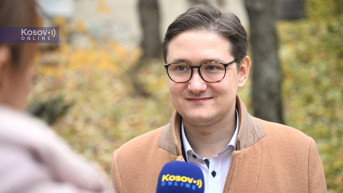
Strahinja Subotic, Programme Manager at the European Policy Centre in Belgrade, told Kosovo Online that the bilateralization of the European Union’s enlargement policy must be brought to an end. He said that the European Commission planned to help Montenegro become an acceding country by this time next year, despite its bilateral dispute with Croatia.
Subotic said that Montenegro was moving “full steam ahead toward the EU.”
“Montenegro has opened all clusters and closed almost all chapters. The plan is for the Accession Treaty to be signed next summer, and with that in mind, I believe that all Member States will work to make it clear to Croatia that it should not abuse its veto power. The bilateralization of enlargement policy must be brought to an end, because if Croatia insists too strongly on demands that cannot be met within a reasonable timeframe, it could send a negative message to other candidate countries as well,” he said.
In this regard, Subotic said he was moderately optimistic that Croatia and Montenegro would find common ground.
“Even if not all conditions are met or bilateral disputes resolved at this stage, Croatia may be willing to use the ratification period as a ‘grace period’ during which Montenegro can continue resolving bilateral disputes without having to worry about its accession. Ultimately, the Croatian Parliament will have to approve Montenegro’s accession, and I believe the stakes are high enough for Croatia to be persuaded to take the right course and for any problem that could affect enlargement policy to be prevented,” Subotic explained.
When it comes to the dispute between North Macedonia and Bulgaria, he assessed the situation as more complicated.
“Of all the candidate countries, perhaps North Macedonia has had the most unfortunate experience, given that it began its European integration process at the same time as Croatia, as both received candidate status in 2005. First it was blocked by Greece, then France and now Bulgaria. However, unlike the problems Montenegro has with Croatia, which are genuinely bilateral in nature, Bulgaria managed to convince the Member States that the issue it had with North Macedonia was actually an issue for the entire Union. As a result, the Council incorporated Bulgaria’s demands. For North Macedonia to move forward, it will have no choice, and there will not be as much room for compromise as there may be between Montenegro and Croatia, because this is now the official position of the European Union and the EU stands behind Bulgaria. Of course, it is unfortunate that this is the case, because North Macedonia had been making rapid progress,” Subotic said.
Speaking about Serbia’s European integration, Subotic said that the rule of law was Brussels’ top priority.
“I have been in Brussels twice over the past two weeks, and I can say that the priorities are, first, the rule of law, then foreign policy and the normalization of relations with Pristina. The Kosovo issue ranks third in importance. The second issue is Russia, while the first and overriding priority is the rule of law. It is good that the Student List has already spoken with Marta Kos twice. They have even had talks with Sorensen and, here, with the Acting Head of the European Union Delegation. The dialogue is ongoing, and the idea is to convey the message that priorities need to be sequenced. The Student List needs to be given time to take over the institutions, become more familiar with the European Union and develop its sectoral policies, and only then should the more difficult issues be addressed. The belief in Brussels, at least for now, is that once all institutions begin to be freed up and the country becomes more democratic, it will be easier to discuss the more difficult issues, including, of course, relations with Russia and relations with Pristina,” Subotic said.
He concluded that the current focus was on normalizing dialogue with Brussels, after which discussions could turn to a more effective approach to the dialogue with Pristina.
Regarding Kosovo’s efforts to obtain EU candidate status, Subotic said that Kosovo had not done its part.
“Kosovo is pushing for it, of course. It submitted its application several years ago, at the height of the geopolitical changes. However, my assessment, based on conversations with people in Brussels, is that Kosovo has not done its part, even setting aside the five Member States that do not recognize it. Kosovo has problems related to the rule of law. If you quantify Kosovo’s reports, it is a territory with a score of 1.6 on a scale of one to five, which represents a very low level of democratic development, so I do not believe that the question of candidate status will be considered. The way war crimes are being handled is also problematic. We saw attempts to restrict the mandate of the Specialist Chambers, and that was also condemned. Nor should we forget that Kosovo was subject to restrictive measures, which were lifted some time ago. The ball is in their court. The EU will insist on the establishment of the Association, which has been pending since 2012,” Subotic said.

comments