
Ognjanoska Stavrovska: Problems arise when bilateral issues take precedence over meeting EU membership criteria
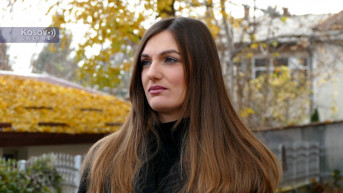
Skopje-based expert in EU law and European integration Leposava Ognjanoska Stavrovska told Kosovo Online that introducing bilateral conditionality into the EU enlargement process had set a dangerous precedent. She said that problems arose when bilateral issues took precedence over meeting the membership criteria.
Ognjanoska Stavrovska said that the possibility for a Member State to use its veto when assessing whether a candidate country had met the membership criteria was embedded in the European Union’s legal and institutional architecture.
“However, the problem arises when a Member State, in its relationship with a candidate country, uses that possibility in disputes that are closely linked to its own national interests. We are currently seeing such a situation in Montenegro’s accession process in relation to Croatia. It is very important to distinguish whether the veto is being used in connection with criteria that form part of EU law and are linked to the obligations of EU membership, or whether we are dealing with an entirely different type of dispute,” Ognjanoska Stavrovska told Kosovo Online.
She added that, in this context, it would be important to determine whether such a dispute could potentially be referred to other international bodies competent to resolve disputes of that nature, or to the Court of Justice of the European Union following eventual accession.
Asked whether this showed that bilateral disputes posed a greater problem than the clusters themselves, Ognjanoska Stavrovska said that all countries in the region were facing this issue.
“This has not remained confined to our country’s accession process. We can now see that it is also affecting the accession of other countries in the region, as well as other candidate countries. The European Union itself was conceived precisely as a means of overcoming bilateral and regional issues through cooperation in other areas. However, it is true that the focus of the accession process itself has shifted,” she said.
Given that North Macedonia’s European path has been blocked because of its dispute with Bulgaria, Ognjanoska Stavrovska noted that the problem arose precisely when bilateral issues overshadowed the fulfillment of membership criteria and, by being introduced into the process, compromised the process itself.
“There is currently an awareness at the European Union level that structuring the process in this way also affects the credibility of the accession process itself. In that regard, we have heard proposals from the European Commission on how this situation could be overcome in the future, including the introduction of qualified-majority voting. However, whether this can actually be applied in the future will ultimately depend on the will of the Member States,” she explained.
Ognjanoska Stavrovska said she wanted to believe that the region would recognize that good-neighborly relations and European integration represented the strongest guarantee for the future of all countries and brought greater benefits than the concessions they required when it came to bilateral and regional issues of this kind.

comments