
The Brussels puzzle: Does the EU have the capacity to continue the dialogue, and will the USA take a more active role?
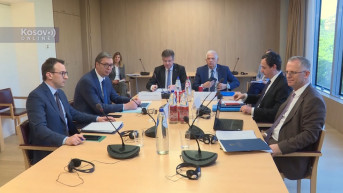
Since the tragic events in Banjska on September 24, there has been hardly any high-ranking European and US official who has not emphasized the importance of an urgent return to the dialogue. However, for now, there are no indications as to when representatives from Belgrade and Pristina might sit down at the negotiation table. The European Union lacks a defined platform for resuming the dialogue since Pristina voiced strong complaints against the mediators Josep Borrell and Miroslav Lajcak, especially after the stance of the Albanian side that there would be no talks with Serbia "until it is punished for Banjska".
In an attempt to salvage the dialogue, the "big five" is announced for October 21, consisting of special envoys from the Quint and the EU. The delegation will first visit Pristina and then Belgrade. Besides the EU's Envoy Lajcak, the delegation will also include envoys from the US President, France, Germany, and the Prime Minister of Italy, namely Gabriel Escobar, Emmanuel Bonne, Jens Plotner, and Francesco Talo.
The President of Serbia, Aleksandar Vucic, said that they were coming with "new matters" regarding Kosovo and stressed the importance of continuing the dialogue with Kosovo for Serbia, even though Belgrade was the only side that aims for it, as Albin Kurti "never wanted to engage in discussions".
EU Ambassador to Kosovo, Tomas Szunyog, stated in an interview for Kosovo Online that resolving security issues in the north was crucial. "However, I want to clarify that a comprehensive approach, including a political solution, is of the utmost importance for the normalization of relations between Kosovo and Serbia, toward long-term stability and peace. Therefore, the way forward is dialogue led by the EU. This is not just my message; it is the message of the 27 EU member states who have emphasized that the European path for both Kosovo and Serbia goes through dialogue with EU support and the normalization of their relations," Szunyog stated.
Vladimir Bilcik, the European Parliament rapporteur for Serbia, also said that dialogue was the only way forward, pointing out that there had not been a clear link established between official Belgrade and what had happened in Banjska. According to him, calling for sanctions before the investigation was complete was not a constructive way forward, just as criticizing EU rapporteurs was not.
Diplomat Zoran Milivojevic points out that the interest of the EU and the US is to resume the dialogue between Belgrade and Pristina. However, he also emphasizes that, when it comes to Serbia, there are certain prerequisites for this, including de-escalation in the north, the return of KFOR to its functions, and the commencement of the formation of the Community of Serb-majority Municipalities.
Regarding the messages coming from representatives of Kosovo's authorities, stating that there would be no continuation of negotiations until Serbia was sanctioned for the events in Banjska on September 24, Milivojevic tells Kosovo Online that Brussels and Washington will insist on continuing the dialogue and returning the Ohrid Agreement to the table, i.e., the European plan for normalizing relations.
"It would be a significant success for the EU and an attempt to restore credibility if they returned to the dialogue on the Ohrid Agreement and if Serbia accepted to discuss its implementation or, in some way, accepted discussing the Community of Serb-majority Municipalities as a part of the package. The West will undoubtedly insist on this," Milivojevic says.
As for Pristina, he does not expect a change in the stance of Kosovo's authorities.
"They remain consistent, especially since they will now use the Banjska case for that type of confirmation, not as a threat, because they cannot, but as a confirmation of their political platform regarding the situation in the north of Kosovo and the need for confirmation of statehood and recognition by Serbia," our interlocutor emphasizes.
He points out that there is no change in Serbia's stance either.
"Serbia is not in a position to engage in negotiations, regardless of the pressures. Serbia is in favor of dialogue and believes that conditions for its continuation should be facilitated. If we want meaningful discussions, we must consider realpolitik. This means that, given the escalation on the ground, de-escalation is required. It is clear what that means - the return of KFOR to its functions and the Community of Serb-majority Municipalities as a preliminary issue. This is roughly Serbia's position regarding the continuation of the dialogue. Serbia can discuss the Ohrid Agreement, but only on points that are uncontroversial for Serbia, those that do not imply de facto recognition," Milivojevic believes.
The European Union is in a defensive position and lacks initiative when it comes to the dialogue between Belgrade and Pristina, and there is a possibility that, following the recent events in Kosovo, the key to finding a solution will be in the hands of the United States, according to political analyst Shkelzen Maliqi.
After September 24 and the events in Banjska, despite calls from European and US officials emphasizing the importance of reducing tensions and resuming dialogue, there are no indications as to when representatives from Belgrade and Pristina will return to the negotiation table. Moreover, Kosovo officials insist that there will be no talks until Serbia is sanctioned.
Maliqi tells Kosovo Online that there is no other option but to continue the dialogue, but there are no clear signals regarding the direction the talks will take.
He also commented on speculations that the European envoy for dialogue, Miroslav Lajcak, and Josep Borrell might step down.
"Now, as for Borrell and Lajcak, I don't know. Lajcak seems to be a candidate for the Prime Minister of Slovakia; it remains to be seen whether he will stay in his current position. I think that dialogue has no alternative. Not only the dialogue but also the process that was near completion with the Ohrid Agreement, which was verbally accepted by both sides. Albin Kurti was reportedly ready to sign it. Vucic didn't sign it, but he promised to do so once his arm pain subsided. So, now the focus is on Vucic's recovery, and we'll see what kind of pressure will be applied. The EU is in a defensive position; it lacks initiative, and it is likely that the United States will be the driving force in seeking a solution," Maliqi said.
He reminds that the dialogue has not yielded results for the past few years.
"The dialogue has been stagnant for the last five or six years, with no results, and Kurti and Vucic have been putting obstacles in the way of that dialogue because it didn't suit them, neither Kurti nor Vucic, for it to be just a Community of Serb-majority Municipalities with an unclear status. Now, it is expected that there will be a bit more pressure. Whether there will be success remains to be seen," Maliqi said.
If something significant doesn't happen in the dialogue by spring, Maliqi claims that the discussions will take a back seat.
"That's the intention; by the end of the year or possibly early spring, around February or March, it should be concluded. If it doesn't conclude, there will be EU elections and the presidential campaign in Washington, and the risk that the Kosovo issue remains a frozen conflict," Maliqi emphasized.
The founder and director of the Global Focus Center, Oana Popescu-Zamfir, expresses skepticism about the EU's ability to bring the Belgrade-Pristina dialogue back on track without the help of the United States.
Popescu tells Kosovo Online that she believes the United States will continue to play a very important role in the Balkans.
"I am skeptical that the EU will be able to push things in the right direction without the US. And to be honest, I don't see why it should. It's clear that this is our backyard, and that this is largely a European process, but I think the US, as a security guarantor in the region and a traditionally very important player, should step in at some point. I'm sure that's crucial, even in the context of whether the Balkans, in general, become more stable or not," Popescu says.
Regarding the dialogue, Popescu believes that the EU has invested a lot in that process.
"I believe that all parties have invested a lot in the process over time, even though there have been no tangible results. This happens independently of the US influence in the region, but I believe that a sustainable solution for the region will come through the cooperation between the US and the EU," she states.
She also points out that at this moment, it's challenging to say how to continue the dialogue.
"I believe the EU, as a mediator, has provided a good framework, but there hasn't been a genuine willingness on both sides to make tangible progress. The EU is only a mediator; it's up to both parties to reach an agreement. If they don't want to do that, there is very little that the EU can do on its own. Unfortunately, both sides have successfully used this to their advantage for their political purposes and manipulated the dialogue framework in that direction, trying to gain benefits from the EU," Popescu states.
She emphasizes that it is "somewhat disappointing that the EU hasn't achieved more success in the dialogue and played a more active role".
"I don't know if all of us should consider doing things differently. But, at the end of the day, it's up to both sides to, if they want to get closer to the EU, progress together," she concludes.


0 comments