
Can Kosovo join NATO ahead of turn?
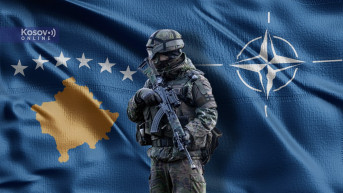
The President of the AAK Ramush Haradinaj, while congratulating Sweden on joining NATO, stated that Kosovo could be the next member. Officials in Pristina constantly emphasize that their key priorities include not only membership in the European Union but also accession to this Alliance. However, Kosovo Online interlocutors are skeptical that this will happen soon.
"The political-military alliance - NATO has strengthened with Sweden's membership as the 32nd member. We hope that Kosovo is next in line!" Haradinaj emphasized.
Officials in Pristina also highlight that, alongside EU accession, NATO membership is one of their key priorities.
"Our goal for NATO membership has been clearly communicated; we are daily working towards that goal. The army we have is stronger than ever," Albin Kurti recently stated.
Can Kosovo join NATO ahead of turn?
Executive Director of the Council for Strategic Policies Nikola Lunic assesses for Kosovo Online that it is explicitly uncertain whether Kosovo could be one of the next NATO members because it does not meet any required condition, including the specifically emphasized "fair treatment of national minorities."
Lunic says that the Alliance is a military and political organization where decisions are made by consensus, and Article 10 talks about the way new members enter, which must meet a series of political, economic, and military criteria.
"It should be a democratic country based on a market economy and have a fair treatment of national minorities. And that is particularly emphasized. If we add economic criteria to that, which is two percent of gross national income that must be allocated to its armed forces, considering that Kosovo does not have an army at the moment, armed forces, and it is questionable when they will have one and in what structure," Lunic says.
He is skeptical about how long the procedure for Kosovo's admission to NATO would take.
"Kosovo is not a NATO partner country. They are not a member of the Partnership for Peace. They still need to establish their army, become a member of the Partnership, and if they wish and if they meet the criteria to enter the Partnership Action Plan, then the technical procedure begins: from the Letter of Intent, access protocols, parliamentary ratifications that can last up to a year," Lunic assesses.
According to him, the announcements by Kosovo officials that they expect swift admission to NATO are populist statements not based on facts but solely directed towards Serbia.
"It is explicitly not certain, nor will it happen. It is a political, populist rhetoric that exploits Serbia's confusion in such geopolitical, tectonic disturbances. Serbia is seeking its place in a balanced foreign policy and some kind of virtual military neutrality which is unsustainable in this situation," Lunic emphasizes.
He adds that Pristina has a clear goal of portraying Serbia in the international community as a Russian proxy player.
"This should not be ignored, and Serbia should focus on it very clearly and dedicatedly. To convince the international community that our freedom and dedication to European principles and values are a priority. We have put that dedication in Article 1 of the Constitution of Serbia. Our country is based on such principles," Lunic believes.
He says that the best "response" for Serbia is to homogenize its foreign and security policy with the EU as soon as possible.
"We must not allow any instability in the Western Balkans, which undoubtedly would suit Pristina. This is not in the interest of Serbs and Serbia at the moment," Lunic is explicit.
He warns that Kosovo decided back in 2018 that it would form its armed forces within ten years.
"So, by 2028, they will probably establish those forces. What they will be like, what structure they will have, and what capabilities they will have will depend on Serbia. That's why in the negotiations on the normalization of relations between Belgrade and Pristina, I am convinced, there should be discussions about security aspects and there should be a security aspect because it is necessary to agree on whether it will be a mono-national army or a multinational army. Whether they will have all the capabilities they want or will limit military capabilities. What will their structure be like: will Serbs participate in that army or not. And ultimately, as unbelievable as it sounds, whether Kosovo will be a potential partner to Serbia or will remain our eternal enemy," Lunic concludes.
On the other hand, security expert Nuredin Ibishi believes that the current security situation could accelerate Kosovo's accession to NATO, and his predictions are that this will happen within three to five years.
"Kosovo Security Forces are in a phase of transition, development, training, and increasing the number of personnel and armaments, as well as capacity building. All of this is under NATO supervision. However, one obstacle to becoming a member is that Kosovo is not recognized by four NATO member states. That is the first problem. The second is the phase of accession to the Partnership for Peace program that precedes full membership," Ibishi stated for Kosovo Online.
His predictions suggest that Kosovo could be admitted to NATO within three to five years, but examples from some Western Balkan countries show that they can join the Alliance even before that timeframe.
"I believe that the security situation, both globally and in the region, could expedite the accession phase, meaning that Kosovo's membership could happen earlier. Some Western Balkan member states joined NATO ahead of schedule. They did not meet all the standards as NATO specified regarding weapon standardization, equipment, training... Therefore, it is expected to happen after the completion of the KSF transition phase," Ibishi explained.
He emphasizes that the security situation in the region could accelerate the process of Kosovo's full membership in NATO.
"The potential disruption of peace in the region due to Russia's tendency to expand conflict in the Western Balkans could shorten the admission timeline in the foreseeable future. However, my predictions are that the process of Kosovo's accession to NATO will take a maximum of three to five years," Ibishi said.
However, military analyst Aleksandar Radic assesses for Kosovo Online that despite announcements and references to the possibility of a precedent, there is no chance that Kosovo will join NATO in the near future. This is because it would be paradoxical for Kosovo to join NATO before Serbia, and many Alliance members, including Spain, would not allow such a possibility.
He is skeptical that NATO would apply special procedures in Kosovo's case.
"Procedures are, of course, a matter of agreement, but so far, it has been a taboo for NATO. The consensus of all countries is crucial because NATO was created in a different era that functioned differently. NATO is not a supranational organization. It consists of 32 states, including Sweden. All of these are sovereign countries with their own foreign policies and armed forces. The consensus of all these countries is a taboo that NATO will not cross. How can we expect Kosovo to join NATO if one of the most important members, Spain, has not recognized Kosovo's independence? That is an obstacle that cannot be overcome," Radic says.
He points out that Kosovo expresses a clear ambition to be part of NATO, but there are two key obstacles.
The first is that the Alliance, without special exceptions, does not admit countries with unresolved territorial issues, and the second is that it would be paradoxical to expect Kosovo to join NATO before Serbia.
"For years, Serbia has been at NATO's doorstep, although it does not knock on those doors because it does not want membership. Therefore, the formula used by Western powers is that Serbian military neutrality does not imply passivity in communication with NATO. Serbia cooperates and has relaxed relations with NATO. The incident in Banjska somewhat disturbed this, but it is still clear that the focus of cooperation by Serbian authorities is directed towards NATO when it comes to the defense domain. There is political and military-technical cooperation, the Serbian defense industry relies on technologies from NATO member countries, and it would be quite paradoxical to expect Kosovo to join NATO before Serbia," Radic asserts.
Asked if a "special exception" for Kosovo could be a model for Ukraine's NATO accession, Radic says it is unrealistic because Ukraine is a "topic for itself" compared to the Kosovo issue due to its significance.
"Regardless of our emotions, Kosovo is still a Balkan problem, a problem of the former Yugoslavia's space, not a global problem. In such a situation, I do not believe that NATO is willing to toy with the interests of individual members who do not want to recognize and accept Kosovo for their political reasons," Radic says.
He adds that these reasons do not automatically imply a friendly position towards Serbia.
"These are not reasons that automatically imply friendliness towards the Serbian side, they are simply pragmatic reasons that do not want to support any form of separatism, protecting the interest of preserving their own integrity," Radic assesses.
Asked what Kosovo's potential NATO accession would mean for Serbia, the military analyst emphasizes that it would lead to additional and radical isolation.
"That would not only be a thorn in the side but also an open threat to Serbia in the current situation. However, I think we are far from such a scenario due to the open cooperation that the current authorities have with NATO," Radic concludes.


comments