
Can Sorensen depoliticize the issue of the missing in Kosovo?
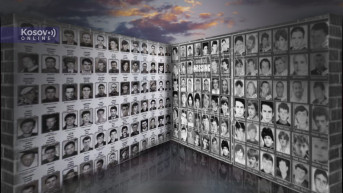
For the new European mediator in the Belgrade-Pristina dialogue, the issue of missing persons is a priority. This statement closely resembles that of his predecessor, Miroslav Lajcak, who achieved almost nothing on this matter. For the families of the missing and kidnapped—regardless of their surnames or faiths—the same painful wound remains unhealed for too long. A solution will come when the issue of missing persons stops being political and becomes purely a humanitarian matter, say the interviewees for Kosovo Online.
Written by: Djordje Barovic
“The clarification of the fate of the remaining missing persons is a humanitarian necessity. Families still waiting for answers about their loved ones deserve closure. That is why missing persons are my priority in the dialogue,” stated Peter Sorensen on Wednesday.
Just two months earlier, on December 23, the then-European mediator Miroslav Lajcak expressed encouragement over "small steps forward."
“I am encouraged by recent small steps forward, such as the establishment of the Joint Commission on Missing Persons. It is high time to bring peace to the families and loved ones of those whose fate remains unknown. The Joint Commission should exert much-needed political pressure,” Lajcak wrote on Facebook.
In the end, nothing came of it.
A Letter Without a Response
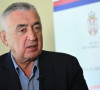
The President of Serbia’s Commission for Missing Persons, Veljko Odalovic, revealed to Kosovo Online that he had already written to the new European mediator, Peter Sorensen, outlining all the issues but had not received any response.
"After Lajcak’s departure, when I asked him to brief Sorensen on all these matters and realized that he hadn’t done so, I wrote a letter to Mr. Sorensen, pointing out everything I have been talking about and highlighting potential problems. I hope that through the meetings he will have in Belgrade and Pristina, he will develop a new platform to define priorities," said Odalovic.
Although he has not received any response from the new European mediator, he expects to be heard during Sorensen’s first visit to Belgrade.
“I hope this visit to Belgrade will be an opportunity for an open discussion on this topic. We need to lay out the facts. I will reiterate that we have never hidden or failed to transparently present the facts to Mr. Lajcak or anyone else. We will do the same for Sorensen and demand that the dialogue he leads and the topics he addresses remain within the framework of what has been written and agreed upon. There is no new framework," Odalovic emphasized.
He specified that the issue of missing persons in Kosovo is "a very sensitive and difficult issue, further complicated in Brussels."
“Two years ago, I hoped that when the Declaration on Missing Persons was agreed upon between President Vucic and Albin Kurti, it would bring new momentum, that we would be able to provide families—who rightfully expect answers—more than we had before. For five years, the process in Brussels has been practically frozen, stuck. This is due to Pristina’s stance and Albin Kurti, who does not see dialogue as a forum for discussing any issue, including missing persons, with Belgrade,” Odalovic warned.
Odalovic is confident that the new European mediator will accomplish more than his predecessor, Miroslav Lajcak.
"I have told Miroslav Lajcak multiple times: 'I don’t doubt that you wanted to help, but if you don't realize that you lacked support, then that’s the issue.' His mission regarding missing persons ultimately ended in failure. We made no progress despite his promises that some of his interpretative statements and explanations of contentious matters would allow us to move forward. But clearly, he neither had the strength—though I won’t say he lacked the will—nor did he get the job done. And that is now the point of contention and stumbling block at the very start of Sorensen’s mandate regarding missing persons," Odalovic stated.
He explained that the key issue lies in the interpretation of the Declaration on Missing Persons, which envisioned the establishment of a joint commission under the EU, including representatives from Belgrade, Pristina, and the International Committee of the Red Cross.
According to Odalovic, this body was meant to serve as a "support mechanism" to assist the Working Group, the only official mechanism for resolving the issue of missing persons.
"This is the sticking point. Pristina, with support from certain centers, interpreted this as the creation of a new body that would replace the Working Group, which is completely unacceptable to us. That is not stated in the Declaration, nor in any other document. They simply do not want the Working Group because it was established under the auspices of the UN Secretary-General’s Special Representative, and Pristina categorically refuses to recognize anything associated with the UN as a legitimate mechanism," Odalovic noted.
He recalled that all previous governments in Pristina, before Albin Kurti, cooperated in resolving the issue of missing persons, which led to clarifying the fate of 1,800 missing individuals.
"Kurti does not allow our colleagues from Pristina, whom we meet regularly through a different mechanism within the Berlin Process, to sit with us. But he does not permit them to meet within the Working Group. This must be made clear to Sorensen and the entire international community that supports this process—it must be returned to its proper framework and operated under the established rules," Odalovic stressed.
Optimism and Sanctions
Even in Pristina, some acknowledge that the issue of missing persons should be a humanitarian, not a political, issue.
Bekim Blakaj, Director of the Humanitarian Law Center in Kosovo, believes that the new European mediator in the Belgrade-Pristina dialogue, Peter Sorensen, will take a much more proactive approach than his predecessor.
"Sorensen announced that the first issue he will address will be the missing persons, something that was agreed upon long ago and for which Prime Minister Kurti and President Vucic signed a joint Declaration. I believe Sorensen will be much more proactive because both sides still see this issue as political rather than humanitarian," Blakaj told Kosovo Online.
He is optimistic about progress, particularly since the agreement on missing persons allows the EU mediator to impose sanctions on any party that fails to cooperate.
"It is stipulated that the EU mediator can even apply certain sanctions if it is determined that one or both sides are not implementing the agreement. I hope that Sorensen, having recently assumed this role, will use his mandate to push forward the resolution of the issue of missing persons," Blakaj emphasized.
He recalled that the Declaration on Missing Persons was signed two years ago, marking an opportunity for progress that was ultimately missed.
Opening the Archives
Slavisa Vuksanovic, a member of the Executive Board of the Association of Families of Kidnapped and Missing Persons from Kosovo and Metohija, believes that the key problem is the politicization of the issue and that the "ball is in Pristina's court." However, he insists that the EU and the U.S. have the means to pressure Pristina to change its approach.
"It is my firm belief that the European community and the U.S., as the ones ultimately responsible for the overall situation in Kosovo and Metohija, can use their institutions and officials to exert concrete pressure on Pristina to depoliticize the search for missing persons," Vuksanovic told Kosovo Online.
He recalled that Brussels Working Group agreements stipulated that both Belgrade and Pristina must open all their archives to facilitate the search for the missing.
"Belgrade has done so, while Pristina refuses to open its archives, particularly concerning former KLA members," he stated.
Del Ponte’s Evidence
Maria Lina Veca, an Italian journalist and researcher, who has long investigated missing persons in Kosovo, including allegations of organ trafficking, takes a far more skeptical stance.
"I do not expect the new European mediator, Peter Sorensen, to address the issue of missing persons in Kosovo—nor do I expect any European official to do so. Simply put, they no longer care," Veca told Kosovo Online.
She questioned why there is no longer insistence on prosecuting those responsible for organ trafficking.
"Someone knows where the missing are, but no one is genuinely interested in asking what happened to them," she concluded.

0 comments