
Could inter-parliamentary dialogue accelerate normalization between Belgrade and Pristina?
A dialogue between members of the Serbian and Kosovo parliaments—as a parallel track to the high-level Brussels-led negotiations—could contribute to a more constructive climate for the process, say interlocutors of Kosovo Online. However, the feasibility of this initiative is immediately challenged by the unresolved question of under what conditions members of the two assemblies would be willing to sit at the same table.
Written by: Dusica Radeka Djordjevic
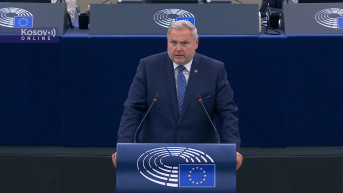
The author of the parliamentary dialogue initiative, European Parliament rapporteur for Kosovo Riho Terras, believes that inter-parliamentary talks could serve as a valuable catalyst to revitalize the negotiation process, which urgently needs momentum. In his view, the European Parliament could play a role in facilitating these efforts and is already considering launching talks between Serbian and Kosovo parliamentarians, with the EP acting as a mediator.
Terras has not yet specified what topics could be addressed in such a format.
Analysts agree that the initiative is welcome but point to a number of obstacles that could hinder its successful implementation and impact.
Political scientist Ognjen Gogic identifies the first major challenge: that an official meeting between MPs from Serbia and Kosovo could be interpreted as implicit recognition of Kosovo’s independence by Serbia. While a way around this might be to label Kosovo's representatives with an asterisk and footnote—as the EU does in its official documents—it is unclear whether Pristina's representatives would accept this arrangement.
“For Serbia and its MPs, a condition would be that such meetings occur in a status-neutral setting. The Kosovo side, however, is unlikely to facilitate this. In fact, they would probably insist on equal representation as a prerequisite,” Gogic told Kosovo Online.
He notes that informal contacts between Serbian and Kosovo MPs already exist and are often facilitated behind closed doors by various NGOs.
“However, we can see that this hasn’t led to any concrete results or improved the dialogue. Mere contact is insufficient when there’s no political will from the key decision-makers. That said, there is a general call for the dialogue to become more transparent and inclusive, involving a wider range of actors from both sides. This could potentially contribute to more sustainable outcomes and generate progress in a dialogue that has long been stagnant,” Gogic explains.
If a modality for meetings acceptable to both sides were to be found, and if those talks proved productive, such a format could influence public perceptions on both sides and create a more favorable atmosphere for dialogue. In that case, Gogic notes, it would become more difficult for decision-makers in Belgrade and Pristina to maintain rigid positions—they would need to respond to evolving public expectations.
“This would send a powerful message: if MPs can meet and talk, then surely some solutions can be agreed upon and implemented. Moreover, the dialogue need not focus solely on contentious political issues. It could cover topics such as EU integration or environmental protection—less controversial subjects that could still help improve the atmosphere. But even that would be hard to achieve in a status-neutral manner, which is a firm condition for Serbia,” Gogic added.
While parliamentary dialogue between Kosovo and Serbia—with EU facilitation—could make a meaningful contribution, Belgzim Kamberi, a fellow at the Musine Kokalari Institute in Pristina, believes the biggest problem lies with the executive branches on both sides and within the EU itself.
“These three parties—Belgrade, Pristina, and Brussels—need to show greater political will to revive the dialogue,” Kamberi told Kosovo Online.
“Any initiative by the EU that contributes to the Serbia–Kosovo dialogue, including one involving MPs, is welcome. However, the core problem lies with the governments and the EU as the mediator. What’s needed is more efficiency from all three. The EU needs to be more effective; Pristina needs a new government and functioning assembly, which it currently lacks; and Serbia needs more political will and legitimacy amid ongoing protests and local political dynamics.”
He adds that a parliamentary dialogue could create some pressure on the executive, but it also reflects a deeper issue: the EU itself appears to be struggling with a coherent vision for the Kosovo–Serbia dialogue.
“It’s not just the U.S. that has become less active in the Balkans—it seems the EU also lacks direction in this matter. While Albania and Montenegro are being touted as potential new EU members, the Kosovo–Serbia dialogue appears to be stuck in a vacuum,” Kamberi observed.
Commenting on Terras’s second announcement—that he may initiate dialogue with the five EU member states that have not recognized Kosovo, with the aim of encouraging recognition—Kamberi said this is a matter of bilateral relations and the sovereign decisions of those states.
“Some of these countries have linked recognition to the normalization of relations between Kosovo and Serbia through the Brussels dialogue. Given the current geopolitical context, it would be surprising if any of the five changed their stance in the near term. Still, I believe that meaningful progress in the Brussels dialogue and normalization process could eventually influence those recognition decisions,” Kamberi concluded.

0 comments