
Kamberi: The initiative to launch dialogue between MPs is welcome, the problem lies with the executive authorities
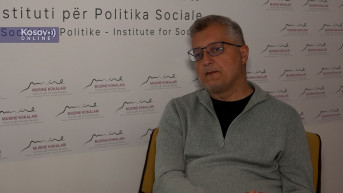
Members of parliament from Kosovo and Serbia, along with the European Parliament, can contribute to the dialogue between Belgrade and Pristina, but the biggest problem lies with the executive authorities on both sides and within the European Union, Belgzim Kamberi, a researcher at the Musine Kokalari Institute, told Kosovo Online. According to him, all three of these actors need to show more political will in order to revive the dialogue.
The idea to initiate dialogue between Serbian and Kosovo MPs, mediated by the European Parliament, was proposed by Riho Terras, the European Parliament’s rapporteur for Kosovo. Kamberi says that the problem in the Serbia-Kosovo dialogue lies more with the executive branches than with the MPs.
“Any initiative from the European Union that would provide input for the dialogue between Kosovo and Serbia would be welcome, including one through MPs. But the biggest problem lies with the governments and with the EU itself, which is mediating the dialogue. It is most important that all three of these actors be more efficient. The EU itself should be more effective; secondly, we need a new government in Pristina, and right now, we have neither a government nor a functioning assembly, and thirdly, Serbia needs to demonstrate more political will and gain greater legitimacy for its leadership, especially in light of protests and local developments,” Kamberi said.
He adds that dialogue between MPs could create some pressure on the executive branches, but also points out that this initiative demonstrates that the European Union itself is in a kind of crisis when it comes to the Kosovo-Serbia dialogue.
“It seems it is not just the United States that is less active in the Balkans, the European Union also lacks a vision regarding the Kosovo-Serbia dialogue. Unlike Albania and Montenegro, which are being mentioned as potential candidates for EU accession, in the case of the Kosovo-Serbia dialogue, we appear to be stuck in some kind of vacuum,” Kamberi observed.
Commenting on Terras’s announcement that he might begin a dialogue with the five EU member states that do not recognize Kosovo, in an effort to initiate the recognition process, Kamberi said that the recognition of Kosovo by those EU countries is a matter of bilateral relations and the sovereign decisions of those states.
“Additionally, some of them have linked this issue to the normalization of relations between Kosovo and Serbia through the Brussels dialogue. Given the current geopolitical context, it would be surprising if new recognitions of Kosovo were to come from those five EU states. In any case, I believe it is very important for the normalization of Kosovo-Serbia relations and the Brussels dialogue to progress as much as possible, as that could later have an impact on the question of Kosovo’s recognition by those five EU countries,” Kamberi said.


0 comments