
The crisis in the north of Kosovo is still ongoing: What did Lajcak bring to Belgrade?
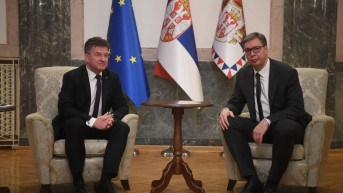
The Special Envoy of the European Union for the Dialogue between Serbia and Kosovo, who after several weeks of lull is returning to full diplomatic activity, was met with the same situation on the ground that he left before leaving for the summer break. Pristina has still not met the demands of the USA and the EU to de-escalate the crisis in the north; the police have not withdrawn from municipal buildings, and neither have the illegitimately elected Albanian mayors and the path to new elections in Serbian municipalities is being complicated by the government of Albin Kurti with requests for a petition to replace local authorities. That is why the question arises what the scope of Lajcak's visit to Belgrade will be, and whether it can move things from the deadlock.
The interlocutors of Kosovo Online say that it is good that Lajcak is coming to Belgrade to discuss the de-escalation in the north of Kosovo and the formation of the Community of Serb-majority Municipalities, i.e. all those issues that are important for the Kosovo Serbs and their security, but also point out that the key to solving crisis is in the hands of Pristina, which caused the last instability and is constantly generating it anew.
The President of Serbia, Aleksandar Vucic, said on the eve of the talks with Lajcak, which he said would certainly not be easy, that "Kurti is deliberately delaying meeting with him in Brussels, in order to do his dirty work in Kosovo", that is, to arrest the Serbs. ban Serbian goods, and try to expropriate Serbian land.
Political analyst Dejan Vuk Stankovic assessed that Lajcak wanted to speed up the process of normalizing relations between Belgrade and Pristina.
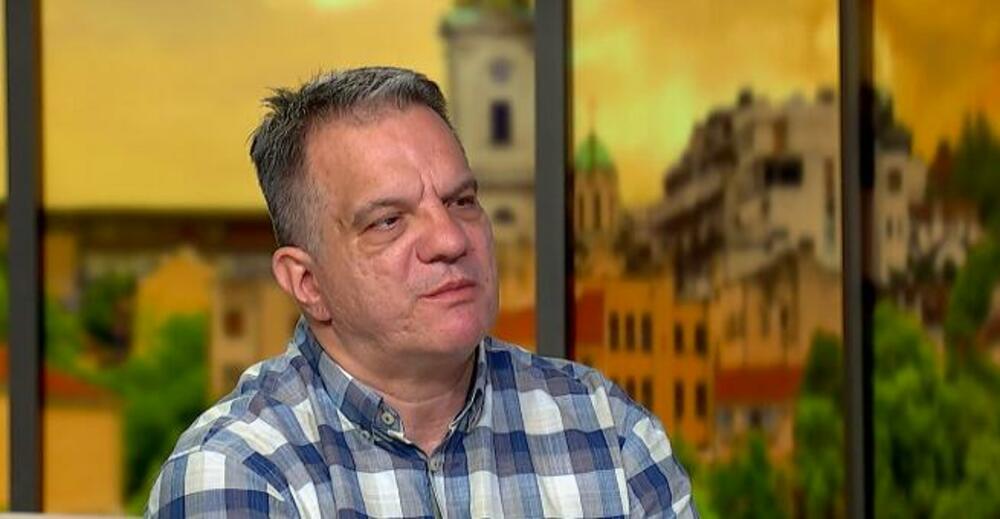
However, he expressed doubt that his visit to Belgrade would yield results, because, as he said, the key to the problems was in Pristina.
"I think that Lajcak wants to speed up the process between Belgrade and Pristina and that everything he is doing is for the sake of reaching an agreement that will be implemented because that would ultimately be a kind of positive evaluation of his work since he was chosen by the most important EU politicians for the man who should deal with that issue," Vuk Stankovic said.
However, as he assesses, the mission is not going well for the European Envoy for now, regardless of the fact that he invests a lot of energy and has ambitions to complete the job successfully. He points out that the Pristina side is a bigger problem and obstruction for him than Belgrade.
"But the situation is as it is and it seems to me that he will try to speed up the whole thing and that is the essence of his visit to Belgrade," Vuk Stankovic believes.
On the other hand, the analyst says that he cannot guess in which direction the talks in Belgrade will take place.
"I don't know what he could do in Belgrade, I think that the focus of those activities should be on Pristina because Pristina is the 'bad guy' in the negotiations; they don't respect what has been signed so far and they don't respect what could be called the dynamics of the negotiation process, any other explanation is factually unfounded and politically incorrect," he said.
When asked how he commented on the fact that Lajcak had for now only announced a visit to Belgrade, but not to Pristina, Vuk Stankovic emphasized that it was in some way a message that Belgrade should "finally decide and unconditionally accept" the Franco-German proposal.
"I think it is not only his message but also the message of, unfortunately, a majority part of the political establishment within the EU. But I think that without minimal concessions from Pristina, he has no business in Belgrade and that is what he slowly but surely knows, regardless of the fact that he has a kind of bureaucratic persistence that characterizes people who have the kind of support and power that Lajcak has," the analyst said.
He believes that Lajcak cannot do much about the normalization of relations between the two sides until the end of his mandate, but that the bottom line is that, whoever will be the next EU Envoy for the Dialogue between Serbia and Kosovo, the demands will not change.
"Whether Lajcak was there or not, things will remain the same, unless there is a possible change of attitude in the USA, which I doubt. So as far as Europe is concerned, the matter is, as one would say in basketball jargon, nailed down by the solution that was given with the Franco-German proposal," he concludes.
He assesses that the agreements signed so far and everything that has been agreed are actually "a dead letter on paper", and that it is too early to speculate and forecast what will happen after the elections at the EU level.
Serbia, he adds, has done everything it could with regard to the Brussels Agreement and dialogue with the Albanians.
"There is an asymmetry in the fulfillment of obligations. There is an asymmetry in the treatment of both sides by the negotiators from the EU, above all by Lajcak and Borrell, so Serbia has done everything it could, and the Albanians are doing what they think they can and for which they probably have some tacit support and that is the case at the moment. What will happen if there are some political changes, at this moment it is too early to say because it is not known what the character of those changes will be. A lot depends on the development of events in Ukraine, economic and political - the security effects of that war, as well as the mood of the electorate in Europe, which is unknown at the moment," Vuk Stankovic assesses.
According to him, it is very difficult to speculate what will happen with the Kosovo issue in the future, which is "far from being a priority of the EU, or of any of the individual countries, especially not those that have recognized Kosovo."
ISAC Fund Research Director Igor Novakovic tells Kosovo Online that Lajcak is coming to Belgrade with two main topics - the elections in the north of Kosovo and the formation of the Community of Serb-majority Municipalities.
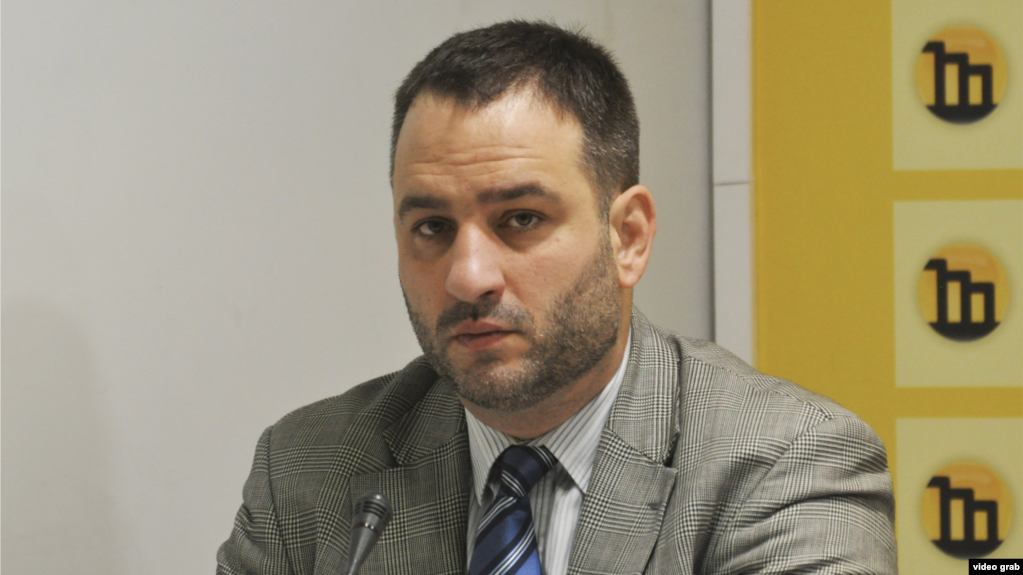
"The basic question that arises is - how to proceed. The West expects that there will soon be elections in the north of Kosovo, however, the way Pristina advocates it, I am not sure that it will be accepted by the Serbs in Kosovo and this crisis will probably continue. The elections in the north and the CSM are key topics. If the expectations of the West and if Lajcak comes to negotiate with Belgrade to persuade the Serbs from the north to participate in the elections as Kurti envisioned them, through a petition, I am not sure that it will be possible." he states.
He adds that it is obvious that the Ohrid Agreement is currently in the drawer and will remain there until the practical issues are resolved, but that it remains for the West as a basis for how relations between Serbia and Kosovo should be handled and in which direction that process should go.
"Kurti persistently says that Pristina has de-escalated the situation, although the Serbs from the north do not see the situation that way at all. I think that Lajcak is trying to do everything possible to move things from the deadlock, to possibly organize high-level meetings in Brussels. But it is extremely difficult at this moment to predict in which direction things will go," Novakovic says.
He points out that the requests from the USA and the EU to Pristina to de-escalate the situation are non-stop, and that they explicitly demand the formation of the CSM.
"I think that now Lajcak wants to examine the terrain of the possibilities for Belgrade to help with the participation of the Serbs in the elections, but, I repeat, it does not seem feasible to me, at least not in the way that the Prime Minister of Kosovo and the Government in Pristina envisioned it.

comments