
Defense of Kosovo from Tirana - a battle for political points?
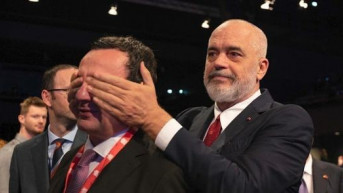
The war rhetoric of Kosovo's Prime Minister Albin Kurti, according to which Kosovo is constantly under threat of attack from Serbia, although facing condemnation within Kosovo itself, as assessments suggest that it deters investors and gives young people an additional reason to leave the country, has found fertile ground in Tirana.
In the span of just a few days, Albanian Prime Minister Edi Rama first stated that "Albania will stand by Kosovo even if things reach a point where talking is no longer an option, but weapons are used, and any attack on Kosovo is an attack on Albania," and then the President of this country, Bajram Begaj, in a congratulatory message to Kosovo's President Vjosa Osmani, stated that Albania would always stand by Kosovo "in confronting any threat."
Why is Tirana embracing Kurti's rhetoric about preparations to attack Kosovo? Who would attack Kosovo, considering the presence of NATO forces, i.e., KFOR?
The notion that it would be Serbia, according to our portal's interlocutors, doesn't hold. Behind the words of the Albanian Prime Minister, they actually see the gathering of political points in the region, as Rama and Kurti, they say, are competing to be the leader of all Albanians.
The President of the Council for Strategic Policies and former Minister of Defense of Serbia, Dragan Sutanovac, says that he doesn't believe anyone in Tirana "with any sense" thinks that someone plans to attack Kosovo, which is why statements from Albanian officials alluding to such a possibility are seen as serving internal needs and stirring up emotional tension among citizens, both in Kosovo and Albania.
Sutanovac sees Rama's statement as a part of the internal struggle over who will be the leader of all Albanians.
"Albin Kurti doesn't have ambitions limited to just Kosovo, but much broader ones that endanger security across the entire region. His policy towards the Serbs, which practically initiates the gradual exodus of the Serbs, is just a part of what he plans to do. The political program of his party, clearly states that they advocate for a 'Greater Albania'. Until he became Prime Minister, and even for a while as Prime Minister, the Albanian flag was always behind him during interviews. So, he wants to establish a new Albanian state, which is probably the aspiration of many Albanians in the region. However, what is interesting, and his personal desire is to be the unifier and the leader of all Albanians. In this regard, Rama needs to respond to his aspirations by showing that he is the greater Albanian," Sutanovac says for Kosovo Online.
He recalls that Albania is in NATO, and NATO forces are present in Kosovo under the UN mandate, namely KFOR.
"Serbia certainly doesn't have military aspirations to conquer or liberate that area militarily, whatever someone defines it, and it all ends with rhetoric that is meant to raise emotional tension among citizens, both in Kosovo and in Albania, and to divert attention from the essential problems that exist in both Kosovo and Albania. I don't think anyone in Tirana with any sense is thinking that someone plans to attack Kosovo. Serbia definitely doesn't," Sutanovac emphasizes.
Therefore, he believes that the rhetoric of some Albanian politicians aims to raise tension on a national basis and emotions.
"This chest-thumping about how they will save each other is actually their internal struggle over who will be the leader of all Albanians, as announced at the rally in Tetovo last year by Kurti, where they said he was the Prime Minister of all Albanians in the world. I am sure that was the trigger for Edi Rama to show that he is a bigger Prime Minister of all Albanians in the world than Kurti," Sutanovac says.
Marko Blazic from the Center for Social Stability resonates similarly, suggesting that Albanian Prime Minister Edi Rama, for the sake of political points, accepted Kurti's game to compete over who will lead a more extreme policy and promote themselves as the leader of the Albanians in the Balkans.
"After the gathering in Tetovo where Albin Kurti was promoted as the leader of 'Greater Albania' and the 'all-Albanian,' as they call it, who will finally fulfill the dream of the Prizren League about 'Greater Albania,' Edi Rama was forced, and unfortunately, we see that he accepted Kurti's game to compete over who will lead a more extreme policy because such a policy has support among the Albanian population not only in Kosovo but also in North Macedonia and Albania. Rama was forced to accept this game for political points and the race that is now evident - who will promote themselves as the leader of Albanians in the Balkans, whether it will be Albin Kurti or Edi Rama," Blazic says for Kosovo Online.
He points out that this statement by Rama is historically supported because, he says, in 1999 Albanian regular forces supported the aggression against FR Yugoslavia.
However, Blazic emphasizes that it is absurd to comment on any war due to the presence of KFOR forces on the ground.
"Serbia has never expressed a desire to resolve the Kosovo issue militarily, which has been proven multiple times. We have never rejected negotiations, even though the Brussels Agreement has been violated, and the Community of Serb-majority Municipalities has not been formed for more than 11 years. We are still aware that it is better to negotiate for 100 days than to engage in war for one day. Albin Kurti is the one who wants ethnically pure Kosovo, and he has currently opted for a silent 'Operation Storm' model. However, we see the arming of the Kosovo Security Forces, and that in some perspective, the formation of the so-called Kosovo army is his desire, and perhaps he sees that he could move from the model of a silent 'Operation Storm' to violent ethnic cleansing of the Kosovo area. He reflects his desires with some 'justifications' that Serbia will commit aggression," Blazic says.
The situation is further complicated by geopolitical circumstances because Albin Kurti constantly talks and draws parallels to the war between Russia and Ukraine, suggesting that Serbia could resort to something similar.
"He says that Vucic is 'little Putin' in the Balkans and that we are a Russian base in the Balkans, which is not grounded in reality and facts. However, this rhetoric is receptive to the Albanian population in our southern province, and it undoubtedly brings him political points," Blazic concludes.
An analyst from Tirana, Ben Andoni, explains for Kosovo Online that there is a memorandum between Albania and Kosovo with clauses that make it legal for Albania to provide assistance to Kosovo, and vice versa. He also points out that other NATO members, such as Montenegro and North Macedonia, also have memoranda with Kosovo and can send weapons to it.
"Albania can change its legislation and send people to Kosovo in extreme cases. I believe that in this case, it would be an official obligation of Albania, and it would not only be about volunteers. Something must be taken into account. According to Article 5 of the protocol, NATO intervenes only if Serbia directly attacks Albania, whereas in this case, everything is related to the memorandum Albania has with Kosovo. It is understood that everything is justified by the fact that we are two brotherly states. We are two states but one nation," Andoni says for Kosovo Online.
In his opinion, there is great concern, especially after some recent statements from Serbia, citing statements from Aleksandar Vulin as an example.
"I think Rama's words about Kosovo were also spoken on behalf of the United States, but it was understood that there is now a commitment from Tirana for what awaits Kosovo in the future. In my opinion, dark clouds are gathering over Kosovo. This can be seen in the military spending of both Serbia and Kosovo, but especially in the fact that, according to the information I have, two-thirds of the Serbian Army is near the border with Kosovo. Obviously, Rama received information from NATO, of which we are a member. The Prime Minister chose the moment, but also the way to convey his message, and he is trying to improve his image in Kosovo. He knows that Self-Determination is still very strong in Kosovo and he is trying to exert influence there. It is understood that the future of Kosovo is very problematic," Andoni believes.
The President of Serbia Aleksandar Vucic, he adds, has recently been talking about the persecution of the Serbs in northern Kosovo by the Kosovo Government and emphasizes the obstruction of the formation of the Community of Serb-majority Municipalities.
"According to this doctrine, Russia intervened in Ukraine, and in Georgia as well. Also, Azerbaijan got into conflict with Armenia. This has reached its peak with Serbia's demand, as a member state of the United Nations, for Kosovo to be held accountable before the Security Council," Andoni says.


0 comments