
The Development Fund for the North suffers losses: Who benefits?
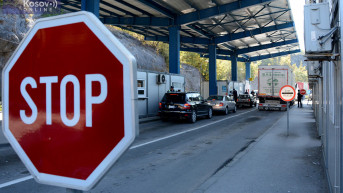
The Development Fund for the four municipalities in northern Kosovo, which generates its revenue from customs duties and excise taxes on goods entering Kosovo through the Jarinje and Brnjak crossings, has been deprived of funds due to the Kosovo Government's decision to allow Serbian goods to enter only through Merdare following the partial lifting of the ban on Serbian imports, according to interlocutors of Kosovo Online. It is estimated that the fund has suffered a loss of nearly four million euros due to this regime and the prior complete ban on importing finished goods from Serbia.
Written by: Dusica Radeka Djordjevic
According to the agreement from the Belgrade-Pristina dialogue on January 17, 2013, customs duties collected at Jarinje and Brnjak are transferred to the fund's account and used exclusively for projects in northern Kosovo. For example, in 2018, 2.1 million euros from the fund were allocated for projects in the four municipalities: 400,000 euros for Leposavic to support raspberry cultivation, nearly 500,000 euros for Zubin Potok for the second phase of pool construction, 500,000 euros for North Mitrovica for a sports hall and a fire station, and over 700,000 euros for Zvecan for municipal infrastructure development, including support for the EU’s “Regional Landfill” project.
The ban on Serbian imports is just one example of the obstructions and challenges faced by the fund. Earlier this year, the Kosovo government intended to use the fund’s money to pay off the debt to the KOSTT company for electricity consumed in the north. However, the EU Office in Kosovo stated that debt repayment does not meet the criteria for funding projects through the Development Fund.
Questions sent to the EU Office in Pristina regarding the current state of the fund and the losses incurred during the import ban went unanswered by Kosovo Online.
Dragisa Mijacic, coordinator of the Working Group of the National Convention on the EU for Chapter 35, says there are currently about three million euros in the fund's account that have not been allocated, and the fund has been virtually inactive in recent years. He explains that the fund was designed as an instrument for the infrastructural and economic development of municipalities in northern Kosovo. However, it has not received funds for years.
“First, because of the 100% tariffs on Serbian imports to Kosovo, and in recent years due to the ban on Serbian imports and the partial allowance through Merdare. As a result, all Serbian goods destined for northern Kosovo residents are cleared at the Pristina terminal or Merdare, not at the Mitrovica terminal, which means no revenue flows into the fund,” Mijacic told Kosovo Online.
He adds that the fund has been plagued by a lack of transparency since its inception.
“About 14 million euros have been collected so far, some funds have been spent, but the fund has not significantly contributed to the socio-economic development of northern municipalities for various reasons. With the ban on goods entering through Jarinje and Brnjak, this financial instrument has been further marginalized,” Mijacic emphasizes.
The fund’s management board, comprising the Kosovo Finance Minister, a representative of Kosovo Serbs (appointed by northern municipalities), and the EU Ambassador to Kosovo, has not met for several years.
“The EU has not found the strength or means to channel the fund’s resources into development projects, and the fund remains an instrument that is rarely discussed,” Mijacic explains.
Despite these challenges, he notes that many projects have been completed with the fund’s money since its formation in 2013, although there were significant issues with conditions for fund utilization.
“At first, the principle was that whichever municipality proposed a project first would get funding. Later, a kind of agreement between municipalities was introduced, so funds were allocated not based on project utility but through political agreements between the presidents of the four northern municipalities. In the end, there was no fund allocation at all,” Mijacic says.
He cites the Via Ferrata “Berim” as an example of a completed project, but adds that around 75% of initiated projects were never finalized.
Milos Vukadinovic, founder of the NGO Civil Society Development Institute “Innovate” from Leposavic, estimates that the Development Fund for the North suffered a loss of about 3.8 million euros over the past year and a half, during the ban on Serbian imports imposed by Pristina and the subsequent restriction to the Merdare crossing.
He highlights the lack of transparency regarding the fund’s status and states that his calculation is based on the average annual revenue the fund generated from 2013 to 2018.
“If we consider the period from 2018 to today, the residents and municipalities of northern Kosovo may have been deprived of 8 or even 15 million euros for infrastructural projects. The fund has been inactive since 2018, and its management board has not approved any projects in the northern municipalities,” Vukadinovic says.
He explains that the fund initially received around 2.5 million euros annually but saw a sharp decline over the past six years due to political decisions and obstructions by central Kosovo institutions, particularly the Ministry of Finance.
“In 2019, Pristina imposed tariffs on Serbian goods, followed by the COVID-19 pandemic with its restrictions, and finally, the June 2022 decision to completely ban Serbian imports to Kosovo. Since 2018, no projects funded by the Development Fund have been implemented in northern municipalities,” Vukadinovic points out.
Vukadinovic concludes that numerous obstructions have prevented the fund from fulfilling its intended purpose.
“The projects financed by the fund focused on infrastructure in the four municipalities but also supported the economy, agriculture, and small businesses. The funds were also used for land expropriation for infrastructural projects, support for NGOs, and cultural and sports infrastructure,” he says.
Ljubomir Maric, who was a member of the fund’s management board representing the Serbian community from 2018 to 2020, also notes that the Development Fund for the North has never functioned as intended due to various obstructions from Pristina.
“Under the pretext of lacking certain technical resources, it was decided that Serbian goods could only enter through Merdare. Albin Kurti staged a tactical performance. The customs collected on goods entering through Jarinje and Brnjak, intended for the four northern municipalities, go into a special bank account. These funds are meant for capital investments, subsidies, and economic development in the four municipalities. When goods do not pass through Jarinje and Brnjak, no funds can be collected for the fund,” Maric explains.
He does not believe that the choice of Merdare was accidental, as he argues that everything done by the government led by Albin Kurti ultimately aims to remove Serbs from Kosovo and to “amputate everything Serbian,” which also applies to the Development Fund for the North.
“The funds collected in the fund never exceeded four million euros annually, although it was envisioned to reach six million euros. Of the approximately 14 million euros collected, investments were made in infrastructure, subsidies for entrepreneurs and farmers, small and medium-sized enterprises, and everything that makes daily life easier for people,” Maric explains.
He states that the fund was defined within the European Union as a transitional solution to secure resources for improving the lives of Serbs through infrastructure development, until the establishment of the Community of Serb Municipalities (CSM), when the funds would be collected within the CSM system.
The fund’s management board, he adds, makes decisions by consensus, but it has not functioned effectively due to constant obstructions from Pristina and objections from the Minister of Finance.
“The biggest problem arose during Haradinaj’s tenure as head of the provisional institutions in Pristina when there was a blockade on importing goods. Thus, the fund never managed to function properly because successive governments have always aimed to ensure that Serbs in Kosovo and Metohija do not live well. There has never been a genuine desire for coexistence, but rather, there has always been some form of obstruction. What is happening now with Albin Kurti is no longer ordinary obstruction. This is extreme nationalism with only one goal: Kosovo and Metohija without Serbs and a Greater Albania,” Maric concludes.

0 comments