
Vukadinovic: Import restrictions on Serbian goods cost the Development Fund for the North about €3.8 million
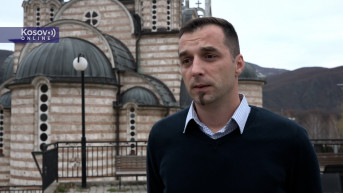
Milos Vukadinovic, founder of the NGO Institute for Civil Society Development "Innovate" from Leposavic, tells Kosovo Online that the Development Fund for the North lost approximately 3.8 million euros during the past year and a half due to Pristina's ban on Serbian goods imports and the subsequent restriction of entry solely through the Merdare crossing.
He points out that the data regarding the fund, which collects revenue from customs on goods entering Kosovo through the Jarinje and Brnjak crossings, is highly non-transparent and that estimate is based on the average annual amount of money flowing into the fund from its establishment in 2013 until 2018.
As he adds, the loss to citizens and municipalities in northern Kosovo could be interpreted as 8 million or even 15 million euros for infrastructure projects when considering the period from 2018 to the present.
"From the establishment of the fund in 2013 until 2018, approximately 2.5 million euros flowed in annually. However, this amount has significantly decreased over the past six years, primarily due to political decisions and obstructions by central Kosovo institutions, especially the Ministry of Finance. In 2019, Pristina's institutions imposed tariffs on Serbian goods, followed by the COVID-19 pandemic with its restrictions. The most recent decision affecting the fund was the June 2022 complete ban on Serbian goods imports into Kosovo. Since 2018, not a single project funded by the fund has been implemented in northern municipalities," Vukadinovic stated.
He reminds that the fund was established through the Brussels Dialogue between Belgrade and Pristina in January 2013 with the aim of improving infrastructure, however, due to numerous operational obstructions, it has failed to achieve its purpose.
"Projects financed by the fund included infrastructure improvements in four municipalities, as well as support for the economy, agriculture, and small businesses. The funds were also used for land expropriation for infrastructure projects, support for NGOs, and cultural and sports infrastructure," Vukadinovic noted.


0 comments