
Does Iraq have a reason to change its position on not recognizing Kosovo?
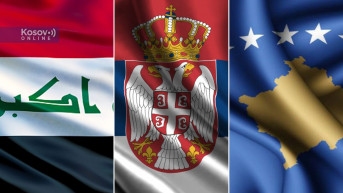
Claims that Iraq’s recognition of Kosovo is "only a matter of time" have been made even ten years ago, yet Baghdad has to this day not changed its stance on respecting the territorial integrity of Serbia. Despite lobbying efforts by politicians from Pristina, analysts in Belgrade are convinced that Iraq would be shooting itself in the foot by recognizing Kosovo, as it would pave the way for the secession of Iraqi Kurdistan. In Kosovo, as expected, there is hope that Baghdad might eventually "change sides."
Written by: Dusica Radeka Djordjevic
At several meetings in Iraq—specifically on the sidelines of the Delphi Economic Forum held in Sulaymaniyah, a city in Iraqi Kurdistan—former Kosovo Foreign Minister Enver Hoxhaj lobbied about ten days ago for Iraq’s recognition of Kosovo.
Although Iraqi President Abdul Latif Jamal Rashid was one of the speakers at the forum, Hoxhaj did not meet with him.
Hoxhaj stated that he met with the Deputy Prime Minister of Iraqi Kurdistan, with whom he discussed the need for closer political, economic, and cultural cooperation, as well as with former Iraqi Foreign Minister Hoshyar Zebari, to whom he said that “Iraq has no reason not to recognize Kosovo.” He also met with Dara Rashid Mahmood, Minister for Economic Planning of Iraqi Kurdistan.
Although on Facebook Hoxhaj presented Rashid Mahmood as Iraq’s Minister of Planning, the actual Minister of Planning and Deputy Prime Minister of Iraq is Mohammed Ali Tamim.
These meetings are neither the first nor likely the last between Kosovar politicians and their counterparts from Iraq, but according to Kosovo Online's sources, Hoxhaj's talks should not seriously concern the Serbian government. In their view, there are no indications that Iraq might change its stance and recognize Kosovo.
After all, just a month ago, the Chargé d’Affaires of the Iraqi Embassy in Belgrade, Majda Abul Yasin al-Adami, reaffirmed Iraq’s firm support for Serbia regarding Kosovo during a meeting with Dusan Kozarev, Secretary General of Serbia’s Ministry of Foreign Affairs.
Foreign policy analyst Mirko Dautovic told Kosovo Online that due to the internal Kurdish issue, the Iraqi government cannot recognize Kosovo, as that would mean opening the door for Kurdistan’s secession. He also remarked that Hoxhaj did not meet with anyone in Iraqi leadership of real significance.
“Hoxhaj was in Sulaymaniyah, a city in the Kurdish region, attending the Delphi Forum, which is something like a ‘poor man’s Davos.’ He did not go there for bilateral talks between statesmen, but rather as a forum participant, alongside many ‘former’ figures. The only notable names were perhaps Ahmet Davutoğlu, former Turkish Foreign Minister, or Massimo D’Alema, who was Italian Prime Minister 25 years ago, so it wasn’t a major event,” said Dautovic.
Still, he noted, there is a reason Kosovo sent a delegate there.
“Kurdistan, much like Kosovo, seeks independence. Back in 1992, they expelled Iraqi troops from their territory. Ever since then, until the 2020s, the Iraqi state—whether under Saddam Hussein or the new post-U.S.-occupation government—has had no control over the Kurdistan region. Kurdistan aspires to independence, so it makes perfect sense that they would invite a representative of a region that has, at least partially, succeeded in its secession efforts and is more successful than Kurdistan,” Dautovic explained.
When asked whether Kosovo’s allies are lobbying for Iraq to recognize Kosovo, Dautovic responded, “Iraq is not so weak as to act against its own interests.”
“At this moment, Iraq is not a particularly strong state. It heavily depends on both the U.S. and Iran. It also cooperates with Turkey—ironically, more through Kurdistan itself—despite Turkey’s fight against Kurds within its own borders. But these actors do not have sufficient influence over Baghdad. Iraq is not an overly stable country, but it is also not weak enough to work against its own interests,” he concluded.
Aleksandar Mitic, Research Associate at the Institute of International Politics and Economics in Belgrade, stated that Iraq has in no way—officially or unofficially—indicated any change in its position regarding respect for Serbia’s territorial integrity.
“Iraq acknowledges that Kosovo and Metohija are an integral part of the Republic of Serbia, and that is something we’ve been hearing for decades, years, months, and even in recent weeks,” Mitic told Kosovo Online.
He added that Iraq’s position is entirely understandable, given that it is a country facing serious challenges to its own territorial unity, and has an interest in upholding the UN Charter and international law when it comes to the territorial integrity of sovereign states.
Regarding the meetings held in Iraq by former Kosovo Foreign Minister Enver Hoxhaj, Mitic states that it is "a legitimate right of Albanian lobbyists—former ministers, businessmen—to travel the world, to try to lobby in various ways, to corrupt, and to extract as much as possible for their cause."
He adds that the meetings Hoxhaj had were of a nature that in no way suggest a change in Iraq’s official stance.
“A meeting with a former minister—so, ‘a former with a former’—over drinks after some forum of which there are hundreds around the world, is not something that indicates any change in position. It’s clear, of course, that he would receive support from someone who is an official in Iraqi Kurdistan, given that the Kurds in Iraq don’t only have aspirations for autonomy, which they already possess, but for something more, beyond the framework of Iraq. But it is just as clear that this will in no way alter the position of the authorities in Baghdad. On the contrary. One could even say this was somewhat of an own goal, if the goal was to influence Baghdad,” Mitic told Kosovo Online.
According to him, Iraqi Kurdistan is under significant pressure, primarily due to Turkish bombings and constant attacks, and its position is not an easy one.
“We must also understand that the Kurds are a large nation that still does not have a state of their own—unlike the Albanians, who want to create a second ethnically pure state, and even that might not be enough for them. From that perspective, I can understand them, but I do not believe that any leader of the autonomous Kurdish region in Iraq currently has the power to influence the central authorities in Baghdad in any way,” Mitic emphasized.
However, political analyst Bljerim Burjani from Pristina believes that Iraq may recognize Kosovo in the near future.
“This also depends on other states in the East. It is expected that two countries will recognize Kosovo—Iraq and Syria. We’ll see how things develop with those states, what their final positions will be, or whether more time is needed. Turkey, which helps Kosovo gain more recognitions, plays a key role in Syria,” Burjani stated for Kosovo Online.
At the same time, he observes that Kosovo has never had a real foreign policy strategy regarding where to invest efforts to secure new recognitions.
“I believe targeting countries was not done according to any real plan—it was improvised, based on where chances seemed better. Kosovo’s recognitions mostly came thanks to the U.S., European countries, and the United Kingdom. Recent lobbying by opposition figures like Behgjet Pacolli and the President of Kosovo secured two new recognitions, and now Enver Hoxhaj, a former minister, has become active again—which is good, that at least someone outside the government is working for the state and its citizens,” Burjani said.
He added that in the past, efforts were made to get the Vatican to recognize Kosovo, and he expects renewed lobbying now that the new Pope is from the United States.
“Now foreign policy efforts and individuals will turn toward the Vatican. If the Vatican recognizes Kosovo, that will lead to new recognitions from Latin American countries—at least four of them. But we’ll see how far lobbying efforts go and what results they produce,” the analyst concluded.

0 comments